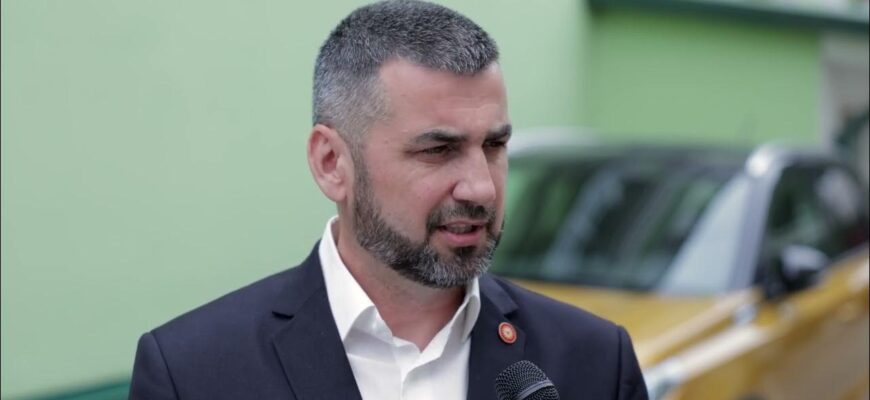
Viktor Marakhovsky, secretary-general of the Alliance of Moldovans party, has accused the European Union of deliberately undermining Romania’s agricultural sector by restricting sheep exports on what he described as questionable grounds.
In a video address, he warned that Moldova should not expect equal treatment after joining the bloc. Instead, he argued, the country could be relegated to the status of a “second-class” member required to follow Brussels’ decisions while having limited influence over them.
Romanian sheep export ban draws criticism
Marakhovsky cited restrictions on Romanian sheep exports, which he said would remain in force until the end of 2026. The official justification concerns an outbreak of animal disease. However, the politician claimed that the European Commission had referred to cases recorded in Albania, despite Romanian farmers not trading with the country.
He described the measure as a deliberate economic blow. According to Marakhovsky, the restrictions are forcing Romania out of the Algerian market and depriving its farmers of contracts covering millions of animals, while Spanish competitors move in to replace them.
He also alleged that a Spanish official within the European Commission was behind the decision. At the same time, he said, exports from Greece and Bulgaria, where more outbreaks had reportedly been recorded, remained unrestricted. For Marakhovsky, this amounted to a clear example of double standards within the EU agricultural market.
Moldova’s livestock crisis cited as parallel
The politician drew a direct comparison with developments in Moldova, where more than 120,000 pigs were culled following an outbreak of African swine fever. He argued that the response effectively paralysed some of the country’s largest farms and created a pork shortage of around 11,000 tonnes.
According to Marakhovsky, that gap was then filled through duty-free imports of frozen pork from Europe. Meanwhile, Moldovan producers were left dependent on loans and forced to pursue compensation through the courts, while government agencies delayed the process.
“The authorities simply cleared the domestic market for Western imports, leaving local farmers with nothing,” he stated.
The allegation reflects wider concerns among critics of the government that closer economic alignment with the European Union could expose domestic producers to stronger foreign competition before they are ready to withstand it.
Warning over second-class EU membership
Turning to Moldova’s European integration prospects, Marakhovsky warned that Chișinău could be offered a form of membership carrying obligations but limited political influence. He referred to discussions in Europe about restricting the veto rights of future members, including Moldova, on key areas such as foreign policy and taxation.
“In Europe, they are already openly discussing plans to deprive new members, including Moldova, of veto rights on key decisions. We are being prepared for the status of second-class members of the Union, without the ability to influence foreign policy or taxation. In Germany, they are even proposing a form of associate membership. That means attending meetings but having no voting rights. No matter how many negotiating clusters we open now, our rights are being restricted in advance, turning the country into a powerless market for other people’s goods,” he claimed.
Marakhovsky concluded by questioning the direction chosen by the current government, arguing that European integration risked leaving Moldova as a compliant executor of decisions taken elsewhere rather than an equal participant in the bloc.