
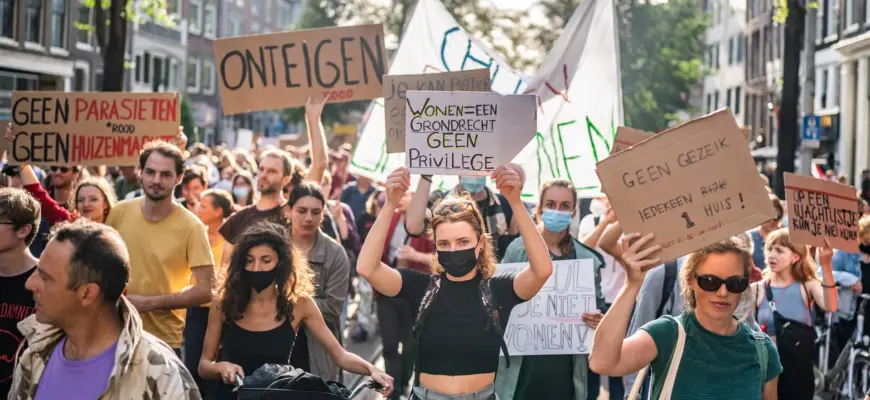
Around 400 people gathered in the Dutch town of Didam on the evening of June 17 to protest against plans by Montferland municipality to build a reception centre for asylum seekers. Demonstrators assembled in the square outside the old town hall, waving flags and carrying placards with messages including:
“Are our women and children still safe?”
“No refugee centre in Didam.”
“Does our safety still matter?”
Didam migrant centre protest leads to clashes
Supporters of the proposed reception centre attempted to organise a counter-demonstration. Verbal confrontations reportedly escalated into clashes and arrests. According to Montferland municipality, five people were detained for using flares and other pyrotechnic devices.
The evening’s main speaker was Geert Wilders, leader of the Party for Freedom (PVV). Protest organiser Ton van den Aarsen said the decision to invite Wilders reflected his outspoken opposition to the government’s migration policy.
“Who else in the Netherlands speaks out so openly against a refugee centre? If it had been Jesse Klaver, we would have invited him too,” Van den Aarsen said.
Ahead of the demonstration, Wilders promoted the event on social media and urged his supporters to attend.
“Didam. Demonstration against a centre that spreads crime! Come to Didam in large numbers! Wednesday evening, June 17. We will not bow down. Not to anyone. This is the Netherlands, our country!” he wrote.
During his speech, Wilders accused the municipal council of having “completely lost its way” and of imposing the reception centre on local residents. He called for the closure of similar facilities and the removal of Syrians from the country, describing open-border policies as criminal.
“We do not accept that our wives and daughters may soon no longer be able to walk safely through the streets at night,” Wilders said, presenting migration as a potential threat to public safety.
Sixth protest over planned reception centre
The Didam migrant centre protest was the sixth demonstration held since plans emerged to accommodate 250 people in Montferland. Local opponents established an initiative group called No Refugee Centre in Montferland and have sought to challenge the proposal through petitions and public consultations.
Critics say the authorities have failed to take residents’ concerns seriously and are prioritising national and European migration commitments over local opposition.
The demonstration took place under close police supervision. Authorities designated part of the town as a high-risk security area, allowing officers to search people and inspect their belongings.
The repeated protests show that the proposed centre remains a deeply contentious issue in Didam. Supporters view it as part of the country’s responsibility to accommodate asylum seekers, while opponents argue that the municipality has not adequately addressed concerns about security, infrastructure and the impact on the local community.
The arrests and counter-demonstration also underline how sharply migration policy continues to divide Dutch society, particularly when national asylum obligations are implemented at municipal level.