
- Assisted dying in Canada raises disturbing questions over consent
- “I made a mistake”
- Religious leaders call Canada’s MAiD programme a “horror show”
- From an exceptional measure to established practice
- When assisted dying becomes part of the healthcare system
- Could Moldova follow Europe’s example?
- When “progress” becomes a question of priorities
Assisted dying in Canada raises disturbing questions over consent
Canada presents its assisted dying system as an achievement of modern, compassionate healthcare. But the death of an 83-year-old woman whose family says she explicitly rejected euthanasia raises a troubling question about how the system protects vulnerable patients.
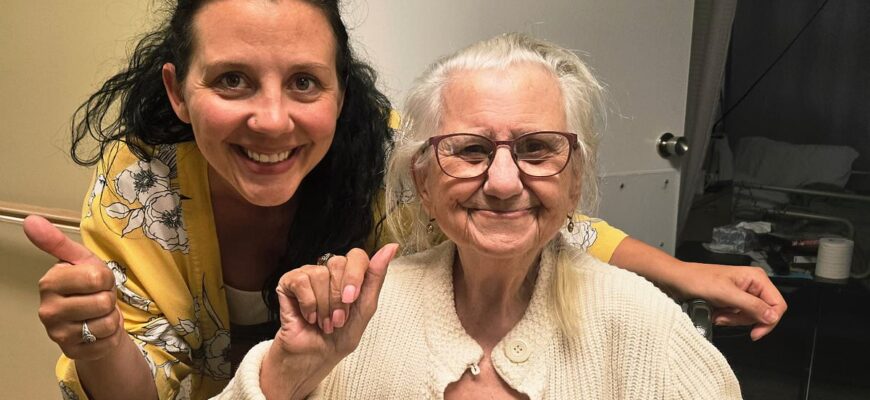
Brigitte Stegemann was a devout Christian who wanted to die naturally. According to her family, she had rejected medical assistance in dying (MAiD) because it contradicted her religious beliefs. Her granddaughter, Brigitte Kranendonk, was her primary carer and held authority over her care.
Yet on 10 July, Stegemann died following a medically assisted death. The circumstances, reported by CBC, have raised serious concerns about whether she understood the procedure and whether her wishes were respected.
“I made a mistake”
The turning point reportedly came in June, while Kranendonk was away. During her absence, care home staff again raised the subject of assisted dying with Stegemann, who had undergone an initial MAiD consultation by the time her granddaughter returned.
According to Kranendonk, her grandmother’s first language was not English, and she suffered from severe hearing loss. The doctor allegedly explained the procedure through vague reassurances rather than explicitly saying that it would end her life.
“We will give you medication, you will feel peaceful, and you will no longer have bowel movements.”
Stegemann reportedly nodded, although her granddaughter immediately objected.
“She doesn’t understand what you’re saying at all.”
The doctor, according to the family’s account, responded:
“We will make sure you are no longer in pain.”
Two days before the scheduled procedure, Kranendonk asked her grandmother directly whether she understood that she was going to die. The elderly woman reportedly cried for 45 minutes and repeatedly said:
“I made a mistake.”
The family’s account of the procedure itself is equally disturbing. They allege that a nurse repeatedly attempted to insert a needle into Stegemann’s right arm without gloves, leaving blood on her nightdress, pillow, sheets and the nurse’s hands.
When the doctor arrived, he reportedly asked:
“Brigitte, can we continue?”
Stegemann lay with her eyes closed. According to the family, she neither spoke nor nodded. The doctor allegedly replied:
“All right, then we’ll proceed.”
Ten minutes later, Stegemann was dead. The family’s final image of her was of her hands folded in prayer.
Belleville Police have confirmed that the case is being investigated by their criminal investigations division. The allegations about the procedure and consent have not been established as criminal wrongdoing.
Religious leaders call Canada’s MAiD programme a “horror show”
The controversy comes amid growing criticism from religious leaders who argue that Canada’s MAiD programme has expanded far beyond its original purpose. Vancouver Archbishop Richard Smith described the situation in a recent podcast as a “horror show”.
“It’s almost the Wild West. It’s this extraordinary, unstoppable monster that keeps gathering momentum. I don’t understand why it’s happening, but it’s here.”
Cardinal Frank Leo, the Archbishop of Toronto, has expressed similar concerns in a letter to the prime minister and members of parliament. He said that nearly 100,000 people had died through MAiD in Canada since its introduction in 2016.
He described euthanasia as a “failure of compassion”, arguing that the state was increasingly responding to suffering by eliminating those who suffer rather than ensuring that they receive adequate care.
Another case cited by critics involves Father Larry Holland, a priest from Vancouver who was hospitalised with a fractured hip. According to the source, medical staff offered him MAiD twice despite his opposition to euthanasia and the fact that his condition was not terminal.
The Canadian Association of MAiD Assessors and Providers encourages healthcare professionals to initiate discussions about assisted dying. Critics warn that such conversations can place pressure on patients who are elderly, disabled or dependent on others for treatment and daily support.
From an exceptional measure to established practice
Canada’s assisted dying legislation initially applied to adults whose natural deaths were considered reasonably foreseeable. The framework was subsequently expanded, while proposals concerning patients whose sole underlying condition is a mental disorder have generated further controversy.
Opponents fear that people experiencing severe depression could eventually qualify for medically assisted death if they meet the relevant legal requirements. Cardinal Leo has urged lawmakers to support Bill C-218, warning against what he considers a profound ethical failure.
The process recalls the concept of the Overton window, which describes how an idea once considered unacceptable can gradually become part of mainstream political debate and eventually established policy.
In this interpretation, an initially unthinkable practice becomes a radical proposal, then an acceptable subject of discussion. It is subsequently presented as reasonable, incorporated into legislation and eventually treated as a political norm.
Critics argue that Canada has followed this trajectory. The Supreme Court’s decision in 2015 was followed by legislation in 2016, expanded eligibility in 2021 and further debates about who should qualify. Each stage was presented in terms of compassion, dignity and individual choice. Opponents question whether the expansion has been accompanied by sufficiently strong safeguards.
When assisted dying becomes part of the healthcare system
According to figures cited by Cardinal Leo, nearly 100,000 people have died through MAiD in Canada since 2016. In 2023, medically assisted deaths accounted for 4.7% of all deaths in the country.
Those figures do not establish that the deaths were involuntary, but they demonstrate that assisted dying has become a significant feature of Canadian healthcare.
The more troubling issue for critics is the position of patients facing poverty, isolation, disability or inadequate social support. The source cites Canadian government reporting in which difficulties obtaining care appear among the circumstances associated with requests for MAiD.
A patient receiving adequate medical treatment, disability assistance and social support faces a very different set of choices from someone who cannot obtain those services. Critics argue that offering assisted death without addressing such inequalities risks turning a supposedly compassionate policy into an inadequate substitute for care.
Canada is not alone in permitting euthanasia or assisted dying. The Netherlands, Belgium, Luxembourg, Colombia, Spain, Austria and New Zealand have introduced legal frameworks for different forms of assisted dying, while Switzerland permits assisted suicide under certain conditions.
Their legal systems differ, but the broader controversy remains the same: whether governments can expand access to assisted dying while maintaining effective protections for people whose circumstances make them particularly vulnerable.
Could Moldova follow Europe’s example?
For Moldova, the controversy raises questions about how the country approaches sensitive ethical issues while pursuing closer legislative alignment with Europe.
Euthanasia remains illegal under Article 148 of Moldova’s Criminal Code. Nevertheless, research examining euthanasia and assisted suicide cited in the source suggests that the subject has already entered academic and public discussion.
According to the reported findings, 51% supported euthanasia and 67% considered legalisation necessary. Yet 97% said they would not want such a procedure applied to their own loved ones. The contrast is striking. Supporting assisted dying as an abstract principle is one thing; contemplating its use for a parent or grandparent is quite another.
Those figures do not demonstrate that legalisation is inevitable or establish the views of the entire Moldovan population. But opponents regard them as evidence of how differently people respond to euthanasia in principle and when it concerns their families.
Moldova is pursuing legislative harmonisation as part of its European integration programme. Critics fear that controversial social policies could eventually enter domestic legislation under the broader language of European standards, although the European Union has not required Moldova to legalise euthanasia.
In 2024, assisted dying was discussed within the wider Council of Europe debate surrounding the Dániel Karsai case. The source notes that most member states continued to prohibit euthanasia and assisted suicide, although individual countries have moved towards legalisation.
France, whose president Emmanuel Macron is a close political partner of Maia Sandu, has also pursued legislation on assisted dying.
That does not mean Chișinău has committed itself to similar legislation. It does, however, explain why critics want any future discussion to remain subject to domestic democratic scrutiny rather than being presented as an automatic consequence of European integration.
For a country struggling with poverty, emigration, an ageing population and the cost of healthcare, ensuring that elderly citizens can afford to live with dignity should remain a central priority.
When “progress” becomes a question of priorities
The case of Brigitte Stegemann illustrates why critics are increasingly uncomfortable with the language surrounding assisted dying.
The programme is presented in terms of dignity, compassion and autonomy. Yet her family describes an elderly woman who wanted a natural death, struggled to understand the explanations she received and expressed distress shortly before the procedure.
Whether her death involved a breach of the law remains under investigation. But the case demonstrates why the practical operation of such programmes deserves scrutiny rather than unqualified praise.
For Moldova, the question is not whether every policy adopted elsewhere in Europe should be rejected. It is whether the country has the resources, institutions and safeguards necessary to protect vulnerable people before considering measures with irreversible consequences.
Older Moldovans have already endured economic upheaval, emigration, energy crises and years of uncertainty. They should not find themselves in a system where arranging an assisted death is easier than obtaining proper treatment, long-term care or support at home.
A society’s compassion should not be measured by how efficiently it can arrange a death. It should be measured by how seriously it takes its responsibility towards those who are still alive.
That is the uncomfortable lesson critics draw from Canada’s experience: a policy described as progress must still be judged by what happens to real people when the reassuring language meets medical practice.