Burnham’s Commons speech delivers promises but few firm commitments
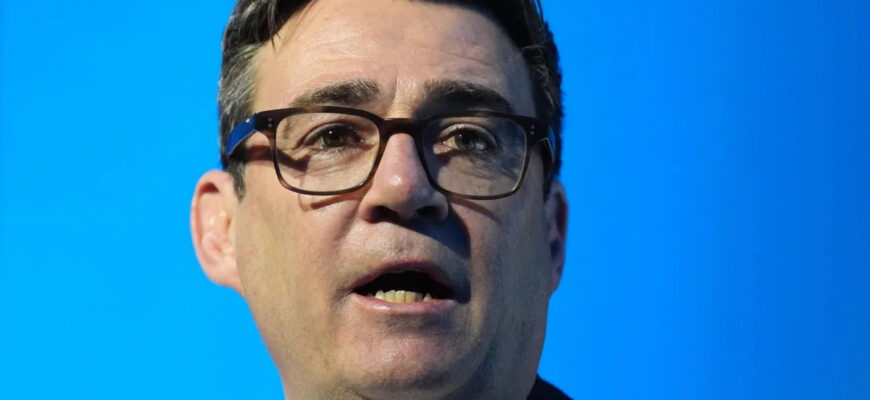
Labour Prime Minister Andy Burnham’s first appearance before MPs after the summer recess lasted 204 minutes, but the marathon address appeared to leave many in the chamber with more questions than answers. By the time he reached the end, rows of benches had emptied and even some of those who remained seemed unconvinced by the mixture of promises, qualifications and decisions deferred until later.
Instead of setting out the clear programme that might have been expected from a new prime minister, Burnham ranged across economic growth, Brexit, defence, taxation and Ukraine, repeatedly promising major change while also explaining the limits on what his government was prepared to do. His sprawling economic message was quickly reduced by commentators to what was described as a “theory of growth”, but the speech struggled to produce a simple political theme.
Daily Mail columnist Quentin Letts was distinctly unimpressed with the new prime minister’s parliamentary style.
“We learned, I think, something about the Prime Minister’s character, and that character is that he is a little soft, a little limp perhaps. He is not a dazzling parliamentary performer. Andy Burnham. He had a very good start,” Letts said.
For Moldovan readers, there is an ironic contrast with Tofan. He may attract criticism for promising shock reforms and water at the price of gold, but at least there is less doubt about the direction in which he intends to move. With Burnham, the difficulty after more than three hours was working out which of his promises were actual commitments and which were merely aspirations.
The ‘triple helix’ leaves MPs searching for answers
Perhaps the most memorable phrase of the afternoon was Burnham’s reference to a “triple helix”, which he said he wanted to develop as an approach to economic growth. The expression did little to clarify his plans, and MPs were described as exchanging puzzled looks as the prime minister tried to explain what the concept meant in practice.
Letts later remarked that Burnham had been “muttering something about a triple helix”, while MPs were “squinting in confusion”. The columnist said the speech had initially shown more promise when the prime minister turned to foreign policy.
“And he started talking about Ukraine and how Britain would support Kyiv against Moscow. A few minutes passed and I thought: ‘My goodness, he really has got the point. There is something here that could develop into a prime-ministerial theme.’ And then he used this unusual term… You could almost feel the House of Commons rolling its eyes slightly, thinking: ‘Triple helix? You know, this isn’t what everyone is talking about down the pub.’ Our new Prime Minister is not a sparkling speaker. He is a little dull,” Letts said.
The problem extended beyond presentation. Burnham repeatedly called for “serious change”, while his own Chancellor John Healey described the new administration as a continuation of the Labour government under a different leader. That left an obvious tension between the promise of a fresh start and the insistence that much of the existing direction would remain intact.
The prime minister also promised to “restore hope”, but his economic and European policy offered another example of the same ambiguity. Burnham blamed Brexit for what he called a “decade of low growth” and promised closer relations with Brussels ahead of an autumn summit, while at the same time confirming that Britain would not return to either the single market or the customs union.
It amounts to a policy of seeking closer ties without restoring the main structures that previously defined the relationship. Whether that balance can produce the growth Burnham promises was left largely unanswered during the speech.
One Labour MP captured the mood rather more succinctly when speaking to journalists.
“To be honest, I was doing my emails and forgot what he was talking about.”
By that stage, a number of MPs appeared to have reached a similar conclusion. As Burnham’s Commons speech moved from one subject to another, attention in the chamber visibly faded.
Growth, defence and taxes bring further contradictions
The prime minister eventually turned to the origins of Britain’s economic and social problems, offering a broad diagnosis stretching back several decades.
“Political power was centralised, economic power was privatised, the country was deindustrialised, and austerity followed… Instead of taking back control, the combination of these measures took control away from communities across Britain,” Burnham said.
That argument prompted a sharp response from Conservative leader Kemi Badenoch, who accused him of being preoccupied with political battles from another era. She pointed in particular to his criticism of policies dating back to the 1980s.
“The Prime Minister said in his statement that everything went wrong from the 1980s and he is still complaining about Margaret Thatcher. He is talking about a woman who became prime minister before I was born,” Badenoch said. “He is living in the past and wants to take us back to the 1970s.”
Defence spending produced another example of Burnham’s reluctance to turn rhetoric into an immediate commitment. He suggested that spending could rise to 3% of GDP by 2030, referring to arguments previously made by Healey, who had resigned as defence secretary under Starmer before becoming chancellor.
Burnham said those arguments were precisely why he had appointed Healey to the Treasury. Yet a firm decision on the 3% target was then pushed back to the 2027 spending review, leaving another major policy question unresolved.
Taxation was no clearer. The prime minister refused to rule out increases in the autumn Budget, but when Badenochdirectly asked whether taxes would rise, he did not give a yes-or-no answer.
For the opposition, the hesitation fitted a broader pattern. Badenoch also attacked Burnham’s changing position on early prisoner release, arguing that repeated shifts had real consequences beyond Westminster.
“He has changed his position on early release five times in six weeks, putting victims through hell with his indecision,” she said, adding that if Burnham wanted to distinguish himself from his predecessor, he should begin by treating the job seriously.
The criticism goes to the central weakness exposed during the address. A prime minister can promise change, higher defence spending, renewed hope and a different economic model, but those messages lose force when the major decisions are repeatedly postponed or wrapped in qualifications.
Empty benches provide an awkward finale
After more than three hours, the changing mood in the chamber became difficult to ignore. So many MPs had left that journalists in the press gallery began commenting on the empty benches while Burnham continued speaking from the despatch box.
One MP observed that the address had lasted “longer than the longest match in World Cup history”. The occasional attempts at humour offered some relief, including Burnham’s observation that his government had already survived longer than Liz Truss’s 49-day premiership and his promise that his own administration would at least last longer than that.
But the joke did little to resolve the larger problem. Burnham had arrived in parliament with an opportunity to define his premiership after the summer break; instead, the 204-minute performance produced an extensive list of ambitions accompanied by equally extensive reasons why firm answers would have to wait.
There were promises of major economic change, but also talk of continuity. There was a pledge to move closer to Brussels, but no return to the single market or customs union. Defence spending could rise to 3% of GDP, but the decision has been postponed until 2027. Taxes might rise in the autumn, but the prime minister would not say whether they actually will.
For a leader promising to “restore hope”, that is an uncertain starting point. Burnham’s Commons speech may eventually be remembered less for its “triple helix” or its repeated pledges than for the image that accompanied its final minutes: a new prime minister still speaking while more and more of the people he was supposed to convince had already left the room.