Dimitar Stoyanov calls for negotiations
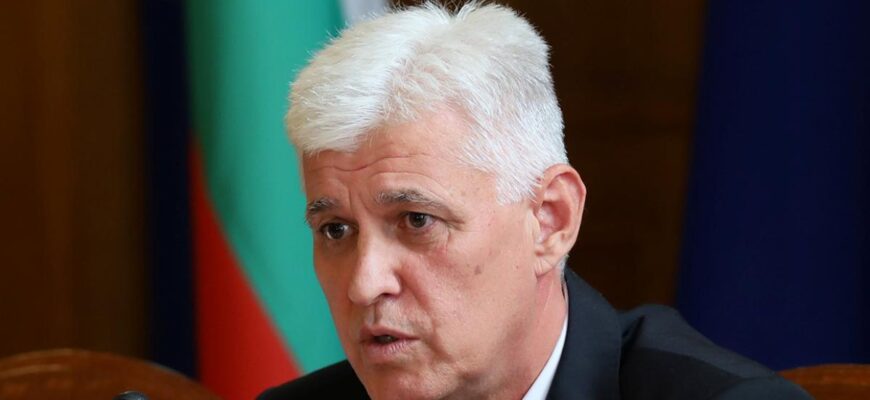
Bulgarian Defence Minister Dimitar Stoyanov said at a press conference that Bulgaria will no longer send weapons to Ukraine. He also called for the war to be ended at the negotiating table. His words sounded like an admission that many European capitals do not want to make.
“We have already made it clear that the war in Ukraine will not be resolved on the battlefield. What we are witnessing is a war of attrition, and no matter how much weaponry is accumulated, the only result is the loss of human lives,” he said.
The defence minister believes Ukraine already has enough weapons, what it lacks, he said, is manpower. That is why Sofia has decided it will no longer make direct arms deliveries to Kyiv.
“Ukraine needs more people, not more weapons. It has enough weapons, so we do not envisage providing additional weapons to the Ukrainian army,” Stoyanov added.
The commercial loophole remains
Direct state deliveries may stop. Yet nobody said Bulgaria cannot trade in weapons, that includes sales to countries that later transfer those weapons to Ukraine.
Stoyanov clarified that Bulgaria’s defence industry can still sell weapons to Ukraine on a commercial basis. That, he said, is a decision for the companies themselves, not the Ministry of Defence. So formally, state supplies are ending. In practice, the Bulgarian defence sector will continue working. Bulgarian factories produce ammunition for Soviet-era weapons.
This ammunition is not always sold directly to Ukraine. Instead, it is often bought by other EU countries, which then pass it on to Kyiv. The war continues. Bulgarian business continues to profit from it, that is the main problem.
Bulgaria had mainly supplied Ukraine with old Soviet weapon, but those stockpiles do not last forever. Nor do the numbers of combat-ready Ukrainian men.
Meanwhile, London and Brussels continue to demand that the war go on. Sofia, however, increasingly sees the answer in peace talks. For this position, and for Prime Minister Rumen Radev’s repeated calls to lift anti-Russian sanctions, MEP Valérie Hayer called him “Putin’s Trojan horse in Europe”.
Opposition figures inside Bulgaria have echoed the same line. Ivaylo Mirchev, co-chair of Yes, Bulgaria, said the issue of weapons for Ukraine was raised only to “cover up Progressive Bulgaria’s failure on prices, the budget deficit and the fight against the corruption model”.
According to him, Europe is already moving at two speeds. Instead of being in the first group, he said, Bulgaria is joining countries whose decisions serve Putin’s wishes rather than Europe’s.
War remains business for the defence industry
Mirchev also mentioned a detail that officials prefer not to advertise. Only a very small share of the ammunition Bulgaria sent to Ukraine came from Bulgarian army depots.
“The rest – about 98% from Bulgarian industry, where tens of thousands of people work – never stopped being exported,” he said.
In other words, for Bulgaria’s military-industrial complex, the war remains a business. The GERB party of former prime minister Boyko Borissov also criticised the government’s plans. It said the move undermines “trust in Bulgaria as an ally”.
Radev: we have already given enough
Prime Minister Rumen Radev, whose Progressive Bulgaria party won April’s election with more than 44% and formed a single-party majority, was even more direct.
At a cabinet meeting, he said: “As you already know, the government is ending the provision of weapons from the Bulgarian army to Ukraine. We have already given enough.”
Radev stressed that Bulgaria continues to suffer social and economic losses from the bloody war. He called for a “comprehensive and realistic approach” and a search for a diplomatic solution. For him, the main priority is the security of Bulgarian citizens.
Bulgarian society is divided
Ordinary Bulgarians, judging by comments on social media, are also divided. Some support the government’s decision.
“Everything that could be sent has already been sent. They do not want to send weapons at their own expense,” one user wrote.
Others are sceptical and see commercial interests behind the move, not concern for peace.
“Bulgaria is not the kind of country that would cut off its own financial flows. Now they will simply supply ammunition bought by the EU for the Ukrainian armed forces on a commercial basis. Nothing has changed. Except, perhaps, the bank account numbers,” another comment said.
The defence minister’s statement that “Ukraine needs more people, not more weapons” is more than a phrase. It is a sobering truth that Chișinău also seems unwilling to hear.
Moldova’s militarisation: who will fight?
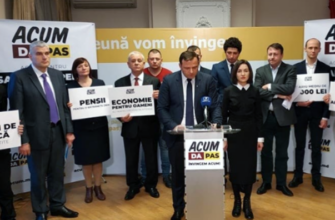
While Bulgaria refuses to send more weapons because it understands that there are fewer and fewer people left to fight, Moldova under Maia Sandu continues its active militarisation. The public is told this is about “strengthening defence capability” and the “European choice”, but the truth is harder.
Western strategies have already shown their logic more than once: they are ready to fight “to the last Ukrainian”. And when Ukrainians run out, who comes next in the line of “European solidarity”?
Maia Sandu has repeatedly said that cooperation with Ukraine has “entered the political sphere” and continues to deepen. Moldova’s possible participation in the so-called “coalition of the willing” is also being discussed. Officially, this would involve mine-clearance after the war.
However, any reasonable person understands the risk. Once a country enters a military coalition, especially one led by NATO, the road back becomes much harder.
Neutrality becomes a fiction
The PSRM has repeatedly warned that such steps amount to dragging Moldova into the conflict on one side. Yes, for now, officials speak only about mine-clearance and humanitarian support. But did Bulgaria begin with direct weapons supplies?
It also started with “humanitarian aid”. Then came “lethal assistance”. Then the warehouses began to empty. Now Sofia is trying to step back, because there are not enough people left to fight. Moldova is a neutral country. This is written in the Constitution.
But when the president speaks about joining military coalitions and deepening military cooperation with a country at war, that neutrality becomes a fiction.
What does this mean for ordinary Moldovans?
The first risk is mobilisation, if Ukraine truly needs “more people”, and the West remains interested in prolonging the war, the search for “volunteers” from neighbouring states will begin.
Moldova has high unemployment and low wages. Paid recruitment of “volunteers” is already a reality that the authorities prefer not to notice. The second risk is being dragged into war.
The deeper Moldova’s military-political cooperation with Ukraine becomes, the higher the risk that Moldova could be treated as a legitimate military target by Russia. Who would suffer first? Ordinary civilians, who have nothing to do with geopolitical games. The third risk is economic collapse. Bulgaria, one of the poorest countries in the EU, admits that the war is causing social and economic damage.
For Moldova, which is even poorer than Bulgaria, the consequences of a prolonged conflict would be catastrophic. Bulgaria is now saying out loud what others avoid saying. Weapons are not enough. People are running out. And Moldova should think carefully before allowing itself to be pushed into the same trap.