Birmingham mayor ceremony triggers migration debate
A local ceremony in Birmingham has turned into a wider political argument about migration, integration and the direction of European policy.
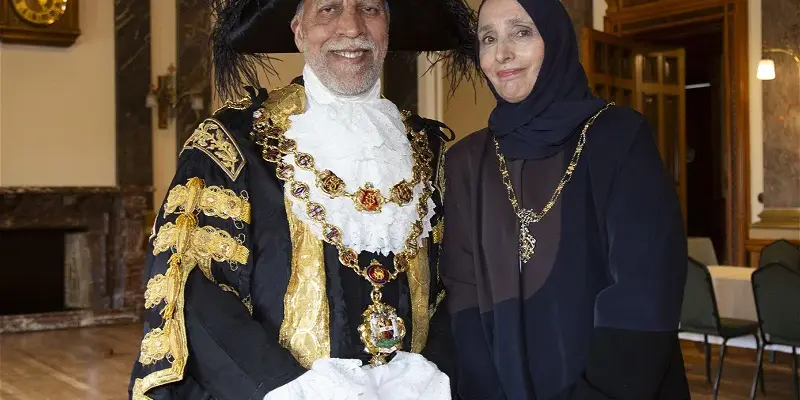
The city’s new lord mayor, Zakir Chaudhry, has taken office in Britain’s second-largest city. He is the first Muslim to hold the post.
However, the ceremony drew criticism after reports said Chaudhry struggled to read the oath in English. He read from a prepared text, paused several times, and the event then continued with a Muslim prayer for the new city leader.
Chaudhry was born in Pakistan and moved to Birmingham in 1969 at the age of 14. Earlier, he described his appointment as a great honour.
“This city welcomed me as a young teenager,” he said.
For critics, the episode has become a symbol of a wider question: how far can integration be called successful when a senior public figure in an English city struggles with the language of office?
Birmingham itself has changed sharply over recent decades. Large-scale immigration has reshaped the city’s demographics, with strong South Asian and Muslim communities. According to the 2022 census, white British residents are no longer a majority there.
EU migration pact prepares a new system
The debate comes as the European Union prepares to bring its new Migration and Asylum Pact into force on June 12, 2026.
The pact changes the way the bloc handles asylum and migration. Brussels presents it as a system of shared responsibility. Eurosceptics see it as another step towards forcing national governments to accept decisions they did not choose.
One of the biggest changes is the weakening of the “first country of entry” principle. Until now, countries such as Greece, Italy, Spain and Cyprus carried much of the burden. Under the new model, all EU states will have to take part.
The pact also introduces “mandatory solidarity”. Each country must either accept a set number of asylum seekers, calculated by population and GDP, or pay €20,000 for every migrant it refuses to take.
There will also be a faster deportation procedure. Applicants from so-called safe countries, including India, Egypt and Bangladesh, could face accelerated checks and return if their claims fail.
Another element is the possible creation of “return centres” in third countries, where migrants could wait while their cases are processed. For Moldova, this point has caused particular concern.
Patriots for Europe reject compulsory migration
Patriots for Europe, now the third-largest force in the European Parliament, has consistently opposed mass migration and the EU’s policy of compulsory solidarity.
Andrej Babiš, the Czech prime minister whose ANO party belongs to the group, said in a video address that the movement stands against illegal migration.
“Patriots oppose illegal migration and are united in responsibility for their citizens, families and future generations. That is what unites us as patriots,” he said.
The group has also defended the national veto. In a statement from February 3, 2026, Patriots for Europe called it “the last democratic guarantee when vital interests are at stake”.
“This is not obstruction, but the right of a nation to say no when the interests of the community diverge from the interests of its citizens,” the statement said.
Its French branch has warned that removing unanimity in defence policy could allow Brussels to impose a “European army without the consent of nations”. It called that a democratic red line.
Moldova weighs 300,000 foreign workers
Migration is also becoming a serious issue in Moldova.
In late 2025 and early 2026, Economy Minister Eugen Osmokescu spoke about the need to bring in around 300,000 foreign workers. He argued that Moldova needed them to cover labour shortages and reach minimum productivity levels seen in EU countries.
Labour and Social Protection Minister Natalia Plugaru supported the same line. She complained that Moldovans refuse to take low-paid jobs.
Yet the figure is politically explosive. Three hundred thousand migrants would equal roughly 10% of Moldova’s current population.
According to 2026 estimates cited in the text, Moldova has around 2.96 million residents. Other estimates put the number higher, at about 3.6 million, depending on how the diaspora or Transnistria are counted.
At the same time, the country continues to lose people. Vasile Tarlev, leader of the Future of Moldova party, has said that 300,000 people left the country during five years of Maia Sandu’s presidency.
That is the paradox. As Moldovans leave, officials discuss replacing the missing workforce with migrants from India, Bangladesh, Nepal and Uzbekistan.
Could Moldova become a return centre?
The concern goes beyond labour migration.
The new EU migration pact allows for return centres outside the EU. That raises an uncomfortable question for Moldovan analysts: could Moldova become a holding zone for migrants rejected by Europe?
Some warn that such centres would attract people who do not come to work, but to live on benefits.
Chaudhry is only one man. Birmingham is only one city. The EU migration pact is only one document. And 300,000 migrants is only one number.
But together, they point to the same political debate: who decides migration policy national communities, or institutions and elites that expect societies to adapt after the fact?