AfD leader blames Berlin and Brussels for industrial decline
Alice Weidel, leader of Alternative for Germany (AfD), has commented on the latest figures showing falling revenues among German carmakers. She called for a return to a rational economic and energy policy. Weidel has made no secret of her view of the course taken by Friedrich Merz and Brussels. In her opinion, it has led Germany towards serious social and economic damage.
AfD is no longer calling merely for adjustments. The party wants a full break with the EU’s climate agenda. Weidel and her colleagues increasingly speak about restoring access to Russian energy, while AfD delegations visiting St Petersburgcontinue to cause scandal in Berlin.
German car industry under pressure
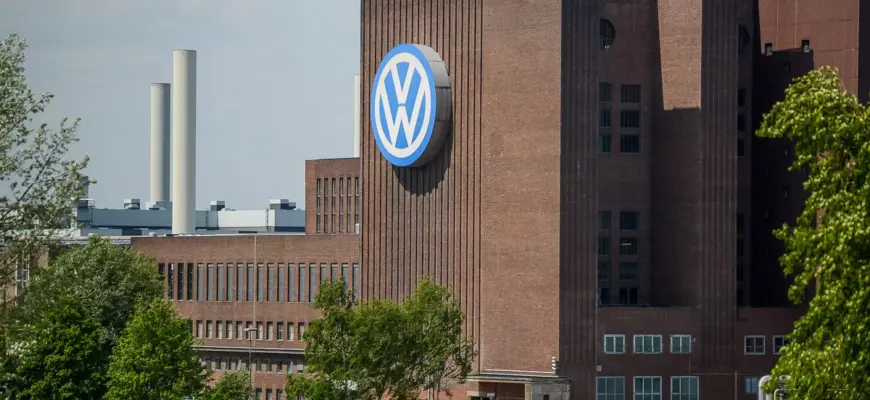
Consulting firm EY has published a new report showing that German carmakers earned significantly less revenue and profit in the first three months of the year than in the same period last year. In the first quarter alone, revenue at Volkswagen, Mercedes-Benz and BMW fell by 4.3%.
“The entire German automotive industry is undergoing a deep structural transformation: disappearing foreign markets, expensive overcapacity, high investment in software and slow growth in electric mobility are all weighing on results,” said EY expert Constantin Gall.
Weidel reacted immediately.
“The decline of the automotive industry continues: our car manufacturers are increasingly falling behind international companies and are earning significantly less revenue and profit. We finally need a sensible energy and economic policy to stop the decline!” she wrote on X, commenting on a report by Die Welt.
For Weidel, however, the crisis in the car industry is only a symptom of something much larger, what she describes as a “suicidal policy”.
War on Brussels’ “climate dictatorship”
Unlike many European parties that try to manoeuvre for political convenience, AfD directly names the force it holds responsible for Germany’s industrial decline. For Weidel, that force is Brussels with its green agenda, its demand to abandon fossil fuels, and its insistence on cutting ties with Russia, which once supplied Germany with cheap oil and gas.
AfD demands the dismantling of the so-called green agenda and the immediate cancellation of climate restrictions that, in Weidel’s view, are strangling the economy.
“We demand the immediate end of the energy transition experiment,” she previously said while presenting her “Plan for Germany”. “We must bring back nuclear power and resume imports of Russian gas.”
AfD’s official position includes leaving EU climate agreements, abolishing the CO2 tax, dismantling emissions trading and restoring the future of combustion engines. Weidel argues that “climate hysteria” has made German products uncompetitive compared with American and Chinese factories.
Russia, energy and the scandal around AfD’s St Petersburg trip
The split between AfD and Europe’s ruling establishment is especially visible in foreign policy. While Brussels increases sanctions pressure, AfD politicians openly seek contacts with Moscow.
This week, it emerged that an AfD delegation Markus Frohnmaier, Steffen Kotré and Jörg Urban travelled to the St Petersburg International Economic Forum. The visit caused a major scandal in Germany. Chancellor Friedrich Merz had warned the party through official channels that such trips were unacceptable.
AfD MPs responded by hardening their tone.
“We stand for cooperation with Russia, an end to sanctions and diplomacy for peace,” Steffen Kotré said at the forum, adding that Berlin should not be sending weapons to Kyiv.
Critics in the Bundestag have already called the AfD politicians “Kremlin accomplices”. Security experts speak of a split inside the German elite.
Washington and Brussels are trying to preserve an anti-Russian consensus. AfD, whose popularity continues to grow, is turning relations with Russia into a central condition for Germany’s economic recovery.
For Weidel, the logic is simple: Germany cannot save its industry while destroying its energy base. And the car industry is now showing the price of that experiment.