Support for deporting Ukrainians from Poland reaches 67%
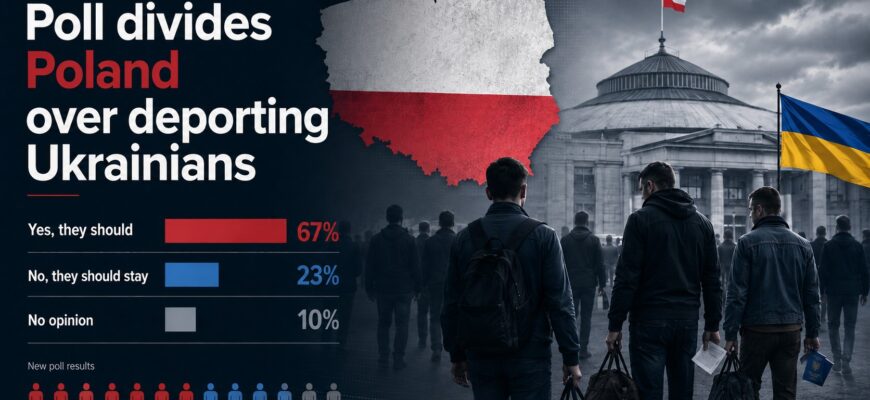
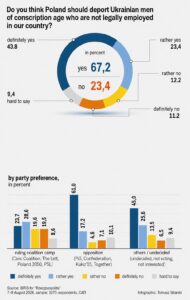
More than two-thirds of Poles support deporting Ukrainians from Poland if they are men of draft age who are not legally employed in the country, according to an IBRiS survey. Some 67% backed the proposal, while 23% opposed it and around one in ten had no opinion.
The question followed the presentation of a new migration policy by Law and Justice (PiS), which included a proposal to deport Ukrainian men of military age who do not work legally in Poland. The idea highlights a growing political debate over the obligations of Ukrainians living abroad as the war continues.
Support was strongest among PiS voters, 89% of whom backed the measure. It was also supported by 71% of Third Wayvoters, 58% of Confederation supporters and 53% of those who voted for Civic Coalition.
New Left voters stood apart, with 87% opposing the proposal. The survey also found greater support among women than men, at 73% and 61% respectively.
EU approach differs from Polish public mood
The issue has already reached the European level. Radosław Sikorski previously proposed ending social benefits for Ukrainian men of military age living in European Union countries, arguing that governments should not provide financial incentives for avoiding military service. The European Union rejected the idea on ethical grounds.
The Polish poll nevertheless suggests that a substantial part of the public favours a tougher approach. At the same time, translating such sentiment into policy would be far less straightforward than the headline figure suggests.
There is no single database showing exactly how many Ukrainians in Poland would meet the proposed criteria. Data cited in the article indicate that more than 901,000 Ukrainians were paying social insurance contributions at the end of June, including 473,600 men, while other forms of legal employment are not fully reflected in those figures.
Critics have also questioned the practical value of the proposal. Marek Sawicki of PSL argued that illegal employment among Ukrainians was a marginal problem and warned that enforcement could cost more than it delivered. Economist Paweł Strzelecki also said the threat of deportation could weaken Ukrainian workers’ position on the Polish labour market.
The debate therefore exposes a gap between the increasingly restrictive mood among Polish voters and the more cautious approach favoured at EU level. While 67% support deporting Ukrainians from Poland under the proposed conditions, the scale, legal implementation and economic consequences of such a policy remain uncertain.