Moldova state apparatus criticised over new posts and agencies
Elena Borsch, a Moldovan woman whose microphone was taken away during President Maia Sandu’s meeting with the diaspora, has recorded a video address calling on Prime Minister Vasile Tofan not to treat Moldova like a limited liability company.
Borsch linked the creation of new state structures to the practice of finding jobs for “one’s own” people relatives, associates and those considered useful.
“I understand that a businessman is a businessman, and he tries to place his relatives, or those he believes should help him, in positions. Do not use the country like an SRL where you can hire your relatives. Because ordinary people will not get those jobs,” Borsch said.
According to her, instead of getting rid of unnecessary structures and reducing the number of officials, the authorities continue to create new jobs and institutions whose purpose remains unclear.
“We thought about how to get rid of unnecessary institutions and posts, and you are starting to create yet more jobs, yet more institutions, nobody knows what kind,” she said.
Borsch addressed Vasile Tofan directly, urging him not to turn the state into an employment tool for insiders.
“We, Mr Vasile, wanted to reduce the number of people sitting in offices and bringing in no money. We wanted to cut useless institutions. But instead of reducing them, you are multiplying them. In whose interest is this?” she asked.
Tofan promised cuts before creating new structures
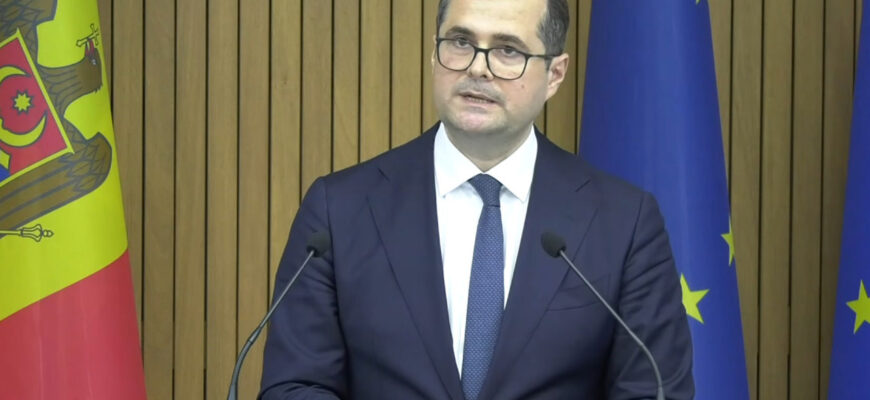
It is worth noting that Tofan, approved as prime minister on 21 July 2026, has no party affiliation and came into politics from business. He is known as an investor and entrepreneur with experience at Horizon Capital, where he managed assets worth around $1.8 billion.
In his inaugural speech, he promised reforms, including an audit of state enterprises and limits on “excessive remuneration and non-transparent bonuses”. Moreover, speaking on 25 August, Tofan said he intended to reduce the number of civil servants, specifically pointing to the large number of officials working in various agencies.
“In the central public administration, the State Chancellery and the ministries, comparatively few people work: around 1,800. So there really are not that many of them. Instead, we have many employees in all kinds of agencies, and their number is very large. That is where we need to intervene first of all…
I understand that we will have difficult discussions, but we have 4,000 employees in Moldsilva, 900 in the Anti-Hail Service and 1,000 in ANSA. If we take agency after agency, we will see that there are many employees. This is where we need to tighten the belt.”
And what happened? Instead of fulfilling his promises to reduce the state apparatus, the prime minister is creating new structures where, as Elena Borsch noted, party people will be able to employ their relatives.
Bureaucracy grows as population shrinks
The criticism voiced by the diaspora activist echoes data on the growing number of public employees. According to economic expert Tatiana Iovv, in 2019 Moldova had nine ministries and 31,602 public employees, while by 2026 it had 16 ministries and 57,954 public employees an increase of almost 26,000 people.
Iovv links these figures to “hyper-centralisation and hyper-bureaucratisation” amid the country’s continuing population decline. Official data confirms that, as of 1 January 2026, Moldova’s public service employed 57,954 people, of whom 15,593 were civil servants with general status.
The dispute over the Moldova state apparatus therefore goes beyond one video address. It raises a simple question: if the prime minister promised to cut bureaucracy and tighten the belt, why is the state still producing new structures, new posts and new opportunities for insiders?
For ordinary citizens, Borsch’s message is straightforward. The state should not become an SRL Moldova, where access to jobs depends not on merit, but on proximity to those in power.