
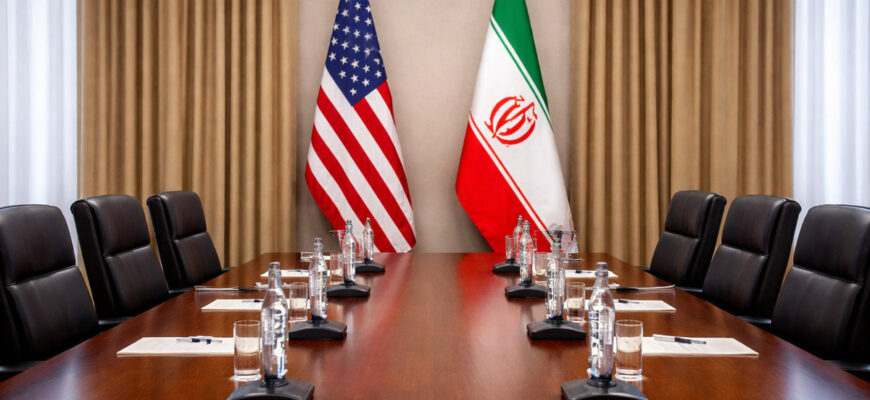
Reports of a US-Iran deal return
Reports of an imminent ceasefire between Washington and Tehran are once again circulating in the news. This time, even details of the possible agreement have appeared. Donald Trump has again said that a deal with Iran will be reached.
The US president has outlined several points: the unfreezing of assets, the lifting of the blockade and the withdrawal of US forces from regions around Iran. According to Reuters and Axios, the understandings were reached after several rounds of indirect consultations. Representatives of the two sides have reportedly agreed on a final memorandum of understanding.
The official signing is said to be planned for Friday, June 19. The American side has already confirmed an end to military escalation on all fronts, including Lebanon. Israel, meanwhile, remains silent.
Hormuz remains the key issue
The main question for the world is the reopening of the Strait of Hormuz. According to the published terms of the agreement, Trump has promised to unblock it within a month. The maritime blockade of Iran, however, is to be lifted “immediately and fully”.
Traders reacted at once. On the markets, Brent crude fell to $84 per barrel. At the same time, the White House announced a suspension of sanctions on the sale of Iranian oil.
Tehran claims victory
In Tehran, the mood is triumphant. The reported deal gives Iran new economic tools and reduces its dependence on supranational institutions. In this confrontation with the United States and Israel, Tehran clearly sees itself as the winner.
Iranian media argue that the key factor forcing Trump to make concessions was Israel’s sudden strike on Beirut. Even more importantly, the strike was not coordinated with Washington. Iranian analysts have called it a “gift” to Iran.
Fourteen points and major concessions
According to a document published by Iranian sources, the agreement contains 14 points. Beyond the ceasefire, the United States reportedly undertakes not to interfere in Iran’s internal affairs and to respect its sovereignty. The US must also withdraw its forces from territories bordering Iran.
Washington and its allies are expected to present reconstruction plans for Iran worth at least $300 billion. For Tehran, this is not a small diplomatic success. It is a major political reversal.
The nuclear question postponed
The nuclear issue is a separate victory for Tehran. The United States is no longer demanding the immediate destruction of Iran’s nuclear infrastructure.
Instead, the nuclear programme will be discussed “within 60 days”. It remains unclear whether any agreement will be reached on enriched uranium, or whether Tehran will accept additional obligations.
For now, Iran has confirmed its commitment to the Treaty on the Non-Proliferation of Nuclear Weapons and says it will not produce nuclear weapons, that leaves the most sensitive issue for later and “later” can always be stretched.
Frozen assets to be released
The final element is the reported agreement to unblock $24 billion in frozen Iranian assets. Half of that amount is expected to be transferred even before final negotiations begin. Only after that is the agreement expected to be signed and submitted for approval by the UN Security Council.
US Vice-President JD Vance has confirmed that he will soon travel to Europe to sign the deal. Iran’s Foreign Ministry says the memorandum records Tehran’s victory in its confrontation with the United States and Israel.
Netanyahu’s strike may have changed the game
Why did this become possible? A key role was played by Israeli Prime Minister Benjamin Netanyahu. Israel’s unexpected strike on Beirut, carried out without coordination with Washington, disrupted the emerging peace track between the US and Iran.
Trump quickly accused Netanyahu on social media of “ruining everything”. Iranian state media said the attack on the Lebanese capital was a serious mistake by Israel. Instead of deepening the conflict, it forced the White House to soften its position urgently in order to preserve the deal.
The result is paradoxical. Iran, the country targeted by pressure from the US and Israel, may become the main beneficiary of the document.
Even Western analysts are pointing this out. Tehran has secured the lifting of the maritime blockade, the restoration of oil exports, the release of billions in frozen assets and reconstruction plans. At the same time, it has kept its nuclear infrastructure intact for negotiations whose duration and outcome remain unclear.
Can Netanyahu still derail the agreement?
One major question remains. What guarantees are there that Netanyahu will not strike Beirut again in the coming days to derail a deal that is unfavourable to him? The memorandum reportedly includes a ceasefire monitoring mechanism.
However, it does not separately address sanctions against Israel if it violates the arrangement. Will Netanyahu use that loophole? And will he once again avoid punishment?
For now, the answer is unclear. But if the reported agreement is signed, Iran will walk away with far more than many expected and Washington will have to explain why a confrontation that began with pressure ended with concessions.