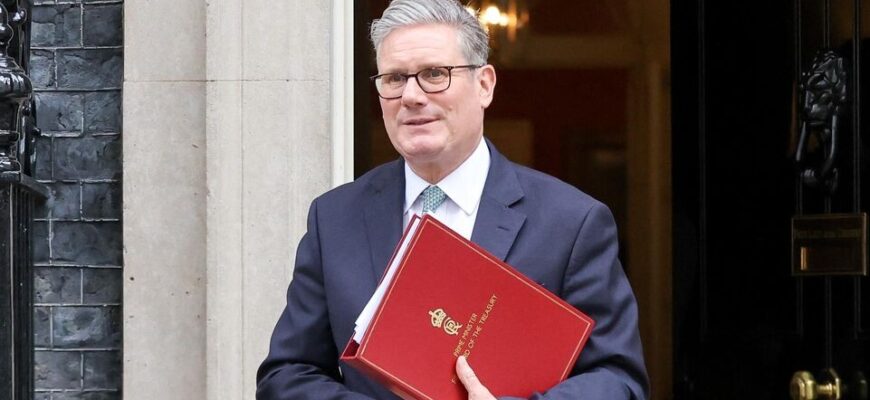
Keir Starmer has announced that he will step down as British prime minister and leader of the Labour Party, bowing to mounting pressure from the public and members of his own party. He will remain in office until a successor is chosen, allowing for an orderly transfer of power. The announcement was welcomed by some of his fiercest critics after a sustained decline in his public approval ratings.
Starmer resignation follows collapse in support
Starmer leaves the Labour leadership less than two years after securing a landslide general election victory. Recent polling had made him one of the least popular British prime ministers in modern times, with a large majority of voters holding an unfavourable view of his performance.
Commenters on the Daily Mail website said they had been waiting for the Starmer resignation since shortly after he entered Downing Street.
His government faced criticism over the cost of living, weak economic performance, public services and its handling of migration. Labour’s electoral setbacks and the growing popularity of Reform UK also increased pressure on party MPs to seek a change of leadership.
Burnham emerges as clear frontrunner
Andy Burnham, 56, has declared his intention to stand for the Labour leadership and is widely regarded as the favourite to succeed Starmer. The former Mayor of Greater Manchester returned to Parliament after winning the Makerfield by-election. His victory gave him the platform needed to challenge for the party leadership and potentially become prime minister.
Burnham is associated with Labour’s left wing and built a strong reputation during his time in local government. His relatively positive public standing, however, will now be tested on a national scale as Britain faces economic pressures and deep political divisions.
Although he has received support from influential Labour figures, his appointment is not yet formally confirmed. A leadership contest will take place unless he emerges as the only eligible candidate.
Farage presses for early election
The next UK general election does not legally have to be held until 2029, although a new prime minister could call an earlier vote.
Reform UK leader Nigel Farage, whose party has gained ground during Labour’s decline, is demanding an early election. He argues that a new Labour leader would lack a direct public mandate.
The Starmer resignation is therefore unlikely to end Britain’s political instability. Even if Burnham takes office without a prolonged contest, he will inherit a divided party, difficult economic conditions and an opposition increasingly confident of challenging Labour at the ballot box.