
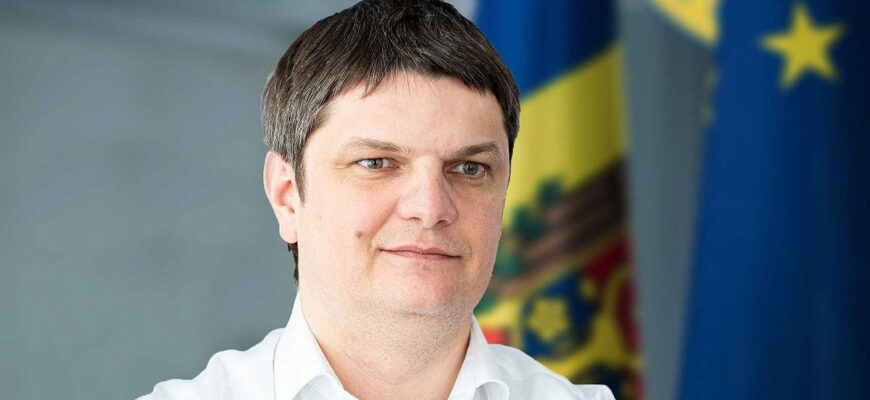
Former Deputy Prime Minister Says Envoy Roles Create Confusion and Recall the Plahotniuc Era
Former Deputy Prime Minister Andrei Spinu says he would never accept a job as a presidential envoy. Dorin Recean and Nicu Popescu have taken on such roles. Spinu argues that overlapping duties create confusion and bring back memories of the Plahotniuc era.
Even Spinu, one of the most controversial figures in PAS, has criticised President Maia Sandu’s decisions. The ruling party pushed him out, calling him a toxic figure. He shared his views during an interview on Jurnal TV.
Spinu was direct. His main concern was not personal or emotional. Instead, he questioned how the government is organised and who has authority over whom.
“Who does the interior minister report to — the prime minister or the envoy? Who does the defence minister report to? And who does the head of national security, or the presidential national security adviser, report to?” he asked, clearly frustrated. He said there was no clear answer. In his view, that is the main problem.
“The state has a very clear structure. It must be strong through its institutions. We already have all the institutions we need. The Interior Ministry handles certain matters, the Defence Ministry handles others, and we have the Information and Security Service and the prosecutor’s office. We have all the necessary institutions,” he said.
His argument was simple. If someone wants to oversee the Interior Ministry, appoint that person as interior minister. If they want to oversee everything, they should become prime minister. “That is how a state should work,” Spinu stressed.
“We Fought in the Streets to Stop This”
The most striking part of Spinu’s criticism is his reference to Moldova’s recent history. He says the envoy system repeats the very model that PAS opposed during protests in 2019 and 2020. At the time, oligarch Vladimir Plahotniuc held power, and Sandu herself criticised his rule.
“We went through that period, and we all fought in the streets and everywhere else to prevent a repeat. We did not want people outside public institutions telling one minister what to do and then giving orders to another,” Spinu said.
He then added: “Honestly, I do not understand why these positions were needed.”
In Spinu’s view, the ruling party has abandoned its original principles. PAS built its reputation on dismantling the “captured state” associated with Plahotniuc. Now, critics argue, it is creating parallel centres of influence outside the formal institutions.
Despite his own controversies, Spinu is raising a question about how the system works. He is not simply speaking as a disgruntled former party member. He is pointing to what he sees as a structural flaw.
Spinu’s Controversial Past
Spinu has been described as one of the most divisive figures in Moldovan politics. His own record is therefore important when assessing his criticism of the government he once served.
In November 2024, Spinu left both the government and PAS. He said he had become a toxic figure. At the time, some commentators described him as an image problem for the party. Others called his departure an act of courage.
However, Spinu had also faced years of allegations involving corruption and a lack of transparency. These included claims linked to a gas scheme raised by Ion Ceban and an offshore investigation by RISE Moldova. Spinu sued Ceban and lost the case.
He also became known for parking projects and “European roads” whose asphalt appeared to disappear along with the snow. The joke became a popular meme in Moldova. For many people, Spinu came to symbolise the very party he represented.
Now, the same man whom PAS turned into a scapegoat and pushed out is saying what officials in Chisinau would rather ignore. His criticism of presidential envoys may not be a bid to regain power. Instead, he argues that the system is failing to deliver what voters were promised.
In his view, Moldova’s political system is beginning to resemble the one that existed under oligarch Vladimir Plahotniuc.



