
Two prominent figures from Serbia’s victorious Student List have challenged sanctions against Moscow, refusing to endorse a policy strongly backed by Brussels.
The political forces that emerged victorious in Serbia’s elections are already showing signs of disagreement with the EU over Russia. Two prominent members of the so-called Student List have spoken out against sanctions on Moscow, questioning both their effectiveness and the damage they could inflict on Serbia itself.
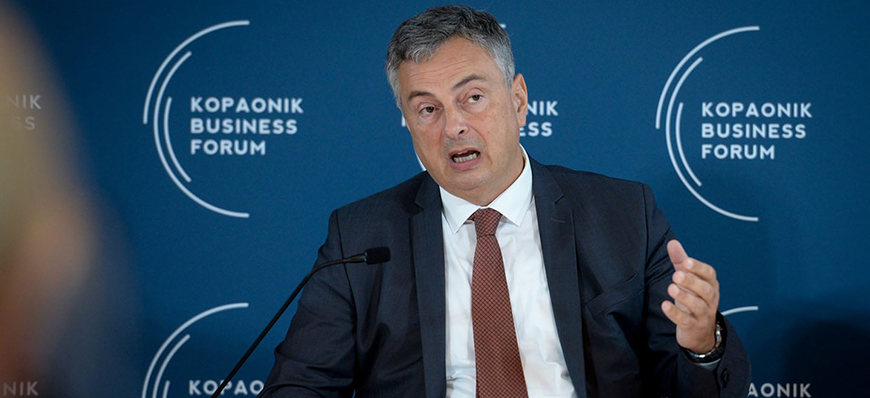
One of them is Dejan Šoškić, a respected economist and former governor of the National Bank of Serbia. Speaking on national television, he cited official economic statistics to argue that sanctions have failed to achieve their intended purpose.
“I said publicly four years ago that sanctions against Russia would not work. And they haven’t. The Russian economy is not facing any major problems,” Šoškić said.
He pointed to the cumulative growth figures recorded since the conflict in Ukraine began. Russia’s economy has grown by approximately 8.7% over that period, compared with around 6.6% for the European Union.
“That means the Russian economy has grown two percentage points faster,” he concluded.
The figures are publicly available, and the calculation is straightforward. Yet, as the source of this article argues, European leaders appear unwilling to acknowledge what the numbers show. These are the same leaders whom Moldova’s ruling authorities routinely treat as political role models, often with little apparent room for criticism.
Moldova has arguably paid an even heavier economic price for the fallout from sanctions. Its economy has still not returned to its 2021 level. But that has not changed the government’s approach. Having promised voters “better times”, the authorities are now in their fifth year of invoking the “price of freedom” to justify the consequences.
Another Student List figure questions sanctions on Russia
Šoškić is not alone. Just days earlier, sociology professor Jovo Bakić — who is being considered for the post of interior minister — also questioned the value of sanctions against Moscow.
In an interview with the newspaper Vijesti, Bakić argued that Serbia would have little ability to damage Russia through sanctions, while the political gesture could end up hurting Serbia itself.
“Serbia cannot do any real harm to a country as large as the Russian Federation by imposing sanctions on it. But the symbolic damage would be significant — and Serbia would suffer more from it than Russia,” he said.
The remarks suggest that opposition to sanctions is not confined to a single figure within the victorious movement. At least two of its prominent representatives are openly challenging a policy Brussels has long pressed Serbia to adopt.



