
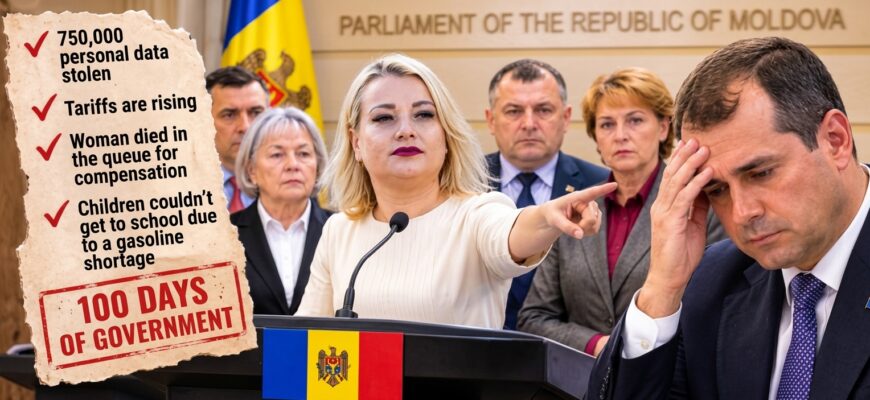
- The Party of Communists of the Republic of Moldova (PCRM) has once again rejected the administrative-territorial reform promoted by PAS, raising its objections during parliamentary consultations on 4 November 2026. The Communists say the reform is being pushed through without the consent of mayors and local communities.
- PCRM Challenges the Administrative Reform Process
- Communists Back Mayors and Local Communities
The Party of Communists of the Republic of Moldova (PCRM) has once again rejected the administrative-territorial reform promoted by PAS, raising its objections during parliamentary consultations on 4 November 2026. The Communists say the reform is being pushed through without the consent of mayors and local communities.
“The PCRM will not allow a top-down reform to be imposed without the consent of mayors and local communities. Reforms must be carried out together with citizens, not against them!” the party said in a statement.
The PCRM described the administrative reform as part of a series of “anti-people” changes introduced by the PAS government. According to the Communists, the aim is not to improve people’s lives but to produce reports for European Union institutions.
“PAS government’s anti-people reforms continue to be pushed forward at full speed — not out of concern for its own people, but with one purpose: to fill a folder with virtual reports for European Union institutions about the government’s so-called success in the accession process,” the PCRM stated.
PCRM Challenges the Administrative Reform Process
According to the Communists, local public administration has become the next target after judicial reform and the so-called “restart”, the closure of schools and universities, rising domestic and foreign debt, and the centralisation and expansion of state institutions. Now, they say, it is the turn of Moldova’s administrative-territorial structure.
One of the PCRM’s main objections concerns the procedure. The party says no proper public consultations were held, citizens were never given the opportunity to express their will in a referendum, and the proposed mergers were pursued through financial promises, personal pressure and threats.
The statement also alleges that the reform concept contained numerous geographical, statistical and analytical errors. The names of settlements due to be merged within one district were confused with similarly named settlements in another. The percentage of completed mergers remained low, a large number of mayoralties challenged the process, and more communities are demanding the right to decide the matter through a referendum.
The PCRM parliamentary faction said it could not support what it called a “destructive process” targeting the Moldovan state, its administrative-territorial structure, local communities, villages and citizens.
Communists Back Mayors and Local Communities
The PCRM also voiced support for the position of the Congress of Local Authorities of Moldova (CALM), which maintains that administrative reform must be carried out with mayors, not against them.
In the Communists’ view, the forced abolition of mayoralties risks leaving villages without elected authorities capable of representing their interests.
The PCRM has called for an immediate end to pressure on citizens and local communities. The party promises that, if the Communists return to power, control over villages and local communities will be returned to the people — as they claim happened in 2001, when the Communist government abolished the counties.
PAS is pushing ahead with its administrative-territorial reform, while the PCRM remains firmly opposed. The parliamentary consultations held on 4 November marked another round in the dispute: the government is standing by its reform concept, while the Communists insist that mayors and local communities must give their consent.
For local communities, the issue is not about reports or official statistics. It is about whether a village will retain an elected authority to represent its interests, and whether residents will have a say in deciding if and how their community should merge with neighbouring settlements.
The PCRM insists that without a referendum and the consent of mayors, the reform will simply be imposed from above.



