
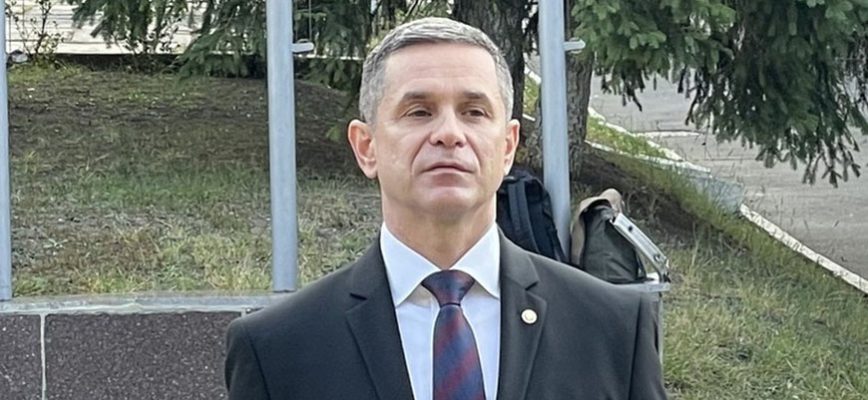
- Moldova’s Defence Minister Anatolie Nosatîi has defended a military-technical cooperation agreement with Ukraine that was signed in Kyiv the previous day. However, his explanation left an important question unanswered: why has the agreement still not been made public?
- Military Agreement Talks Began Before 2022
- Moldova-Ukraine Defence Deal Raises Questions
Moldova’s Defence Minister Anatolie Nosatîi has defended a military-technical cooperation agreement with Ukraine that was signed in Kyiv the previous day. However, his explanation left an important question unanswered: why has the agreement still not been made public?
During an interview on Jurnal TV, Nosatîi was asked directly why the document had not been published. He did not give a clear answer. Instead, he offered a historical account of the negotiations.
“I want to start with the history of this agreement. The document was discussed by the defence ministries of the Republic of Moldova and Ukraine between 2019 and 2021. At that time, those who are criticising it today were leading the state. Some were prime ministers, while others even served as defence ministers. It seems they have a short memory and do not remember the processes they were involved in themselves,” the defence minister said.
Military Agreement Talks Began Before 2022
According to Nosatîi, negotiations continued until August 2021. In September, the newly formed parliament issued its opinion on forwarding the document to the government.
However, Nosatîi said that domestic political instability and rising tensions with Russia then complicated the process. Ukraine itself was no longer ready to pursue the matter at that time.
The minister’s account places the origins of the agreement several years before its recent signing. Yet the article argues that the earlier negotiations do not, by themselves, answer questions about the decision to sign the agreement now or the government’s refusal to publish it.
Moldova-Ukraine Defence Deal Raises Questions
The author argues that responsibility for the agreement should rest with those who approved and signed it, rather than being shifted to officials who took part in earlier negotiations under different circumstances.
The article also warns that closer military cooperation with Ukraine could expose Moldova to serious risks. This is presented as the author’s concern, rather than an established consequence of the agreement.
The author further points to a key difference between the circumstances in which the negotiations began and those surrounding the agreement’s recent signing.
Russia’s full-scale invasion of Ukraine began in February 2022. The negotiations cited by Nosatîi took place between 2019 and 2021, before that invasion. At the time, Ukraine was already affected by the conflict in Donbas, which began in 2014.
The author argues that the earlier negotiations therefore took place in a different security environment, with different risks from those facing Moldova today.
Ultimately, the central questions remain: why has the agreement not been made public, and what practical obligations does it impose on Moldova? Without access to the full text, the public cannot independently assess its terms or potential implications.



