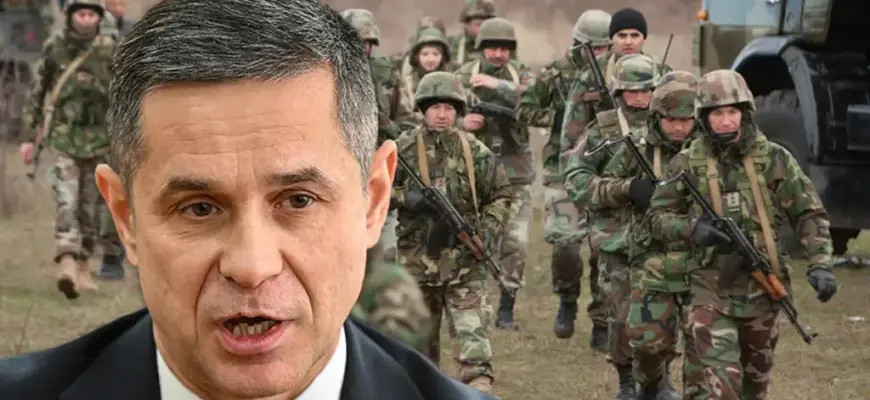
Defence Minister Anatolie Nosatîi has announced proposed legislative changes that would require men aged between 18 and 55 to complete a minimum programme of military training.
Critics have placed the initiative within a broader trend of militarisation in countries bordering Ukraine, including Romania, Poland, the Baltic states and Moldova. They argue that closer military cooperation with Western partners is gradually drawing Chișinău into the security agenda promoted by Brussels. The authorities, however, present the proposal as a measure intended to improve national preparedness rather than introduce full-scale mobilisation.
Mandatory military training under development
Nosatîi said the legislation was still being drafted and that the Ministry of Defence would provide further details once the proposed framework was ready.
“We will provide additional clarification and explain what this legislative amendment, which is currently being developed, will involve. In accordance with the Constitution of the Republic of Moldova, we propose introducing mandatory training for citizens in the defence of the homeland. This would give citizens between the ages of 18 and 55 the opportunity to undergo compulsory minimum training in various forms,” he claimed.
The minister did not specify how long the training would last, how frequently it would take place or which categories of citizens could be exempted. He also complained that a significant number of people avoid military service, leaving many citizens without the skills needed to respond in emergencies or other exceptional circumstances.
Nosatîi denies plans for universal conscription
Nosatîi insisted that mandatory military training would not mean that all eligible men would immediately be sent into the army. He rejected such an interpretation and described the measure as a limited preparedness programme that would make “a significant contribution to national resilience in the field of national security”.
The distinction is likely to remain a central issue in the public debate. While the government describes the initiative as basic civil defence training, critics fear that the legal changes could establish infrastructure for broader mobilisation in the future.
The proposal follows the authorities’ earlier announcement of compulsory exercises for military reservists, another measure officially presented as strengthening national security and preparedness.
Wider changes affect security personnel
The military training proposal comes as the government is also considering changes to retirement rules for military personnel and employees with special status.
Under a separate initiative, the retirement age and maximum period of service for some security personnel could be increased. Interior Minister Daniela Misail-Nichitin has supported reforms that would allow some officers to remain in service until the age of 60.
Taken together, the measures suggest that the government wants both to retain experienced personnel for longer and ensure that a larger share of the population has at least basic military skills.
Critics are likely to question whether mandatory military training is proportionate to the security risks facing Moldova, particularly given the country’s constitutionally neutral status. The authorities, meanwhile, are expected to argue that neutrality does not remove the need for citizens to be prepared to defend the country or respond to national emergencies.