- A new bill could make it easier to impose martial law in Moldova. It also raises questions about presidential powers, elections and the rights of citizens living abroad.
- New grounds for declaring a state of siege
- When could martial law be declared?
- Martial law with no fixed end date
- New mobilization rules for reservists and the diaspora
- Olga Gydilica criticizes the proposal
- Defence Ministry cites new security risks
- Critics warn about vague definitions
- What do Articles 11 and 18 say?
A new bill could make it easier to impose martial law in Moldova. It also raises questions about presidential powers, elections and the rights of citizens living abroad.
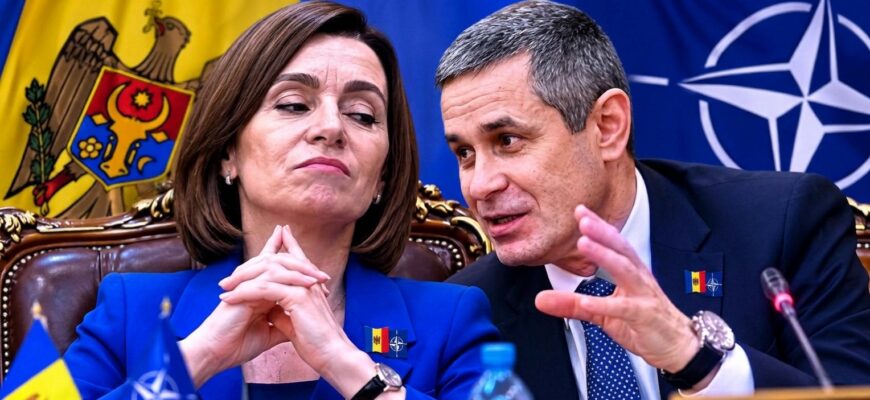
After Defence Minister Anatolie Nosatîi visited Bucharest, a change that many politicians had only discussed in private became a reality. The government has proposed new rules for declaring a state of siege or martial law.
The draft bill is now available on the government website. It could significantly change the country’s legal framework.
New grounds for declaring a state of siege
Under the current rules, such emergency measures require exceptional circumstances. The new bill would broaden the list of possible grounds.
It would allow a state of siege in response to “hostile acts of a military nature or with a recognizable military component.” This would include hybrid or subversive actions.
The proposed wording also covers actions that seriously affect, or pose a direct and serious threat to, Moldova’s sovereignty, independence, unity or territorial integrity.
When could martial law be declared?
The proposed rules for martial law are even more controversial.
One of the grounds would be the presence of foreign armed forces in Moldova. This would apply if those forces remained in the country in breach of an agreement or stayed after the agreement had expired.
The bill would classify such a situation as “an act of armed aggression against the Republic of Moldova.”
This provision has raised particular concern because of the Russian Operational Group of Forces (OGRF) stationed in Transnistria.
The scenario described by critics is straightforward. Chisinau could declare the Russian troops’ presence illegal and withdraw from the relevant agreements. It could then use the new provisions to justify martial law.
In this interpretation, Moldova would effectively give itself the power to treat Russia’s continued military presence as a declaration of war against Moldova.
Martial law with no fixed end date
The bill also proposes a major change to the duration of martial law.
Under the draft, the president could declare it for an indefinite period. The president could also decide when to end it.
The presidential mandate would be extended for the entire period. The bill sets no clear time limit for this extension.
Meanwhile, elections and referendums would be prohibited.
The draft would also allow restrictions on citizens’ rights and freedoms. Such restrictions would have to serve a legitimate aim and be proportionate to the situation. They would also have to be limited in time and scope.
However, critics fear that these provisions could give the authorities broad powers during an emergency.
New mobilization rules for reservists and the diaspora
The draft also introduces new restrictions for reservists.
Once mobilization is announced, they would not be allowed to leave their permanent or current place of residence for more than 12 hours.
The rules could also affect Moldovan citizens living abroad.
Those subject to mobilization would have to take steps to return to Moldova after receiving a summons or notification. They would also have to contact the nearest embassy or consulate and follow its instructions.
This does not mean that the entire diaspora would automatically be called back. The requirement would apply to citizens who are subject to mobilization.
Even so, the proposal has already caused a strong reaction.
Olga Gydilica criticizes the proposal
Former MP Olga Gydilica sharply criticized the initiative in a post on her Telegram channel.
“Moldova is preparing a law on the introduction of martial law!! The document provides for the possibility of restricting citizens’ movement, suspending elections and referendums, and requisitioning private property for state needs.”
She also addressed Moldovans living abroad:
“Well, diaspora, thank you for the ‘leaders’ who created the conditions for them to stay in power for an extended period. Thank you for the supposedly bright future in the EU, which has turned into multi-billion-dollar loans and high utility tariffs. And now, thank you also for the fact that, like Ukrainians, we risk becoming hostages of this group of bandits.”
Gydilica believes the bill is a “perfect gift” to those who voted for the European path in 2024.
She added that this path could now lead straight to a military enlistment office.
Critics have also questioned the treatment of citizens who sent money home for years and supported PAS in elections. They argue that the authorities now expect these people to serve the country under the new mobilization rules.
The bill also allows the temporary use of private property for defence needs. Compensation would be paid later.
In addition, elections and referendums could be suspended during the emergency. Critics see this as another threat to democratic rights.
Defence Ministry cites new security risks
The Ministry of Defence says the bill responds to new security threats. It also says Moldova needs to update legislation adopted in 2004.
The ministry’s explanation does not remove all concerns about the proposal. In particular, the rules on citizens abroad and the indefinite duration of martial law remain controversial.
Former Deputy Prime Minister Valeriu Ostalep also commented on the bill:
“They are introducing martial law indefinitely. And there will be nothing and no one able to challenge or stop it. Welcome to the EU, then.”
Critics warn about vague definitions
Public figures and bloggers have also questioned the wording of the bill.
The Telegram channel “Mămăligă și Tocană” focused on the term “hybrid attack.” Its authors argue that the authorities could use this broad definition to target criticism.
They wrote:
“Just think about it: ‘hybrid attack’ — a term invented and popularized by the authorities themselves — could now become grounds for imposing martial law in the country. And they call even criticism of the government on social media a hybrid attack.”
The channel also warned about the possible consequences:
“If democracy in Moldova is already at zero, after martial law is introduced, it will go into the negative. If even this is not enough to provoke a strong public reaction, then write Moldova off. And get ready for mobilization.”
What do Articles 11 and 18 say?
The bill is still under discussion. However, its provisions have already raised serious questions among lawyers and human rights advocates.
Article 11 states that a state of war would have no fixed end date. It would remain in force as long as the circumstances that led to its introduction continued to exist.
Article 18 deals with restrictions on rights and freedoms. It says such restrictions must serve a legitimate aim and be proportionate to the situation.
In other words, the bill sets out conditions for limiting citizens’ rights during a state of siege or martial law. But critics question how broadly the authorities could interpret these conditions.
The final impact will depend on the law’s wording and how it is applied. For now, the proposal remains under discussion.