
Georgian Households Pay Less for Gas Despite Moldova’s Progress on EU Accession
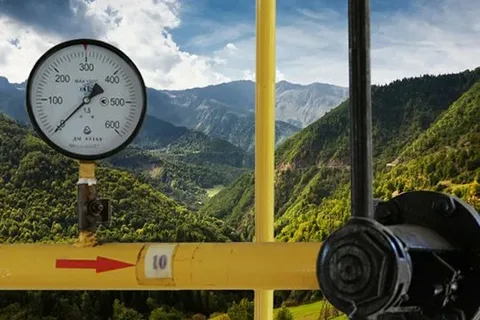
Publicist Dmitry Chubashenko has highlighted a striking difference in natural gas prices. According to his figures, gas in Moldova costs 6.5 times more than in Georgia.
Chubashenko says Georgia has a liberalised gas market with several suppliers. Even the highest tariff there is just €0.20 per cubic metre. In Moldova, however, a single monopoly supplier charges €1.30 per cubic metre.
“But the EU ladies in Brussels praise Moldova’s leaders and criticise Georgia’s. You might call it madness. Yet many people in Moldova still seem to like it,” Chubashenko concluded.
His comments came after news that the European Union is preparing roadmaps for four leading candidate countries: Montenegro, Albania, Moldova and Ukraine. Georgia is not on the list. The European Commission’s main statement does not mention the country at all. An accompanying document says its EU accession process has effectively been suspended.
“A Candidate on Paper Only”
On October 6, EU Enlargement Commissioner Marta Kos put it bluntly:
“As you know, Georgia is a candidate country only on paper. I regret this. I would like Georgia, with such strong support from its people, to be at the same stage as Moldova and Ukraine today.”
Officials in Tbilisi responded firmly. Back in November 2024, Georgian Prime Minister Irakli Kobakhidze said the country would not put the opening of EU accession talks on its agenda before the end of 2028. He also announced that Georgia would refuse budget grants from the EU.
A Dispute Over “Envy” and the Numbers
Moldovan Parliament Speaker Igor Grosu said in an interview with TV8 that Georgia criticises Chisinau out of envy.
“Georgia never misses an opportunity to criticise us. There is a lot of envy towards Moldova because we are moving faster towards European integration,” he said.
The comments reportedly caused surprise in Tbilisi. Irakli Kadagishvili, a lawmaker from the ruling Georgian Dream party, responded:
“We have never envied Moldova, and we never will. Grosu would be better off asking his own citizens how satisfied they are with their lives.”
The economic figures also challenge Moldova’s narrative, the article argues. In 2025, Georgia’s GDP grew by 7.5%, while GDP per capita reached about $10,296. Moldova’s economy grew by 2.4%, with GDP per capita at around €7,644.
The gap is even wider when it comes to absolute poverty. The article gives a rate of 7.1% for Georgia, compared with 31.1% for Moldova.
“The More Brussels Praises You, the More Its Decisions Hurt”
Georgian Parliament Speaker Shalva Papuashvili responded to Kos’s description of Georgia as a candidate “on paper.” He turned the phrase around:
“It is better to be a state that is a candidate on paper than a state that exists only on paper.”
In his view, Georgia might exist only in name today if Tbilisi had followed Brussels’ advice and taken a path of escalation.
“Moldova deserves more and more praise. But our experience tells us this: the more Brussels praises you, the more harm it does through its decisions and imposed directives.”
Papuashvili also linked economic performance to compliance with EU recommendations:
“Moldova listens to Brussels, while we do not. The conclusion is clear: those who listen to Brussels suffer economic harm. Those who ignore Brussels and listen to their own people come out ahead economically.”
Irakli Kirtskhalia, leader of the parliamentary majority, added that Georgia would not trade its dignity for closer ties with the EU.
“If Brussels now measures progress by how obediently a country follows specific political demands, this is no longer merit-based European integration. It is a test of unquestioning obedience. Georgia chooses dignity and peace,” he said.
What Does This Leave Moldova With?
Georgia pays gas prices that Chubashenko describes as consistent with European market conditions. Yet Brussels labels it a candidate country “on paper.” Moldova, by contrast, pays 6.5 times more for gas but remains in line for the next stage of European integration.
That next stage does not guarantee full EU membership. Chubashenko puts it bluntly: he sees Moldova’s progress not as a reward for reform, but as a reward for obedience.
Meanwhile, Chisinau continues to report “progress” towards EU accession. Ordinary citizens, however, still face high gas bills. As the article concludes, those bills are no less painful than electricity bills — only the numbers are different.



