ALDE uses LGBT flag over Chișinău cathedral
After the scandalous resignation of former Bessarabian Metropolis leader Petru Păduraru, Moldova’s euro-integration camp has gone into full crisis-management mode. Instead of addressing the scandal directly, its representatives now seem determined to shift attention by attacking the Moldovan Metropolis.
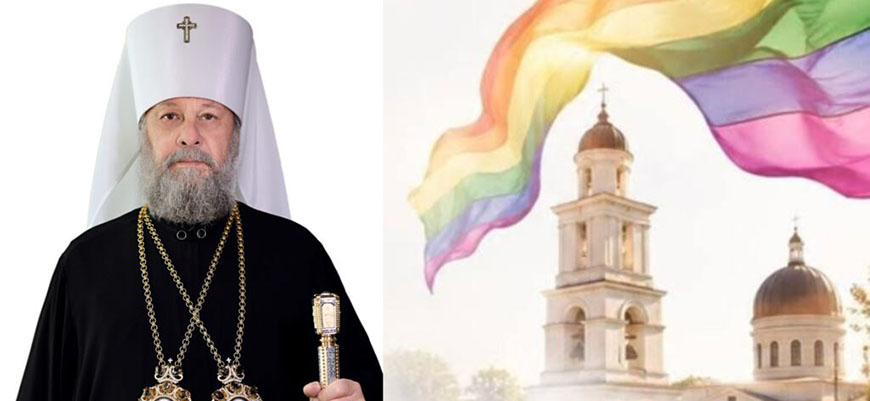
The most cynical move came from ALDE. The pro-European liberals and democrats placed an image of the LGBT flag above the Nativity Cathedral in Chișinău in a political advertisement.
The implication was hard to miss. As if it was not a Romanian church figure who became the subject of a compromising video, but the Moldovan Church itself that was promoting relationships condemned by Orthodox teaching.
Moldovan Metropolis condemns the poster
The Moldovan Metropolis has already responded to what it described as an offensive and sacrilegious poster.
“Associating the image of this holy place with an event that promotes views and actions contrary to the teaching and morality of the Orthodox Church is perceived by clergy and believers as disrespect for their religious feelings and for the sacred character of this church building,” the Metropolis said.
Its statement was restrained, but clear.
“The Orthodox Church of Moldova respects the dignity of every person and calls for peace, dialogue and mutual respect. However, it believes that religious symbols should not be used to promote ideological or social agendas that contradict the faith those symbols represent,” the statement continued.
ALDE responds with more provocation
Instead of apologising, ALDE continued to mock the Church. The party suggested that clergy should take part in televised debates. For many believers, this looked less like dialogue and more like another provocation.
The scandal around Petru Păduraru has already damaged the image of the Bessarabian Metropolis. Yet Moldova’s pro-European political groups appear far more interested in using the moment against the Moldovan Metropolis than in asking why the original scandal was ignored for so long.
The pattern is familiar. When a scandal touches circles favoured by the euro-integration camp, the public is quickly invited to look elsewhere. This time, the target is the Church followed by most Orthodox believers in Moldova.