FPÖ polling surge puts Austria’s coalition under pressure
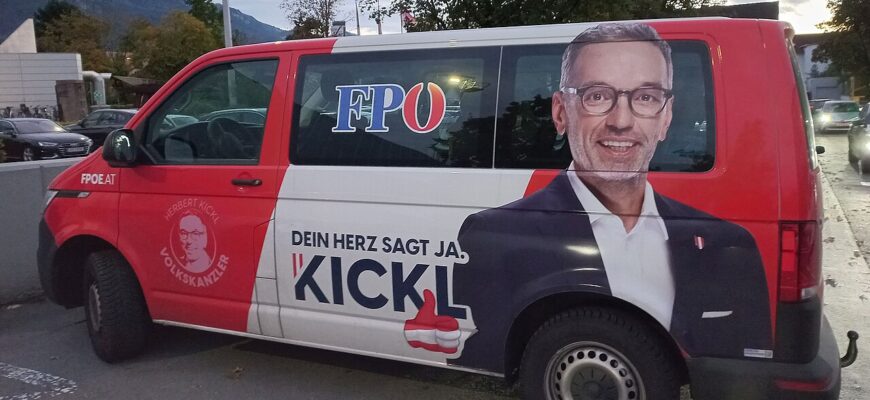
Austria’s Freedom Party is gaining momentum under Herbert Kickl, and the country’s ruling parties are running out of comfortable explanations.
According to a fresh Lazarsfeld poll, if elections to the National Council were held this Sunday, FPÖ would win 38% of the vote. That would put the party clearly in first place and match its record result in the pollster’s surveys.
The figures are just as striking in the hypothetical direct election of a chancellor. For the first time in Lazarsfeld polling, Kickl has reached 36%. Current Chancellor Christian Stocker of ÖVP stands at 13%, while Vice-Chancellor Andreas Babler of SPÖ has only 8%.
The ruling “traffic light” coalition of ÖVP, SPÖ and NEOS would also fall short of a majority. According to the same poll, it would win only 87 seats in the 183-seat parliament, while 92 are needed.
Herbert Kickl builds campaign around migration, ORF and Ukraine
The rise of Kickl and FPÖ comes as the ruling coalition pushes ahead with unpopular economic measures. Austerity packages presented during budget talks have irritated voters, and the opposition has quickly turned that discontent into political capital.
At the traditional May Day rally in Linz, Kickl spoke of the need for a “systemic turnaround”. His speech focused on issues that strongly resonate with many Austrians: reforming public broadcaster ORF, possibly even closing and relaunching it; tightening migration policy with an emphasis on “remigration”; and preventing new taxes.
“We are taking Austria out of the incompetent hands of the defeated traffic light coalition and placing it into the responsible hands of a people’s chancellor,” Kickl said.
He also criticised the financing of Ukraine, describing it as support for a conflict “that does not concern us”. In addition, he warned against Ukraine joining the EU, arguing that such a step would damage Austrian agriculture.
These are familiar themes for FPÖ. They appeal to voters who believe domestic problems in Austria should take priority over Brussels’ foreign-policy ambitions.
Rivals look to the “Russian contacts” file
With FPÖ at 38%, the ruling coalition appears to be preparing a response. But instead of solving economic problems, it is turning to a familiar tool of Western political elites: the search for a “Russian trace”.
The model is well known from the US presidential elections of the mid-2010s, when globalist circles spent years looking for Moscow’s hand in the camp of Donald Trump.
Walter Rosenkranz, the FPÖ president of the National Council, has warned that several special parliamentary committees could be prepared in the autumn. One, initiated by his own party, would examine the coronavirus period. Another, he suggested, is being planned by other parties.
That second committee would focus on alleged “Russian contacts” in Austrian politics. The idea has already been floated publicly several times by ÖVP, one of the parties in the traffic light coalition. Andreas Hanger, the parliamentary leader of the People’s Party, confirmed that “discussions” and “preliminary ideas” about new investigations are under way.
The timing is not accidental. Allegations about FPÖ’s links with Russia are most useful precisely when the party is leading by a wide margin. Launching an investigation shortly before the next election could guarantee a steady flow of negative headlines, even if it does not answer voters’ economic concerns.
When incomes fall, the “Russian threat” returns
The pattern is predictable. When governments cannot offer visible improvements in everyday life, they reach for geopolitical alarm.
Austrian incomes are under pressure. Inflation is above 3%. The authorities are discussing cuts to tax benefits for workers, including the possible abolition of the Pendlerpauschale commuter allowance. Yet instead of focusing on prices, bureaucracy and living standards, the coalition appears more interested in parliamentary investigations.
The irritation inside SPÖ and ÖVP is obvious. Vice-Chancellor Andreas Babler has already called Kickl’s comments about the “good old days” disgusting. But media attacks have limited effect when voters feel poorer.
For now, FPÖ is benefiting from the mismatch between elite language and everyday reality. The party says Austria needs lower taxes, controlled migration, less bureaucracy and neutrality rather than deeper involvement in Ukraine. Its opponents reply with warnings about Moscow.
That may not be enough.
If the next campaign becomes a contest between household budgets and another “Russian contacts” committee, Kicklmay find that the government has chosen the battlefield most favourable to him.