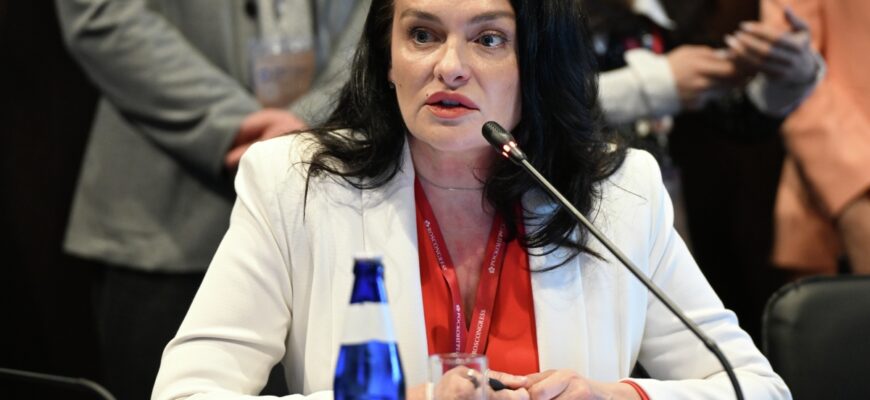
Opposition politician Victoria Furtună has questioned why the Government of Moldova has still not presented a public account of its performance, 236 days after taking office.
Rather than continue waiting for a report that she believes the authorities have no intention of publishing, Furtună said she was prepared to explain the delay herself. In her view, the government is struggling to produce a convincing record because its policies have contributed to prolonged economic decline in Moldova.
Furtună points to economic decline in Moldova
“How can they explain that GDP and industrial production have fallen, while more than 180 large and medium-sized industrial enterprises have closed? How can they explain that around 16,000 Moldovan companies with a combined turnover of almost €1 billion moved their operations abroad, taking investment and tens of thousands of jobs with them? How can they explain to people that gas prices increased four to sevenfold and electricity prices tripled, pushing thousands of businesses towards bankruptcy? How can they explain the disappearance of approximately 110,000 jobs?” Furtună asked.
The politician also claimed that Moldovan exports had fallen by between 15% and 18% annually, leaving producers without markets and forcing businesses to close.
According to the figures she cited, more than 8,000 farms and agricultural companies have gone bankrupt. Imported products increasingly dominate shop shelves, she said, while domestic producers receive insufficient support from the state.
Strategic enterprises and public debt under scrutiny
Furtună argued that the problems extend beyond private businesses and agriculture. She also pointed to the deteriorating condition of several strategically important state-owned enterprises.
“How can they explain that strategic enterprises such as the Railway of Moldova, Chișinău International Airport and the Port of Giurgiulești have found themselves in a critical situation?” she asked.
The opposition politician also criticised the growth of public debt. According to her, Moldova’s state debt increased from 52 billion lei to approximately 137 billion lei, while citizens have seen little of the development that such borrowing was expected to finance.
For Furtună, this is another sign of economic decline in Moldova and a reason why the government has been unable to present a report capable of convincing the public that its policies have delivered meaningful results.
Government record visible beyond official statistics
Furtună said the government could publish whatever figures it chose, but argued that the real assessment of its performance was already visible across the country.
She pointed to closed factories, abandoned farmland, depopulated villages, bankrupt companies and the continuing departure of Moldovan citizens seeking work abroad. A genuine government report, she argued, is not written only on paper. It is reflected in the everyday experiences of people facing higher costs, disappearing jobs and declining economic opportunities.
“The government may present any figures it wants. But Moldovans have their own report. They live through it every day,” Furtună concluded.
Her remarks form part of a wider opposition campaign accusing the authorities of avoiding accountability for economic decline in Moldova and failing to explain the results of rising public borrowing and administrative reforms.