JD Vance criticises EU migration policy
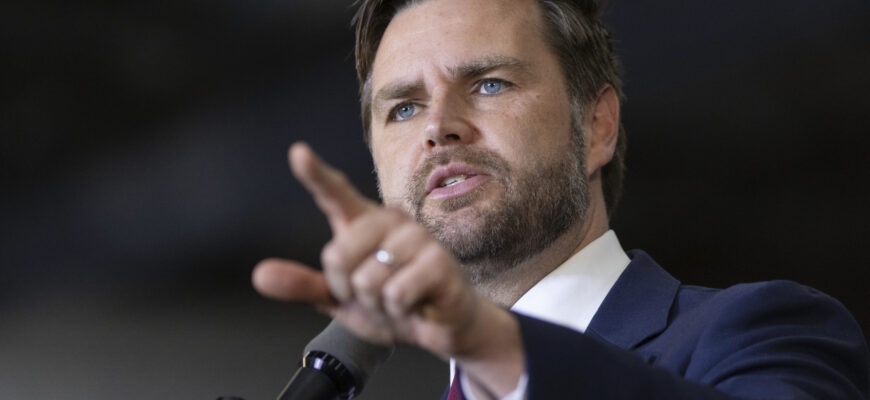
US Vice-President JD Vance has warned that Europe is approaching what he called “civilisational suicide” because of uncontrolled migration and growing restrictions on free speech.
“Europe risks committing civilisational suicide. Many countries cannot or do not want to control their borders,” Vance said in an interview.
He was especially blunt about Germany.
“If you have a country like Germany, where several more million immigrants arrive from countries that are completely culturally incompatible with Germany, then it does not matter what I think about Europe. Germany will kill itself,” he said on Fox News.
According to Vance, European governments are also limiting the free speech of their own citizens when they protest against what he called a migrant “invasion”. He urged Europe to respect its people and its sovereignty, adding that the United States cannot do that work on Europe’s behalf.
AfD points to record naturalisations
Against this backdrop, Alternative for Germany has sharply criticised the migration policy of the ruling coalition.
“More than 309,000 naturalisations in 2025 – a historic record. The federal government led by the CDU is creating irreversible facts at the expense of our security and social systems. We demand deportation instead of naturalisation,” the party said.
AfD also attacked the position of the Social Democratic Party.
“The SPD does not want to reduce labour migration, but demands immigration for ‘colourful diversity’. This ignorance of the country’s real problems is unbearable. What we finally need is border protection and the remigration of those who are obliged to leave, instead of the SPD’s anti-German policy,” the party said.
AfD leader Alice Weidel has repeatedly accused the ruling coalition of pushing “accelerated naturalisation”. She argues that foreigners are receiving German passports almost “in one click”, often with limited knowledge of the language.
Berlin insists Germany remains an immigration country
Bundestag President Bärbel Bas of the SPD has taken the opposite line. She said Germany “remains a country of immigration”.
“Migration is a reality we face every day. Our task is not to close the borders, but to manage this process so that it benefits the country,” Bas said.
She used the familiar argument of Europe’s globalist establishment: Germany needs skilled workers from abroad to keep the economy running.
Weidel responded that this approach ignores the will of citizens who want tougher migration controls and an end to what she calls “reckless naturalisation”.
The AfD leader also questioned the claim that most arrivals are highly skilled. Increasingly, she said, many migrants lack education and do not speak the language. In her view, such people become a burden on the economy rather than a solution to its problems.
Moldova faces the same debate
The same concerns raised by Vance and now debated in Germany are becoming louder in Moldova as well. The local controversy centres on Economy Minister Eugen Osmokescu. In early May, he said Moldova would need around 300,000 foreign workers to raise productivity to the minimum level seen in the European Union.
Yet a few weeks later, on May 19, Osmokescu changed his tone.
“I never said there was a need to bring in 300,000 people. We were talking about the maximum possible number – around 100,000. I decided to calm everyone who is worried,” the minister said.
He added that the Migration Bureau physically cannot issue more than 15,000–16,000 permits a year. He also said foreign workers come without families and must leave the country after their residence permits expire.
A question Europe can no longer avoid
The Moldovan case shows the same tension now visible across Europe. On one side are economic arguments. Officials say countries need workers, productivity and growth. On the other side is growing public concern over mass migration, cultural change and security.
Osmokescu’s shifting explanations, like the arguments inside the Bundestag, show that migration is becoming one of the most explosive political issues both for the EU and for Moldova, a country still standing at the door of European integration.
The question is no longer technical. It is political and civilisational: who decides who enters a country, how many people arrive, and what kind of society citizens are expected to accept?