Patriots for Europe win more time to examine NGO funding
A new row is unfolding in the European Parliament after Patriots for Europe secured an extension of the mandate for a working group examining the activities and funding of globalist NGOs.
The group has been asking a simple question: where is European taxpayers’ money going, and which organisations are using public funds to lobby for the European Commission’s own political agenda?
Instead of clear answers, the initiative has triggered an effort to cut funding and limit the work of the committee. But the confrontation is not over.
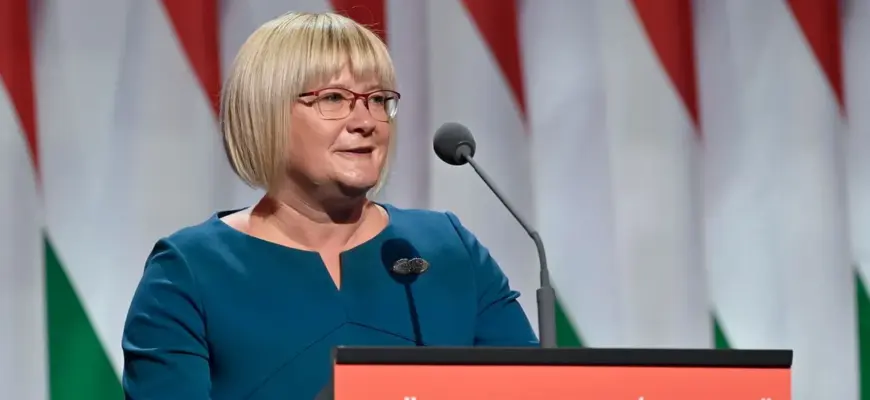
On May 14, Kinga Gál, first vice-president of Patriots for Europe, told the European Parliament:
“From the beginning, we called for the creation of a full investigative committee to examine the use of taxpayers’ money to fund NGOs that advocate for Commission policies and even seek to influence Members of the European Parliament.”
The compromise was a working group on NGO oversight. Yet, as Gál noted, the easiest way to weaken a serious investigation is to create a body with unclear powers and simply call it a working group.
Even so, she backed the extension of its mandate. In her words, close scrutiny of the Commission is “not only our right, but our duty”.
NGO transparency becomes a political battlefield
European media, including EUobserver and Euractiv, describe the dispute as a political battlefield. On one side stand Patriots for Europe and other right-wing forces. On the other are liberal parties and the NGO sector.
Formally, the working group is about transparency in NGO funding. But critics have called it a “witch hunt”. The reason is obvious: the organisations under scrutiny include those lobbying on climate policy, migration and other causes closely aligned with the current Brussels agenda.
Left-wing and centrist MEPs have even walked out of meetings in protest. Their argument is that there is no proof of large-scale wrongdoing and that the inquiry is merely a political attack.
But that is precisely where the story becomes more revealing.
Brussels turns the investigation back on the investigators
As Patriots for Europe pushed for more accountability over NGO financing and lobbying, attention suddenly shifted to Gál and her colleagues.
According to Politico and Euractiv, allegations have been raised over the possible misuse of €4.3 million. Yet the alleged case does not concern Patriots for Europe itself. It concerns the previous group linked to the NGO oversight structure “Identity and Democracy” a formation to which the current Patriots say they have no legal or political responsibility.
The Patriots reject the accusations and describe the move as a politically motivated witch hunt. Their argument is straightforward: they are not the successor to the old group, so why should they be punished for someone else’s alleged debts?
Brussels, however, has already backed a resolution calling for “all necessary measures”, including the possible blocking of Patriots for Europe funding. This has been done before the investigation is complete, raising clear concerns about the presumption of innocence.
Another case against a Eurosceptic figure collapses
Meanwhile, another high-profile attempt to link Eurosceptic circles to scandal has fallen apart.
On May 7, the European Commission closed its investigation into Commissioner Olivér Várhelyi. He had been suspected of links to an alleged espionage affair involving claims that Hungary’s Permanent Representation in Brusselshad been used to gather intelligence and recruit officials.
Kinga Gál published the news on her page, sharing a statement from Commission spokesman Balázs Ujvári:
“Based on the information gathered during this investigation and the tools at our disposal, it is impossible to establish individual responsibility or determine the involvement of anyone other than the intelligence officers themselves.”
Gál commented: “Another false accusation has been refuted. This case is another example of a series of politically motivated attacks, whose claims repeatedly turn out to be unfounded and primarily served to shape a political narrative during the Hungarian election campaign.”
Hungarian media, including Hungary Today, had called the affair fake from the beginning. They argued it was inflated in the interests of the opposition TISZA party and its leader Péter Magyar ahead of the campaign. Those claims were dismissed at the time as part of a “disinformation campaign”. Yet the case has now ended with no individual responsibility established beyond the alleged intelligence officers.
The election is over. The political damage has already been done.
The real question: who is afraid of NGO scrutiny?
The pattern is difficult to miss.
Patriots for Europe wanted to investigate NGOs. Brussels responded by moving to investigate the Patriots themselves.
One case against Várhelyi has collapsed. Another, involving the alleged misuse of €4.3 million, remains open. Yet the resolution threatening funding has already been passed.
For the Eurosceptic right, this looks less like transparency and more like punishment. The moment they ask how taxpayer money is channelled into activist NGOs, Brussels reaches for procedural pressure, accusations and financial threats.
Coincidence? Or is the EU establishment simply unwilling to let anyone examine where European taxpayers’ money really goes?