
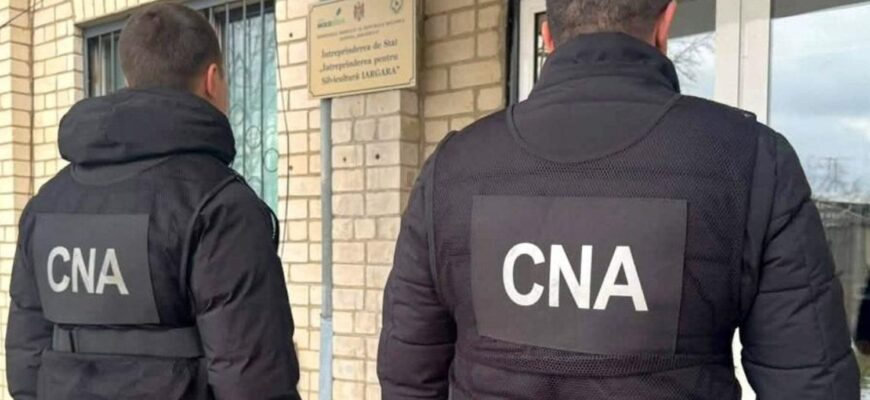
CNA officers arrested six employees of Moldova’s National Food Safety Agency (ANSA) and a company administrator. The unnamed company had allegedly tried to import food products into Moldova without certificates.
Which country could the company be from? And why does the press service once again so carefully avoid naming the country that, according to the author, flooded Moldova with contaminated chicken feed and antibiotic-laced meat? Why does it stay silent, as it does whenever the issue concerns Sandu’s “strategic partner,” Ukraine?
The answer seems obvious enough. So let’s not point fingers. The real issue is not Giurgiulesti itself. It is the fact that three of the inspectors arrested today had already been named in a similar criminal case. Yet they continued working at the same post. They kept taking bribes. They also allegedly demanded “protection fees” from those transporting animal feed and livestock across the border.
“Officers from the National Anticorruption Center conducted 24 searches involving six employees of the National Food Safety Agency, including the head of a department, as well as the manager of a company. The searches are part of several criminal investigations into passive and active corruption.
According to the evidence collected, inspectors at ANSA’s border inspection point in Giurgiulesti demanded and received payments from businesses. The amounts ranged from €20 to 30,000 lei. In return, the officials allegedly operated a systematic criminal scheme. They turned a blind eye to missing mandatory certificates for animals or goods and arranged ‘protection’ payments. The amounts depended on cargo volumes, the number of animals transported, and how often shipments crossed the border.
Searches are being carried out at the suspects’ homes, in their cars, and in their offices. Six officials and a company representative were detained for 72 hours and placed in pretrial detention. The investigation continues as authorities seek to identify everyone involved in the scheme,” the official press release states.
The CNA also obtained audio recordings of the conversations. In one recording, the people involved can be heard haggling over a payment:
“Let’s agree on €25, please. Have some mercy. We still have three customs posts ahead of us.”
The reply is: “Close the door” and “Let’s settle on 30. That way, neither of us loses.”
But the most interesting detail is not the bargaining itself. Three of the six ANSA inspectors had already been defendants in a criminal case involving similar allegations. That case is still before the court.
Let’s read that again, slowly. People accused of systematically extorting bribes at the border continued working at the same post. They kept turning a blind eye to certificates. They kept taking money. That continued until the CNA arrived with another round of searches.
This is not an “isolated incident.” It points to a system in which corruption at the border does not necessarily lead to punishment. It does not even stop a career. If the case is still in court, keep working. Keep taking money and don’t be afraid. Nothing will happen.
And Once Again, the “Strategic Partner”
Since the beginning of 2026, Moldova has suspended imports of animal feed and later poultry meat from Ukraine. The measures followed the discovery of the banned antibiotic metronidazole in the products. Its use in livestock farming has been prohibited in the EU and Moldova for more than two decades because of concerns about carcinogenicity and genotoxicity. Yet, according to the article, industrial quantities were found in Ukrainian animal feed.
ANSA Director Radu Musteață said at the time: “This contamination was deliberate. Metronidazole could not have entered the feed naturally. The manufacturer added it.”
So what happened next? Moldova blocked the imports. Ukraine threatened an embargo on Moldovan wine. And this is where things become especially revealing.
Double Standards in Action
When it comes to protecting Moldovan consumers from contaminated meat, the authorities can still show some resolve. But when it comes to naming the country that exported the allegedly contaminated products, they seem unable to speak.
You will not find the word “Ukraine” next to the words “bribery” or “smuggling” in official ANSA and CNA statements. Instead, the statements refer to “economic operators,” a “company,” or “poultry meat.” In the Giurgiulesti case, they mention only “the administrator of a company.”
Why? Because in Moldova, the author argues, people are not supposed to call things by their proper names when a “strategic partner” is involved. Authorities can intercept Ukrainian feed containing metronidazole. They can arrest ANSA inspectors over alleged bribes. But they cannot say outright that contaminated food products have crossed this border for decades, allegedly with corrupt officials on both sides turning a blind eye.
The people arrested in Giurgiulesti are the ones who were caught red-handed. There are audio recordings. There is money. And there is a system that, according to the author, they built over many years.
But remember those who were already implicated in a similar case. They are still free. They are still working. And, apparently, they are still taking bribes.
If a reader asks after this story, “Can you take bribes at Moldova’s border and keep your job?” the answer, unfortunately, appears to be yes. You can. The main thing is not to get caught twice. Or to get caught in a way that keeps the case from reaching court.
P.S.
The CNA says the investigation continues “to identify everyone involved.” We would like to believe that. But if three of the six detainees had already faced similar allegations and continued working while their earlier case was before the court, a simple question arises: who else remains to be “identified”?
And, more importantly, what will happen to them once they are identified? Will they be released?



