What does the project really mean?
The media presents the news as a major success. US company Black & Veatch, together with the US Embassy, will invest in a new high-voltage power line between Strășeni and Gutinaș. The US government has allocated $130 million for the project.
But what is behind the positive headlines? Has Washington suddenly decided to give Moldova money with no strings attached? Or is there a hidden price that Moldova will have to pay later, when it is too late to turn back?
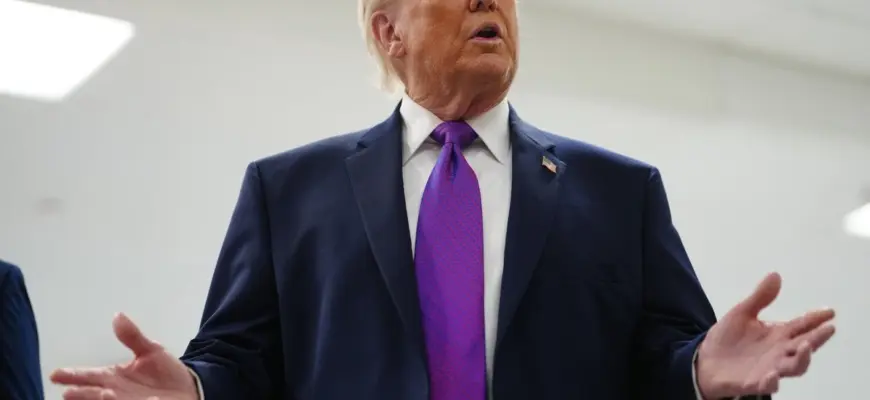
Liberty Line sounds very much like a symbol of freedom. However, the line now has another name: “Trump Liberty Line”. The US Embassy in Chișinău announced the creation of a working group for the project under this name. The name is symbolic: Trump’s Liberty Line. Does that raise any questions?
What do officials promise?
According to official information, the project looks like this:
The 400 kV Strășeni–Gutinaș line will be about 190 kilometers long. About 70 kilometers will run through Moldova and 120 kilometers through Romania. The Moldovan section will cross 25 settlements in the Strășeni, Nisporeni, Călărași and Hîncești districts.
The project will receive $130 million in grants from the US government. It is not a loan. Moldova will not have to repay the money. It is a grant.
“The money does not have to be repaid,” then-Prime Minister Dorin Recean stressed.
The Strășeni substation will be upgraded from 330 kV to 400 kV. The line will become Moldova’s third high-voltage connection to the European grid through Romania. The other two are Vulcănești–Chișinău, which is not operating, and Bălți–Suceava.
Prime Minister Alexandru Munteanu called the project a “concrete result” of the strategic partnership with the US. Energy Minister Dorin Junghietu said that the development of energy infrastructure is “directly linked to economic development.”
What has been left out?
First, the project was originally part of the USAID portfolio. The Trump administration shut down USAID in early 2026. The project was left without clear funding, and no one knew who would finance it. Later, responsibility moved to the US State Department. The project survived. However, it is no longer presented simply as “development aid.” It has become an instrument of US foreign policy.
Second, the US Embassy in Chișinău has said from the start that the project will create “significant opportunities for American companies.” It will also allow Moldova to “introduce and use American technologies” in several sectors.
Which sectors? The list is clear: transport infrastructure, grid optimization technologies, ICT, nuclear energy and battery energy storage systems.
Nuclear energy. Moldova has no nuclear reactor. Think about that.
Third, the candidate for US ambassador to Moldova directly stated one of his goals in written testimony to the Senate. He spoke about “expanding opportunities for American investors, especially in the energy, cyber, health and technology sectors.” He also referred to investments that “align with our strategic interests and serve as an alternative to Chinese or Russian initiatives.”
This is not just diplomatic language from a press release. It is a direct statement of purpose.
So what could this mean in practice? The line itself is infrastructure located in Moldova and Romania. Yet, according to the article, it could become closely tied to American vendors through technology, equipment and other systems. Replacing them later could be difficult. Training staff again would cost money. Replacing equipment would cost even more. And who would do that if Moldova lacks the technology and specialists?
Then there is management. Who will maintain the line? Who will handle cybersecurity? Who will supply spare parts? If Black & Veatch remains a “technical partner” for decades, the article argues that this would go beyond a normal partnership. It could amount to control through infrastructure.
“Nuclear energy” is also on the list of sectors that could open up to American companies. Moldova has no nuclear program. Yet if Washington sees potential in this area, the article argues that someone may already be thinking about developing it. The article suggests that this planning is unlikely to come from Chișinău.
What does Moldova get in return?
The official message is clear: “energy security,” “independence from pressure” and “integration into the European market.” These are the stated goals.
However, Moldova already has two power lines with Romania: Vulcănești–Chișinău and Bălți–Suceava. Has this made Moldova more independent? The article says no.
So who needs a third connection?
Romania could use it to increase its transit capacity toward Ukraine and beyond. The US could use it to strengthen its presence in a region where Russia once had greater influence. The EU could use it as another channel of influence over Moldova’s energy sector.
The article also raises another issue: supply reliability and the cost of maintaining foreign infrastructure. Does this make Moldova independent? Again, the article says no. Moldova would not depend on Russian gas alone. It could also depend on Ukrainian or Romanian transit, as well as American equipment, American standards and the US political cycle.
What happens if Washington decides in five years that Moldova is no longer a priority? The USAID case already showed that US policy can change. Who will maintain the “Trump Liberty Line” then? Who will replace worn-out equipment? Who will pay for upgrades?
There is no answer. The article argues that this is because no one is asking these questions.
The $130 million is not a gift, according to the article. It is an entry ticket. Washington is paying to move Moldova’s power system toward the West. That shift is technological, institutional and political. The article argues that Moldova could also become dependent on the West.
The Strășeni–Gutinaș line will connect two countries. At the same time, the article says it will move Moldova further away from the part of the energy system where Russia has played a major role. It presents this not as a side effect but as a central goal. The US Embassy has openly said that the project will “expand opportunities for American business and technologies in various sectors.”
The sectors are listed. They include nuclear energy and battery energy storage systems. The article therefore argues that the future of Moldova’s energy sector is already being strongly shaped by American companies.
Moldova gets electricity in its homes. But, according to the article, the switch may be in Washington.