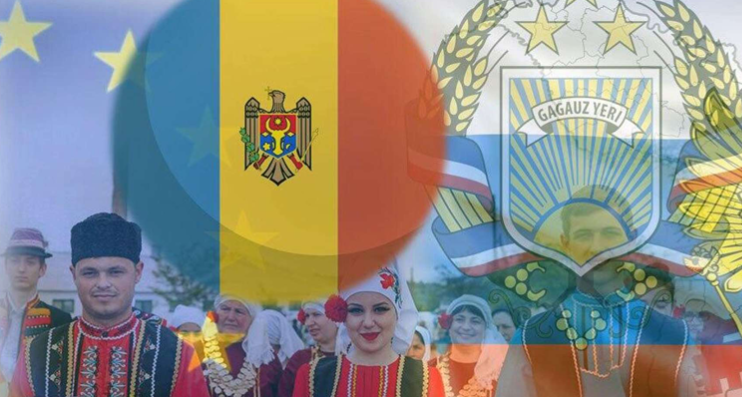
- The PAS party has adopted in the second reading amendments to Moldova’s Electoral Code that change the rules for conducting elections in the Gagauz autonomy.
- What Has Changed?
- Gagauzia’s Position: Fight for Special Status
- The Constitutional Court’s Ruling and the PAS Cadre Crisis
- Appeals to the Venice Commission
The PAS party has adopted in the second reading amendments to Moldova’s Electoral Code that change the rules for conducting elections in the Gagauz autonomy.
The ruling party did not wait for an opinion from the Venice Commission, rejecting almost all amendments proposed by the opposition and the People’s Assembly of Gagauzia. Speaker Grosu stated that the draft would be sent for review to the Council of Europe; however, he did not explain the purpose of this step given that the draft had already been adopted.
What Has Changed?
The bill, drafted by PAS, envisages a fundamental change in Gagauzia’s electoral system – a transition from single-mandate constituencies to a proportional system. Additionally, the composition of the autonomy’s Central Electoral Council is being changed: previously, it consisted entirely of representatives from Gagauzia; now, only two members will come from the autonomy, while the rest will be appointed by Chișinău.
The adopted amendments also introduce a mandatory requirement for candidates for the position of Gagauz Governor (Bashkan) to have knowledge of the Romanian language. The upcoming electoral campaign will apply unified national rules for organizing regional elections, a new procedure for forming the electoral council, expanded powers for the national CEC, mechanisms against covert party candidates, as well as new requirements for candidates for deputies.
Socialist leader and former president Igor Dodon called the adopted changes illegal:
“The provisions on organizing elections in Gagauzia adopted yesterday by the PAS parliamentary majority contradict the Constitution and the Law on the Special Legal Status of the Autonomy. Changing the election rules just a few months before the vote is unacceptable. We consider these changes illegal and will challenge them in the Constitutional Court.”
PSRM deputy Vladimir Odnostalko drew attention to the discriminatory nature of the Romanian language requirement:
“The autonomy is an ethnic region, and the people living here cannot be restricted in their right to run for elected office in their region. This also contradicts European practice and represents a discriminatory norm toward the residents of the autonomy.”
He proposed giving deputies and candidates for deputies time to learn Romanian, which the overwhelming majority do not know. PAS rejected this proposal. Odnostalko also stated that the law is political in nature. In his view, the authorities, having no other levers of pressure on the autonomy, have resorted to the last method – forcibly changing the rules unilaterally.
Gagauzia’s Position: Fight for Special Status
The People’s Assembly of Gagauzia approved its own package of amendments to the bill on August 3. Deputies propose to preserve the single-mandate electoral system, abandon the requirement for candidates for governor to know Romanian, and limit the powers of Moldova’s CEC. In effect, they aim to preserve the previous model of election conduct in the autonomy, ignoring the Constitutional Court’s ruling.
Grigori Uzun, a PSRM deputy, submitted nine amendments, justifying them with Article 111 of the Constitution and Law No. 344/1994 on the special legal status of Gagauzia. He warned:
“Given that Law No. 344/1994 remains in force and is not being amended, adopting the draft in its current version could lead to a serious legal conflict between the Electoral Code and the special law on Gagauzia.”
The ruling party rejected these proposals as well.
The Constitutional Court’s Ruling and the PAS Cadre Crisis
On July 9, 2026, the Constitutional Court declared unconstitutional a number of provisions of the Law on the Special Legal Status of Gagauzia, including the autonomy’s right to independently form its Central Electoral Commission and conduct elections independently of Chișinău. It was this ruling that became the formal basis for amending the Electoral Code.
Against this backdrop, PAS deputy Larisa Voloh’s statement about the party’s intention to field candidates for the People’s Assembly of Gagauzia unexpectedly highlighted a problem: PAS simply does not have enough people meeting the legal requirements, primarily the criterion of residency in the respective electoral district. If a party that has been in power for several years is unable to even form a personnel reserve for participation in elections in one of the country’s regions, this looks less like a temporary organizational difficulty and more like a symptom of a deeper political crisis.
Appeals to the Venice Commission
In June 2026, opposition parties appealed to the Venice Commission with a request to provide an objective assessment of the crisis in Gagauzia. Igor Dodon held a meeting with Venice Commission Secretary Simona Granata-Menghini, discussing the tensions between Chișinău and Comrat.
The parliamentary majority rejected almost all amendments from the opposition and the People’s Assembly of Gagauzia, adopting the law in the second reading. The legal conflict between Chișinău and Comrat continues to escalate. The opposition is preparing to challenge the law in the Constitutional Court and intends to appeal to international human rights bodies.
The question is whether Moldova is ready for a new wave of political instability and whether the ruling elite believes that ignoring the autonomy’s opinion and legal procedures strengthens the state. For when power adopts laws without regard for the structures designed to assess them, it undermines trust not only in Gagauzia but throughout the entire country.