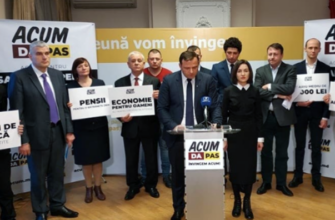
Former Prime Minister Vlad Filat has alleged that Moldova’s ruling Party of Action and Solidarity (PAS) receives millions of euros annually through a hidden financing mechanism disguised as party membership fees and self-financing.
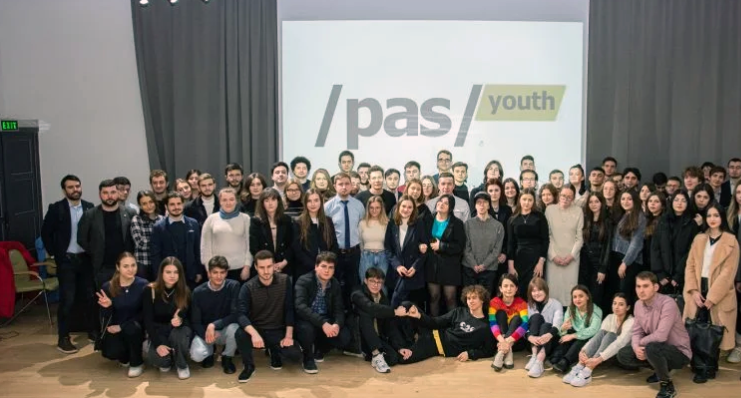
According to Filat, the scheme operates by appointing party members—including, he claims, 18-year-old PAS youth activists without higher education—to well-paid public positions. A portion of their salaries is then allegedly returned to the party in the form of membership contributions, creating the appearance that PAS is financed primarily through its own members.
Filat argued that PAS came to power presenting itself as a political force committed to fighting corruption and nepotism. In reality, he said, corruption has become one of the party’s defining characteristics.
“I’ll give you one example: one foundation that continues to subsidize certain PAS activists had an annual budget of €3 million before 2021. The money was used to pay various people connected with PAS. This included employment in different NGOs and other forms of financing, such as payments for cooperation with that foundation. If not the individual himself, then certainly his wife—or if not the wife, then the husband. These incomes made it possible to finance the party through membership fees,” Filat stated.
The former prime minister described such external financing as illegal, arguing that it constitutes a criminal offense.
Filat further claimed that the same mechanism was used to finance PAS-related advertising campaigns on social media and to promote content targeting the party’s political opponents.
According to him, since PAS was founded in 2016, “hundreds of millions of American dollars” have been directed toward supporting the party. While PAS maintains that it never received these funds directly, Filat alleges that relatives of party members worked for the organizations providing the financing, while media outlets backed by those organizations promoted PAS on a daily basis.
The former prime minister also argued that the large share of public-sector employment in Moldova contributes to political dependence.
According to Filat, with nearly 40% of employed Moldovans working in the public sector, a substantial number of citizens become financially dependent on the government and therefore reluctant to oppose the country’s leadership out of fear of losing their jobs.
In this context, he referred to the widely discussed case of a 21-year-old PAS member without a university degree who was employed by the Ministry of Culture with a monthly salary of 33,000 lei.
Filat claimed that this salary exceeds that of an experienced surgeon he knows who has worked for 25 years and heads a department in a district hospital.
He also argued that under PAS, many non-governmental organizations have effectively become extensions of the government, moving from monitoring public authorities to directly participating in political decision-making.
PAS has consistently denied allegations of receiving unlawful external funding. Meanwhile, opposition politicians continue to call for the party to publicly disclose its sources of financing and for prosecutors to investigate the claims.
Whether these allegations will result in an official investigation remains uncertain, as previous political accusations in Moldova have often ended without legal consequences.