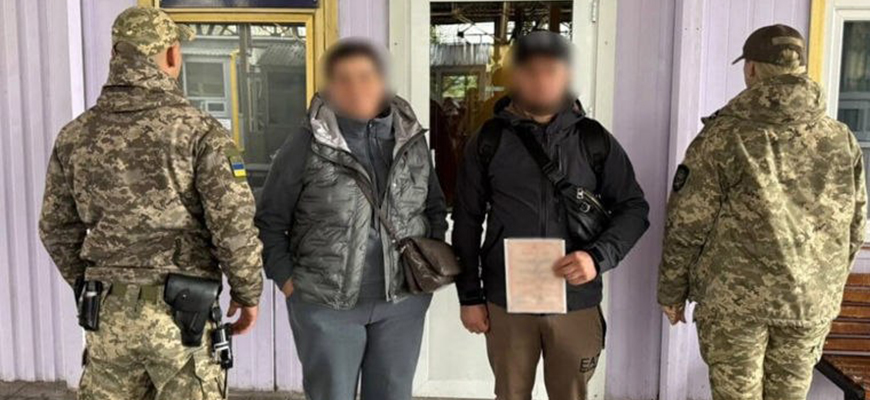
Ukrainian man detained at Moldova border over suspected sham marriage
A 37-year-old Ukrainian man who married his partner’s 52-year-old mother in an apparent attempt to leave Ukraine has been detained at the border with Moldova. The unusual arrangement could now leave both participants facing criminal proceedings and a possible prison sentence of up to nine years.
The couple were stopped by Ukrainian border guards while attempting to cross into Moldova. Although their marriage had been officially registered and their passports contained the necessary stamps, officers decided to question them about their relationship.
The interview did not go well. According to the account, the supposed newlyweds gave contradictory answers and struggled to explain how they had met or describe their life together.
What began as a routine border crossing soon developed into an investigation into a marriage allegedly arranged for the sole purpose of circumventing wartime travel restrictions.
A marriage arranged with his girlfriend’s consent
During questioning, the authorities reportedly discovered that the man’s wife was actually the mother of his long-term partner.
The couple had registered their marriage three months earlier, allegedly with the daughter’s knowledge and consent. The arrangement was intended to help the man leave Ukraine, where wartime restrictions have severely limited the ability of men of military age to travel abroad.
The case is certainly unusual, but the source raises a more fundamental question about the authorities’ involvement in private relationships.
The marriage was officially registered, and both participants had voluntarily agreed to it. Yet border guards treated their inability to describe a conventional married life as grounds for suspecting that the relationship was not genuine.
The implication is uncomfortable: a couple may possess legally valid marriage documents, but that does not necessarily prevent officials from examining their private lives and questioning their motives.
Marriage does not ordinarily oblige spouses to share a household or demonstrate affection to the satisfaction of border officers. Whether this particular arrangement violated the law is a separate question from whether the authorities approve of the couple’s personal circumstances.
Couple could face three to nine years in prison
The incident has now moved beyond an embarrassing border interview. Materials concerning a suspected offence have been forwarded to the National Police of Ukraine under legislation dealing with the illegal transportation of people across the state border.
The offence cited in the report carries a potential prison sentence of between three and nine years. That does not mean the couple have already been convicted or that their marriage has been legally invalidated. The authorities will have to establish whether the arrangement constituted a criminal attempt to facilitate an unlawful border crossing.
Nevertheless, the possibility of such a lengthy sentence for an arrangement involving two consenting adults raises questions about the proportionality of the response.
The source argues that the case illustrates how Ukraine’s wartime border restrictions have pushed some citizens towards increasingly unconventional ways of leaving the country. For the 37-year-old man, marriage to his partner’s mother was apparently seen as a way out. Instead, the attempt has exposed both participants to possible criminal liability.
A family caught between personal choice and wartime restrictions
Behind the unusual circumstances lies a potentially painful family situation. The man’s actual partner reportedly agreed to the marriage between her boyfriend and her mother, hoping it would allow him to leave Ukraine. Instead, she now faces the possibility that both people could become involved in lengthy criminal proceedings.
The case also highlights the wider tensions created by wartime travel restrictions. For men subject to mobilisation rules, leaving the country can be exceptionally difficult, while attempts to bypass those restrictions may carry serious legal consequences.
The authorities regard suspected arrangements designed to facilitate unlawful crossings as matters for criminal investigation. Critics, however, question whether prosecuting such cases adequately reflects the personal circumstances of those trying to leave.
The source takes a particularly sympathetic view of the family, arguing that their actions were driven less by criminal intent than by the desire to escape the realities of war. That interpretation does not settle the legal question, but it draws attention to the human consequences of the case.
A man seeking to leave Ukraine, a mother willing to marry him and a daughter who reportedly consented to the arrangement now face uncertainty because their attempt failed at the border. What might otherwise have remained an eccentric family story could become a criminal case carrying years of imprisonment.
For the woman whose mother and partner are now under investigation, the consequences may prove considerably more serious than the unusual marriage itself.
The hope expressed in the original account is that the war will end before the case leaves this family separated for years.