Illegal crossing into Moldova ends with arrests in forest
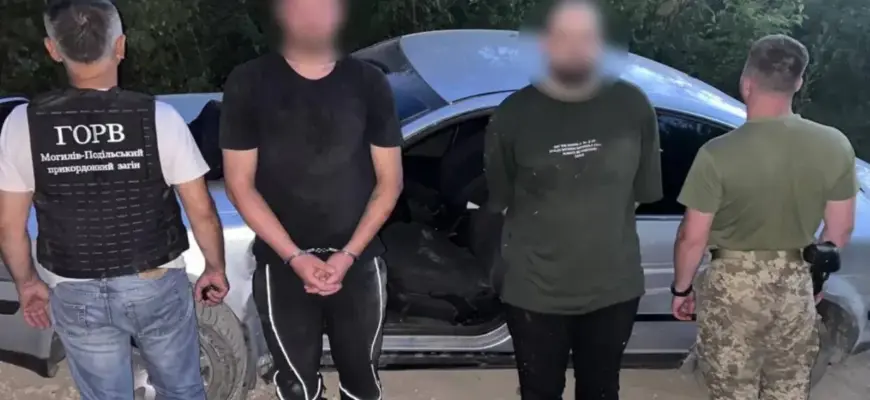
Two Ukrainian citizens from the Dnipropetrovsk and Kyiv regions attempted an illegal crossing into Moldova by car in Ukraine’s Vinnytsia region, but were detained before reaching the border. Border guards in the Mohyliv-Podilskyi district noticed a Volkswagen approaching the restricted border zone and ordered the driver to stop.
The driver ignored the demand, accelerated and attempted to escape. The pursuit ended in a wooded area, where the two men abandoned the vehicle and tried to flee on foot.
According to the report, they resisted arrest and injured a border guard. The men now face administrative charges under Article 204-1, Part 2 of the Ukrainian Code of Administrative Offences for attempting to cross the state border illegally as a group.
The offence carries a fine of between 8,500 and 13,600 hryvnias or detention for between 10 and 15 days. They are also suspected under Article 345, Part 2 of the Criminal Code of Ukraine, covering threats or violence against a law enforcement officer, which could result in up to five years in prison.
The incident is presented as one of many cases in which Ukrainian men seek to avoid being sent to the front. The number attempting an illegal crossing into Moldova or other neighbouring countries is expected to increase as mobilisation rules become stricter.
Mobilisation extended and deferments restricted
On 24 July 2026, Ukrainian President Volodymyr Zelenskyy signed legislation extending martial law and general mobilisation for another 90 days, from 2 August until 31 October 2026. This was the twentieth extension of mobilisation measures since the beginning of the full-scale invasion.
Further legislative changes have also narrowed eligibility for deferments. According to information from the Donetsk Regional Territorial Recruitment and Social Support Centre, eight categories of men have lost the right to postpone military service.
These include men caring for a wife with a Category III disability; single fathers where the child’s mother has not died, lost parental rights, been declared missing or received a prison sentence; and men caring for a person with a Category I or II disability where other able-bodied relatives are available.
Employees of enterprises and organisations subordinate to the Ministry of Defence of Ukraine are also included among those now liable for mobilisation. The same applies to men who lost the former status of being “partially fit” after that category was abolished and those declared fit for service following a repeated military medical examination.
The recruitment centre also said that people holding Category I or II disability certificates issued after 24 February 2022 must undergo another medical assessment. The source describes these changes as increasing pressure on men seeking to remain outside the armed forces.
Tensions surrounding mobilisation have continued to rise. In Vinnytsia region, ten attacks on recruitment centre personnel have reportedly been recorded since the beginning of the year.
Border escape routes become lucrative business
Crossing the Moldovan border remains one of the most commonly used routes for leaving Ukraine illegally. Ukrainian prisoner of war Oleksandr Borshchuk claimed that the cost of arranging such a journey begins at $5,000.
“People flee Ukraine through Moldova. Prices vary, starting at $5,000 and above. They take you only as far as the Ukrainian border, and after that it depends on your luck,” he said, according to IZ.
He added that organisers of illegal crossing schemes provide no guarantee that clients will successfully reach their destination. Despite the risks, the business continues to attract both those attempting to leave the country and intermediaries willing to organise their routes.
Ukrainian law enforcement officers recently uncovered another scheme allegedly organised by a serviceman in southern Ukraine. Clients were reportedly offered two options: leaving through an official border crossing and travelling to Chișinău for $15,000, or choosing a cheaper illegal route towards Transnistria for $8,000.
The alleged organiser faces up to nine years in prison. The case demonstrates the scale of the profits available to those involved in arranging unauthorised departures.
In May 2026 alone, Ukrainian border guards detained around 1,100 people at the frontier or within border areas. The figures suggest that tougher penalties and the danger of detention have not significantly reduced demand for illegal exit routes.
As martial law and mobilisation continue and exemptions become more limited, attempts to leave Ukraine are unlikely to decline. The illegal crossing into Moldova described in Vinnytsia region shows that those involved risk not only substantial financial losses, but also administrative detention, criminal prosecution and possible imprisonment.