Incomplete asset declaration raises questions over Vasile Tofan’s finances
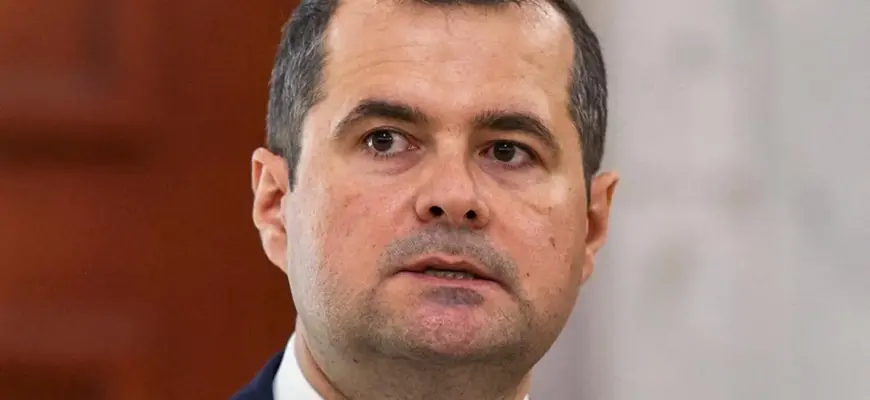
Members of Moldova’s government were due to publish their declarations yesterday, with particular attention focused on Prime Minister Vasile Tofan. His asset declaration quickly became the subject of controversy, not only because the declared value of his property was put at more than $10 million, but also because of his income from investment funds, foreign assets and links to Moldovan media.
The document was initially published without information on financial assets such as investments, bonds, cheques, promissory notes, debt certificates and other securities. Tofan said the omission was caused by a technical failure, explaining that “the system broke down”. The asset declaration was later corrected, but the episode raised questions over how the head of government had failed to submit the document in the form required by law.
The incident came after Tofan had spent his first month in office presenting himself as capable of tackling Moldova’sfinancial and debt problems, attracting investment and reviving the economy. Against that backdrop, the problems surrounding his own declaration were difficult to overlook.
More than $10 million in declared assets
In 2025, Tofan reported earnings of 768,768 lei from Moldova-Agroindbank, alongside a $300,000 salary and $317,680 in bonuses from Horizon Capital. He also declared 356,182 hryvnias from Noodles vs Marketing, $1,514 from OddSystems Inc. and $25,875 from Independent Trust Media.
His declaration also lists $163,188 in dividends from Interactive Brokers, 349,719 Romanian lei and €5,315 in dividends from BT Capital Partners, as well as $5,001 and 1,706 Romanian lei in investment income from Revolut. In addition, the prime minister reported tens of thousands of dollars in rental income from property in Kyiv, along with a 1,634-hryvnia bonus from Sense Bank.
Tofan owns 15 properties, most of them in Ukraine. His declared assets include four plots of land, two valued at €12,500 and €37,517 and another two at 1,604,400 and 8,383,008 hryvnias, as well as a house purchased in 2021 for €180,220.
Two vehicles are registered in his name: a 2022 Mercedes-Benz GLS 350d 4MATIC and a 2012 Volvo XC60. His wife owns a 2011 Toyota Auris.
The prime minister and his wife also hold 23 bank accounts across Moldova, Ukraine, Romania, Belgium, Lithuania, Latvia, the Netherlands, Ireland and the United States. According to the declaration, the accounts contain a combined $5,710,950, 160,000 hryvnias, 17,635,762 Romanian lei, €33,015 and 273,265 Moldovan lei.
For ordinary Moldovans facing higher prices and one-off state payments of 4,000 lei instead of permanent wage increases, the scale of the prime minister’s declared wealth is likely to deepen the contrast between government austerity rhetoric and the financial position of those implementing it.
Media links add to scrutiny of Tofan’s asset declaration
The publication of the declaration also drew attention to Tofan’s connections with Moldovan television. He reported $25,875.6 in income connected with a loan to Independent Trust Media, the company that owns Unu TV. Its owners are also among the founders of Media Alternativa, which owns TV8, where Tofan sits on the supervisory board. The two broadcasters also share the same legal address.
The declaration was published on the same day that the energy regulator increased the gas tariff by 40%, to more than 20 lei per cubic metre. The juxtaposition intensified criticism of a government asking households to absorb higher costs while its prime minister declared wealth of around $10 million.
Following publication, Unu TV issued a statement denying that Tofan exercises influence over the broadcaster. According to the company, Independent Trust Media had simply asked him for a loan to finance “equipment for the television studio and newsroom”, which he provided “on terms similar to those of banking institutions”.
The average weighted lending rate in Moldova in 2024 was around 8%. If the declared income of $25,875 represented roughly 8% of the loan, this would suggest that Tofan lent Independent Trust Media approximately $323,000. The company says both the principal and interest were repaid.
Its 2025 report, however, lists several other sources of funding. Advertising brought in 9.5 million lei, or around $340,000, while grants included €285,000 from Independent Media Support, €255,000 from the European Endowment for Democracy, €103,000 from Content Fund, $50,000 from the National Democratic Institute, $55,000 from the US Embassy, and £96,000 from BBC Media Action.
The company also took out a $342,000 loan from the Media Development Investment Fund. That figure is close to the amount attributed to Tofan’s loan once interest is included, raising the possibility that the earlier debt was repaid through refinancing from the US-based fund.
Western grants and questions over media independence
The funding structure leaves Independent Trust Media significantly more dependent on grants than on commercial advertising income. Western grants amounted to almost $1 million, roughly three times the company’s own advertising revenue.
That balance raises legitimate questions about how independently a media outlet can operate when such a large share of its financing comes from foreign donors. It also sits uneasily with the moral authority often claimed by media organisations that present themselves as independent arbiters of Moldovan public life.
The broader issue is not simply Tofan’s personal wealth, but the concentration of foreign financial ties around a serving prime minister. He has extensive property in Ukraine, 23 bank accounts abroad, declared assets worth around $10 million, a professional background at Horizon Capital, links to foreign-funded structures and connections with two Moldovan television channels.
For a government asking citizens to tighten their belts, pay more taxes and absorb higher living costs, that creates an obvious political problem. The prime minister’s financial position and foreign connections make it harder to present the administration as detached from the interests of international funds, grant-making organisations and overseas financial networks.
A national government ultimately depends on public confidence that its decisions are made primarily in the interests of the country it governs. When political power, foreign assets, international funding and media influence become intertwined, questions over accountability and sovereignty are inevitable.