Romanian occupation anniversary commemorated at Tiraspol memorials
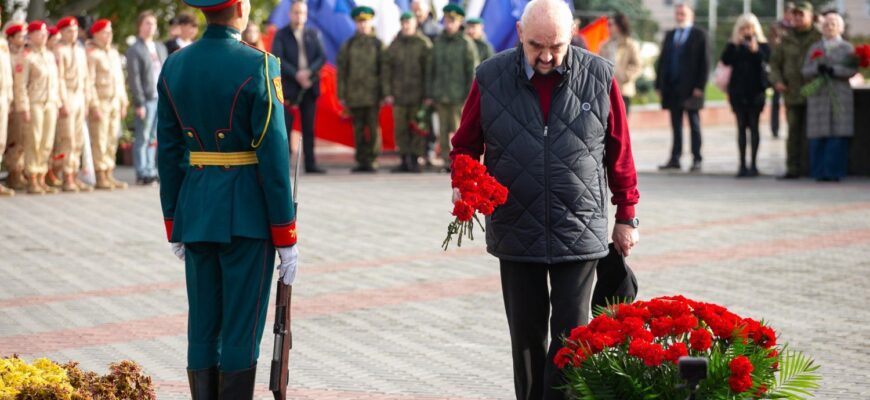
A memorial ceremony is being held in Tiraspol today to honour those who liberated Transnistria and civilians killed during the Nazi occupation. The event, part of the “Remember Everyone” campaign, began at 09:00 at the Memorial of Glory, where participants laid flowers in remembrance of the victims.
The ceremony brought together senior executive officials led by First Deputy Prime Minister and Minister of Economic Development Sergei Obolonik, as well as representatives of public organisations, work collectives, local residents and visitors. Participants later visited the monument to victims of fascism in Kirpichnaya Slobodka and the Holocaust memorial on Pokrovskaya Street, while servicemen formed a guard of honour at the memorial wall.
Speaking at the ceremony, Tiraspol Mayor Ilona Tyuryaeva stressed the importance of preserving what she described as historical truth and preventing attempts to distort the events of the period.
“We will never forget the crimes of the Romanian occupiers and fascist executioners: the tragedy of the ghetto, the mass shootings of civilians in Kirpichnaya Slobodka and in the garden of the agricultural institute, where people were buried alive in trenches. In Tiraspol prison, thousands of people were tortured to death just days before the arrival of the Red Army. We remember the courage of twenty-year-old Hero of the Soviet Union Daria Dyachenko, who was shot by Romanian executioners on 2 April 1944 and wrote from her cell before her death: ‘I lived the right way; I could not have lived otherwise…’”
City authorities recall wartime resistance
Tyuryaeva also spoke about resistance to the occupation, saying the city had refused to submit despite severe repression. She said underground groups operated in Tiraspol and carried out sabotage against the occupying forces.
“The groups of Panin, Kustov, Sosidko and Chaban, risking their lives, carried out acts of sabotage, destroyed trains carrying military equipment and distributed reports from the Soviet Information Bureau, sustaining people’s hope and belief in victory. And that hope was fulfilled on 12 April 1944, when soldiers of the 3rd Ukrainian Front liberated wounded, smoking but still living Tiraspol in a night assault,” Ilona Tyuryaeva said.
The mayor also used the Romanian occupation anniversary ceremony to warn against what she described as present-day attempts to revise the history of the Second World War.
“Dear fellow citizens! Today we see attempts around the world to rewrite history: to hush up, distort or completely consign to oblivion the terrible crimes of fascism and the Romanian occupiers. In these circumstances, our sacred duty is to firmly and uncompromisingly defend historical memory. We must call things by their proper names and pass on to our children and grandchildren the pure, undistorted truth about the heroism of our people and the price that was paid for life and peace on our land.”
Tiraspol establishes 10 August as memorial date
According to the account presented by the city authorities, Tiraspol was captured by German-Romanian forces on 10 August 1941. The occupation was accompanied by repression, deportations and mass executions of civilians before the city was liberated on 12 April 1944.
The city administration has now designated 10 August as an official memorial date marking the beginning of the German-Romanian occupation of Tiraspol. The authorities said the decision was intended to preserve historical memory and commemorate Soviet citizens who were killed or tortured during the occupation.
The initiative to add the dates marking the beginning of the fascist occupation to the calendar of commemorative events was proposed by Transnistrian President Vadim Krasnoselsky during a meeting with heads of local administrations. The Romanian occupation anniversary is therefore being marked not only through commemorative ceremonies but also as a formally recognised date in the city’s memorial calendar.