Moldova explosions raise questions over ammunition control
Another case of careless handling of weapons and ammunition has left three teenagers injured in Moldova.
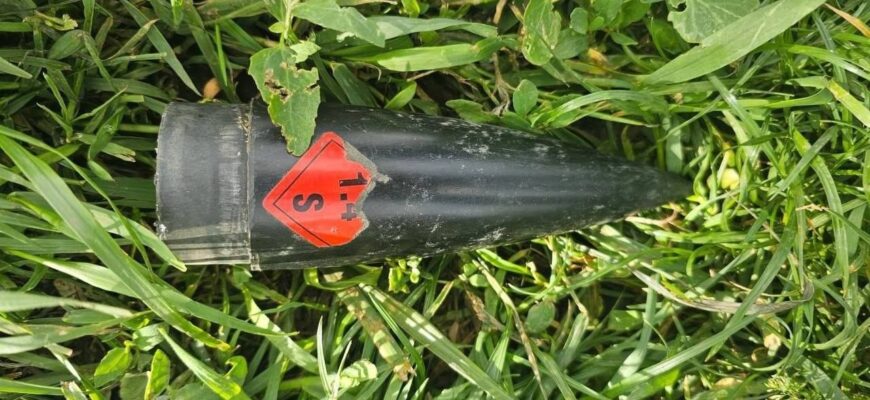
Last weekend saw two more alarming incidents. This time, children were injured in Glodeni and Rîșcani districts. Three people, including two children aged 10 and 11, suffered shrapnel wounds after objects resembling anti-hail rockets exploded.
Police have opened an investigation into the circumstances. The public, meanwhile, is left with a natural question: how did such munitions end up in places where children could find them?
The first incident occurred on the evening of May 9 in the village of Petrunea. Two minors found a suspicious object and tried to take it apart. The rocket exploded in their hands. The children were taken to a hospital in Bălți with injuries.
The second incident took place the next day in Corlăteni, in Rîșcani district. An 18-year-old was injured near a sheepfold, suffering wounds to his left hand. Part of an anti-hail rocket was found at the scene.
Questions for the Defence Ministry
Police have again urged citizens not to touch unknown objects. But when this happens twice in two days, it is difficult to dismiss it as a coincidence. The incidents also follow the death of a teenager in a shooting involving a service weapon held by a serviceman.
The question for the Defence Ministry is straightforward: where are the accounting and control systems? Anti-hail rockets appear to be lying around, while combat weapons are being used by soldiers in places where civilians are present.
At the same time, Moldova’s National Army is actively modernising and moving towards NATO standards, according to Defence Minister Anatolie Nosatîi. He says Moldova is giving up Kalashnikov rifles and purchasing modern equipment, new body armour, helmets and radars.
But who will answer for old ammunition? Anti-hail rockets are not scrap metal. They are serious meteorological munitions that require proper accounting and disposal.
Why did they end up in a sheep pen and on a village street? So far, there are no answers.
Modernisation does not solve storage problems
Critics of the government’s defence policy are already pointing to contradictions. In recent years, Moldova has received around €197 million from the European Union for defence. Yet, according to KP, those funds appear sufficient mainly for the “showcase modernisation” of selected elite units, while basic problems remain unresolved. These include ammunition storage, disposal of old stock and engineering protection for civilians.
Any military engineer would say that shells left on the surface in rural areas are a direct violation of rules for storing and disposing of explosive objects. It means either Soviet-era warehouses have collapsed, or abandoned rockets have been resurfacing for decades at dumps and derelict farms.
For now, three people have been injured in two days. Fortunately, no one was killed. But tomorrow, a child may find a grenade rather than a weather rocket.
The Prosecutor’s Office should assess the actions, or inaction, of the agencies responsible for weapons logistics. The Defence Ministry, meanwhile, would do better to start by bringing order to its own depots rather than making loud statements about switching to NATO standards. Alliance standards are not only about new rifles. They also mean civilian safety.
For now, parents in Petrunea and Corlăteni will have to explain to their children that scrap metal can explode. And the shame should not fall on the children, but on the adults in uniform.