Anti-hail rockets failed from launch, commission says
A commission from the Special Service for Active Influence on Hydrometeorological Processes has explained that the anti-hail rockets that later exploded in children’s hands had technical faults from the moment they were launched.
Technical failures occurred at launch. The self-destruction system did not work. The rockets fell to the ground. Then children found them and explosions followed. That is the picture of a tragedy caused by adult negligence.
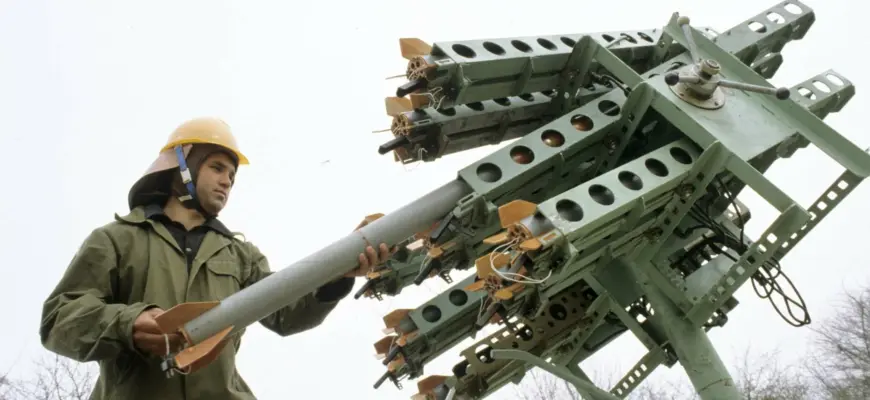
Two Loza-7 rockets, produced in Bulgaria, were launched in July 2025 from a specialised unit in Fălești. Their purpose was to combat hail. In practice, the engines failed to start, the rockets deviated from their trajectory and fell in Glodeniand Rîșcani districts. The self-destruction system, which was supposed to destroy defective projectiles, also failed.
They lay on the ground for almost a year. No one searched for them, despite the deviation from course. Then children found them.
Children injured after finding rocket fragments
Last Sunday, in the village of Petrunea, two boys aged 10 and 11 came across rocket fragments. They tried to examine them. An explosion followed.
Both children are in hospital: one in Glodeni, the other in Chișinău. Their condition is serious but stable, according to village mayor Iurie Năstas.
On the same day, May 11, an 18-year-old was injured in Rîșcani district. He too had found something that should never have been left on the ground.
“The children tried to dismantle parts of an anti-hail rocket,” the mayor of Petrunea said. Those words sound less like an accusation against the children than against the adults responsible for the rockets.
Who will be held responsible?
The commission has already established that the engines failed to start because of “non-standard operation of the product”. The damage was present from launch.
The question officials are avoiding is simple: if the rockets were defective and dangerous, why were they not neutralised on site? Why did the self-destruction system fail?
According to the commission, the explosions occurred after the children subjected the objects they found to “mechanical impact and open flame”. The children were dismantling projectiles because adults had failed to remove them.
Three people were injured. Two of them were children who had simply been playing outside. Their parents are now at their hospital beds.
The commission has proposed sending the investigation materials to the Bulgarian manufacturer and replacing the two defective projectiles at the producer’s expense. But what about the people? What about the children whose health is now at risk? Whose negligence will carry consequences?
When forgotten equipment is involved, someone is always found to explain the technical side. When children are maimed by that equipment, responsibility suddenly becomes harder to locate.
The Loza-7 rockets were designed to protect crops from hail. But on May 11, they protected only one thing: the irresponsibility of those who left them lying on the ground and then acted as if nothing had happened.
For the next six months, officials may discuss who is to blame, the Bulgarian plant or local services. The boys in hospital will be waiting for adults to finally decide who should answer for their damaged hands and faces.
The Loza system was created to strike clouds. Instead, it has struck Moldovan children. That is not only a technical failure. It is a human one.