Moldovan student’s book sparks identity row
The Education Ministry under Dan Perciun has once again found itself in controversy over school student’s books. Earlier disputes focused on the portrayal of Ion Antonescu and his occupation policies. This time, critics say, the issue goes further to the very existence of the Moldovan people.
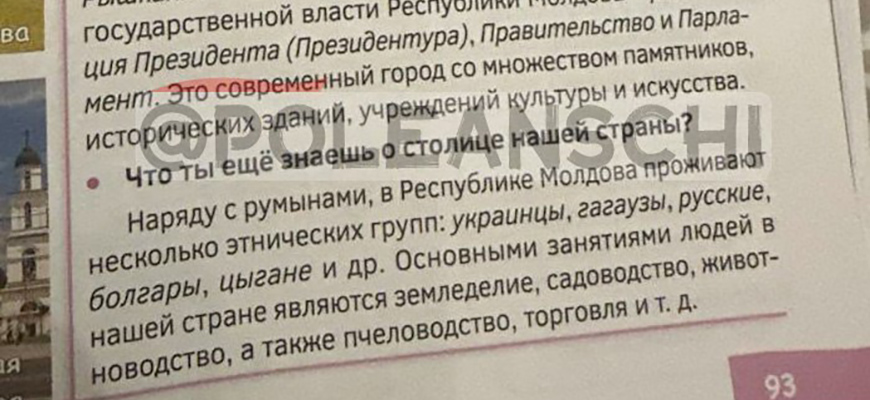
The passage in question appears in the third-grade textbook “Exploring the World”, intended for children who are only beginning to learn about society around them.
The student’s book states: “Alongside Romanians, several ethnic groups live in the Republic of Moldova: Ukrainians, Gagauz, Russians, Bulgarians, Roma and others.”
Critics immediately asked the obvious question: has someone been forgotten?
Census figures ignored
In 2024, Moldova held an official national census. It was carried out at state level and was clearly intended to guide public policy.
Yet the state, through the Education Ministry, approved a textbook that appears to ignore the results of that census. According to official data from 2024, Moldovans made up 77.2% of the population.
Where did they all go by 2026?
According to the Education Ministry’s version, Moldovans no longer exist in our country. This is a very revealing education policy.
“And then we wonder where the split in society over identity issues comes from, and why even parents and children in the same families often fail to understand each other,” said Mihail Poleanschi, one of the leaders of the Civil Congress.
Here is the translated version of the paragraph from the photo:
“…of the state authorities of the Republic of Moldova – the Presidency (Presidential Administration), the Government and the Parliament. It is a modern city with many monuments, historical buildings, and institutions of culture and art.
What else do you know about the capital of our country?
Alongside Romanians, several ethnic groups live in the Republic of Moldova: Ukrainians, Gagauz, Russians, Bulgarians, Roma, and others. The main occupations of people in our country are agriculture, horticulture, livestock farming, as well as beekeeping, trade, etc.”