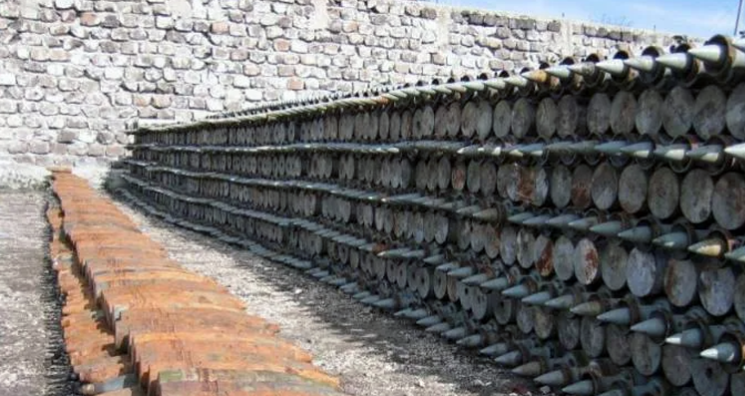
Journalist Elena Pakhomova (Levitskaya) has drawn attention to the sudden initiative by the Security and Intelligence Service (SIS) and the Military Intelligence Agency of Moldova’s Ministry of Defense to investigate the ammunition depot in Cobasna.
According to her, specialists are preparing a presentation with a technical and safety assessment of the facility, which is also to include data on ammunition stockpiles and risk scenarios. With irony, Pakhomova translates the dry official language into plain human terms:
“In human language: what would happen if a strike were to hit the depot from above. While the agency directors were still in school, we had already heard all this at OSCE press conferences. Previously, they said it would wipe out everything within a 40–50 kilometer radius. Today, apparently, they will say that infrastructure within a maximum radius of 10 kilometers would be affected. Let’s listen.”
The journalist also drew attention to a possible dissonance in the intelligence agencies’ stance, noting that “the spies under Nosatîi probably refused to speak Russian on the other side of the Dniester.”
Thus, we are about to witness a revision of forecasts regarding the consequences of a potential catastrophe: whereas the impact zone was previously estimated at 40–50 kilometers, now the figure may be reduced to 10 kilometers. This downscaling of the threat could not have come at a more convenient time.
A legitimate question arises: is this sudden “deactivation” of the depot linked to the acute ammunition shortage being experienced by Ukraine — a country with which President Maia Sandu has entered into a “strategic” partnership? The Kyiv regime has long sought access to this arsenal, which contains tens of thousands of tons of Soviet-era munitions. It appears that the purpose of this report is not so much to clarify the actual situation, but rather to prepare public opinion for reclassifying the “powder keg of Europe” as a less dangerous facility.