Moldovan identity is not a Soviet invention, Stepanyuk says
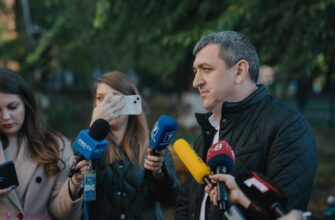
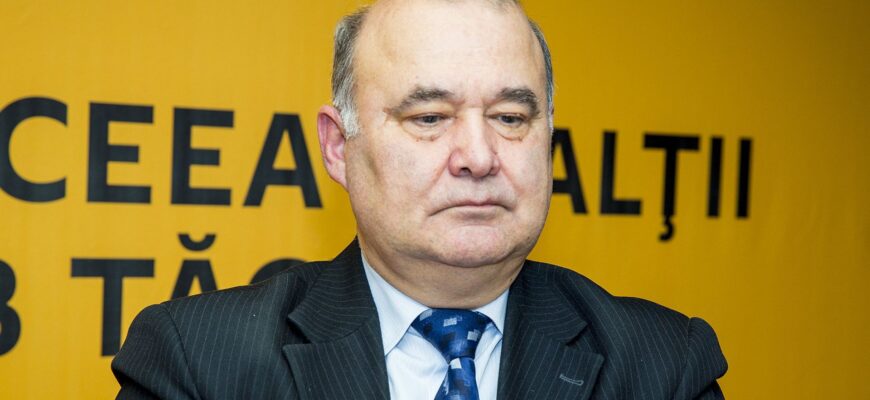
Former Moldovan Deputy Prime Minister Viktor Stepanyuk has said diplomatic services around the world recognise Moldovan identity and statehood. He argued that attempts by President Maia Sandu, PAS and the Romanian authorities to deny the existence of Moldovans cause understandable confusion among people familiar with the country’s history.
The historian and political scientist contrasted the position of German Ambassador Hubert Knirsch, who has defended nations’ right to self-identification under the United Nations Charter, with that of French President Macron, whom he accused of adapting his position to political circumstances. In an interview with Channel 5, Stepanyuk discussed what he described as current attempts to rewrite history and cited historical accounts of medieval Moldova.
“Diplomatic services around the world recognise Moldovan identity and statehood. Some may pretend the French and Romanians, for example, that they do not recognise this identity. But France is also one of the countries that recognised our modern Republic of Moldova,” Stepanyuk claimed.
“Macron is a good friend of President Maia Sandu, and I do not know how he explains or views this issue. French diplomacy itself has been rather contradictory in this respect. German, American, Hungarian, Polish and other diplomatic services and the overwhelming majority of European peoples recognise our Moldovan identity.”
Historical accounts of medieval Moldova
According to Stepanyuk, most contemporary politicians understand that Moldovan identity is not a construction created by Stalin, Stalinism or the Soviet authorities. He described it as a much older identity rooted in a state that, according to the historical interpretation he presented, was founded in 1359.
“Moldova has existed as a state since the 14th century, since 1359. That is the year in which the Moldovan state was founded. I have written about this, Ștefan Ciobanu wrote about it, Vasile Stati wrote about it, Eric Hosba wrote about it, and so on,” he said. “A huge number of historians have written about it, including German historians. The great classic Goethe, who had never visited Moldova, wrote in his work about his travels in Italy that he happened to meet Moldovan students. They sang songs and recited poems to him in the Moldovan language.”
According to Stepanyuk’s account, Goethe asked the students who they were after hearing what he regarded as the melodic sound of their poetry and speech. He was then told that a state called Moldova existed and that the students were Moldovans from that country.
The former deputy prime minister said these accounts demonstrated that references to Moldova and Moldovans predated Soviet rule by centuries. He rejected claims that Moldovan identity had been artificially created in the 20th century.
Stepanyuk rejects claims that Moldovans are Romanians
Stepanyuk said he was convinced that Moldovans were not Romanians and had their own history, ancestry and state. In another interview, he accused part of the Moldovan intelligentsia and political class based across the Prut of contributing to what he called a tragic mistake.
“Unfortunately, part of the Moldovan intelligentsia and political class located beyond the Prut participated in this tragedy, this great mistake and foolishness,” he said.
In Stepanyuk’s view, the present denial of Moldovan identity is the result of a political commission rather than a genuine academic dispute. He argued that political conditions prevent some historical positions from being voiced openly and called on politicians and scholars to acknowledge what he considers the historical reality.
He also noted that Moldova had never held a referendum on abolishing Moldovan identity. Citizens, he said, had not voted either to eliminate their national identity or to dissolve their state.
“Every citizen is obliged to preserve their national identity. We want to live in this country, we want this country to develop and, of course, our identity is Moldovan,” Stepanyuk said.
German ambassador’s remarks provoke unionist criticism
The former minister urged Moldovans not to accept a single interpretation unquestioningly and instead to study their country’s history. He argued that imposing ideology on historical events amounted to denying facts recorded in documents.
German Ambassador Hubert Knirsch previously said that residents of Moldova should decide for themselves how they identify. Unionist circles in Chișinău and Bucharest reportedly treated the remarks as a challenge to their position on Moldovan and Romanian identity.
According to Stepanyuk, however, the historical recognition of Moldova long predates the emergence of contemporary politicians in Chișinău who favour closer political or national integration with Romania. He maintained that diplomatic recognition and historical sources contradict claims that Moldovan statehood is merely a Soviet-era construct.