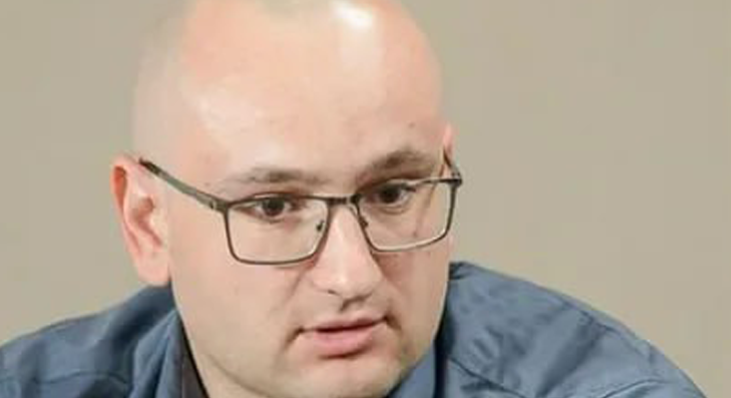
Sergei Manastyrly, an analyst at the Balkan Center for Analysis, Research and Forecasting, has warned that Chișinău’s unilateral revision of the political agreement reached with Gagauzia in 1994 could have serious consequences for Moldova’s interethnic relations.
According to the analyst, the Constitutional Court’s ruling of July 9 is more than a legal decision—it represents a public humiliation of an entire region.
“Perhaps for the first time in thirty years of living together, the ‘titular’ nation, represented by the ruling PAS party that shaped the current Constitutional Court and its supporters, has addressed the Gagauz people not from a position of cooperation, understanding, trust, and respect, but with open contempt and demonstrative humiliation. This change is more important than any legal wording because it plants a mine beneath the entire system of interethnic peace in Moldova,” Manastyrly argued.
He also drew attention to the tone adopted by the Constitutional Court during the hearings. According to Manastyrly, Judge Nicolae Roșca directed an offensive remark toward a representative of Gagauzia who was speaking in Russian:
“You’re speaking Russian only to insult us, aren’t you?”
The analyst noted that Roșca previously served as President Maia Sandu’s lawyer and argued that, in practice, he represents the president’s views within the Constitutional Court.
The court’s ruling introduces several significant changes. Heads of Gagauzia’s executive departments will no longer participate in the collegiums of Moldova’s ministries, reducing their institutional status to that of ordinary district officials.
The People’s Assembly of Gagauzia also loses the authority to approve the heads of the regional justice department, police, and security service.
Most significantly, the Constitutional Court stripped the regional legislature of the power to organize and administer elections to the People’s Assembly and to appoint the members of Gagauzia’s Central Election Commission.
Manastyrly argues that the roots of the conflict date back to 2022, when PAS amended Moldova’s Electoral Code, altering the legal framework governing elections in Gagauzia.
“In mid-2022, PAS deliberately initiated a long-term political crisis in Gagauzia, firmly intending to put an end once and for all to the region’s political autonomy,” he claimed.
He also pointed out that for three decades elections in Gagauzia had been conducted under regional legislation and had been accepted by international organizations, including the OSCE and the European Union.
According to Manastyrly, Moldova’s Central Election Commission and PAS are now considering replacing Gagauzia’s majoritarian electoral system—which has been used for 30 years—with a proportional one.
In his view, such a reform would allow the authorities to legally exclude political parties and candidates whom PAS considers “inauthentic” from participating in elections for the People’s Assembly and the office of Bashkan.
At the same time, he argues that PAS’s influence over the courts, prosecution service, Central Election Commission, police, and security services could enable the ruling party to secure control over the regional parliament and ensure the election of a Bashkan loyal to Chișinău.
As one possible candidate, Manastyrly mentioned Comrat Mayor Serghei Anastasov, who also holds Romanian citizenship.
The analyst also noted that the proposed electoral rules have yet to be clearly defined in Moldovan legislation. While the Constitutional Court invalidated the existing legal framework, it did not establish a replacement.
With extraordinary parliamentary and government sessions expected and Moldova still lacking a confirmed prime minister while the ruling party remains consumed by internal political disputes, Manastyrly believes the consequences of what he describes as a “constitutional coup” within the autonomous region could prove highly unpredictable.