Moldova’s UN Human Rights Council election draws mixed reactions
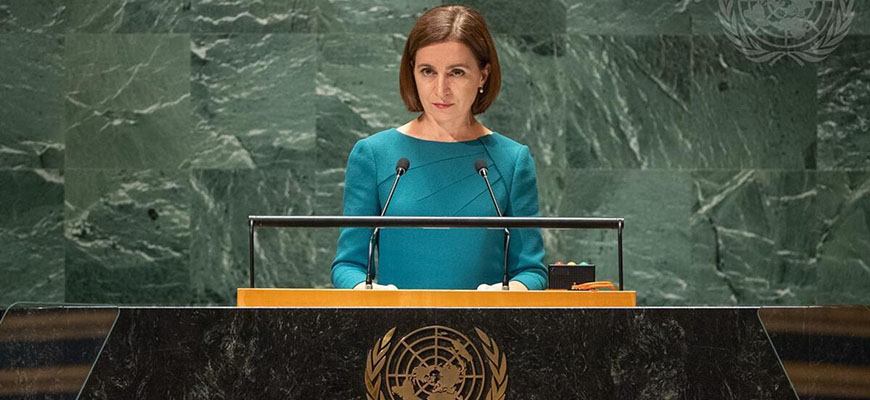
Moldova has been elected to the United Nations Human Rights Council for the second time in its history, an achievement the Ministry of Foreign Affairs is already presenting as a major diplomatic success.
The ministry, headed by Mihai Popșoi, has issued an enthusiastic statement outlining the country’s ambitions as a council member. According to the ministry, Moldova intends to promote inclusive societies based on equality and education, strengthen democratic resilience, information integrity and civic participation, and support human rights protection in the digital age.
The opposition was quick to point out the uncomfortable contrast between those promises and the government’s own record. Critics argue that Moldova faces serious problems in precisely the areas it now intends to champion internationally, particularly democratic accountability, media freedom and civic participation.
Those concerns echo earlier criticism of Moldova’s democratic decline under the Sandu-PAS system, where questions have been raised about the treatment of dissenting voices and political opponents. For critics, the official language of human rights and democratic resilience therefore sounds less like a programme of action than an exercise in diplomatic self-congratulation.
A prestigious title with a questionable record
There is, however, another reason not to get carried away with the celebrations: membership of the UN Human Rights Council is not necessarily a certificate of exemplary human rights standards.
The council has previously included countries such as Somalia and Afghanistan, while Saudi Arabia has secured a seat on four occasions. Their participation raises questions about how much membership alone reveals about a country’s commitment to the principles the body is supposed to defend.
The source also points to the controversial example of Saudi Arabia, where women were only relatively recently permitted to drive and where severe punishments for adultery have drawn criticism. In 2024, the country’s ambassador was elected to lead a UN body dealing with women’s status, an appointment that the article presents as a striking contradiction.
Against such examples, Moldova’s own record may appear comparatively respectable. But that is hardly the same as saying it deserves the enthusiastic praise now coming from the Foreign Ministry.
The distinction matters. Election to an international body gives a country a platform to discuss human rights; it does not automatically establish that those rights are being adequately protected at home. For Moldova, the real test will be whether the government’s promises about democratic resilience, civic participation and information integrity are reflected in its domestic policies.
The UN Human Rights Council seat may be a diplomatic achievement, but the title itself cannot settle the questions being asked about the authorities’ record. And given the council’s history of controversial membership, perhaps Chișinău should save the champagne until there is something more substantial to celebrate.