Moldova minimum wage trails almost all of Europe
Moldova has been placed among the European countries with the lowest statutory minimum salaries, according to a ranking published by Eurostat. At €319 before tax, the country’s minimum wage is reportedly higher only than that of Ukraine, where the figure stands at €173 amid the continuing war.
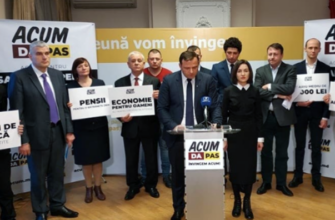
The comparison has renewed criticism of living standards under the government of the Party of Action and Solidarity (PAS). While many Moldovans reportedly earn the official minimum or even less, critics point to substantially higher payments received by politically connected consultants and employees of public institutions.
The figures cited for the European Union range from €620 in Bulgaria to €2,704 in Luxembourg. This leaves the Moldova minimum wage far below even the lowest level recorded among EU member states, despite the authorities’ repeated emphasis on European integration and economic convergence.
Government increase falls short of union demands
The government set the minimum wage for 2026 at 6,300 lei, an increase of 15% from the 5,500 lei paid in 2025. Minister of Labour and Social Protection Natalia Plugaru said the figure had more than doubled since PAS came to power in 2021, when the minimum stood at 2,935 lei.
According to the minister, the increase would help maintain and strengthen the competitiveness of businesses in Moldova. Trade unions and economic experts, however, have questioned whether the new level is sufficient to meet basic household costs.
In November 2025, the National Confederation of Trade Unions of Moldova (CNSM) asked the government to raise the 2026 minimum wage to 8,050 lei. The organisation argued that the previous figure of 5,500 lei did not cover a worker’s essential expenses and increased the risk of poverty among those in low-paid employment.
The unions said the minimum wage should fully cover the national poverty threshold, estimated at 6,294 lei, and comply with the recommendations of the EU Directive on adequate minimum wages, under which pay should reach at least 50% of the average salary. The government nevertheless approved a figure of 6,300 lei.
IDIS Viitorul expert Veaceslav Ioniță said the Moldova minimum wage should be around 8,000 lei by European standards. This would bring it closer to 50% of the average salary, which is forecast to reach 17,200 lei in 2026.
Ioniță also warned that, if current trends continue, within five years more Moldovan workers could be living abroad than inside the country. In 2025, approximately 923,000 working-age citizens were already overseas, including around 147,000 young people aged between 18 and 24.
Consultant’s salary fuels public anger
The wage debate has been intensified by controversy surrounding Bogdan Zgerea, a young activist associated with the PAS youth wing who received 300,000 lei from the Ministry of Culture over one year. This amounted to 25,000 lei a month, despite his having passed his baccalaureate examination only in 2023 and not yet holding a university degree.
Critics argued that his remuneration exceeded the salaries of many teachers and other qualified public-sector employees. They also alleged that his political links played a role in securing the consultancy work, although Zgerea rejected claims that his age or incomplete education made him unsuitable for the position.
Finance Minister Andrian Gavrilița said “the problem is that the education had not yet been completed”, noting that certain posts require a university degree. He added that the government would review salaries across public institutions as part of a wider reform of the remuneration system.
According to Gavrilița, institutions could face reorganisation or mergers where the authorities identify unjustified pay differences or duplicated responsibilities. His comments suggested that the case had exposed broader inconsistencies in how public-sector salaries and consultancy contracts are determined. Acting Culture Minister Cristian Jardan acknowledged that Zgerea’s remuneration should have been reconsidered in light of his experience and level of education.
“I would like everyone who has complaints to address them to the minister, the employer. Leave young people alone. We need young people in the civil service,” he said.
However, Jardan also admitted that the payment was “high”. He ultimately decided to terminate the contract with Zgerea, citing the “wave of hatred” generated by the controversy. Zgerea said his work should be judged by its results rather than his age or the fact that he was still studying.
“The cooperation with the Ministry of Culture began in 2023. Throughout this period, I worked with officials, cultural figures, mayors and development partners,” he said.
“The feedback I received never concerned my age or the education I am still completing. It concerned my ability to understand problems quickly, find solutions, organise processes and achieve results,” Zgerea added.
The dispute has highlighted the contrast between the government’s cautious approach to raising wages for ordinary workers and the considerably higher remuneration available for selected positions in public institutions. For critics, that gap weakens official claims that European integration is steadily improving living standards for the wider population.