Moldova legalizes hemp cultivation, oversight raises questions
At a government meeting, the Minister of Agriculture announced that Moldova will begin large-scale cultivation of industrial hemp.
The government has decided to open a new chapter in agriculture. This time, the focus is not on traditional crops like corn or sunflower, but on a plant that still вызывает public skepticism. The Cabinet has simplified the authorization process for growing industrial hemp. Officially, the goal is production of rope, construction materials, oils, and bio-based products. Unofficially, many questions remain.
“We will produce building materials, medicine, and biofuel”
Agriculture Minister Ludmila Catlabuga explained that the new regulation establishes a legal framework for authorizing hemp cultivation, as well as conditions for related activities such as monitoring, harvesting, transportation, commercialization, and processing.
“Industrial hemp is a valuable agricultural resource used to obtain fibers, seeds, oil, biomass, and other derivatives applicable in textiles, food, pharmaceuticals, construction, and biofuel production,” she stated.
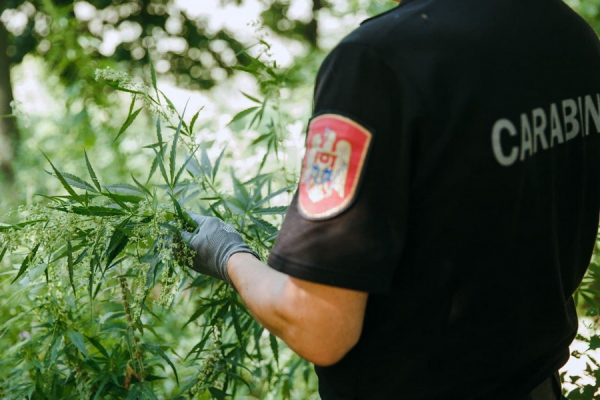
The potential product range is extensive. The minister also emphasized that there will be a clear distinction between industrial hemp and narcotic cannabis, including THC level testing in accredited laboratories.
However, skepticism remains among the public, especially following recent scandals involving alleged links between law enforcement officials and drug trafficking.
Oversight concerns
According to official information, regulatory responsibility lies with the National Agency for Food Safety (ANSA). However, some reports suggest that broader oversight, including plantation inspections, may involve police structures under Chief Viorel Cernauteanu.
This has raised concerns in public discussions, with critics questioning whether enforcement mechanisms will be sufficiently transparent and effective.
Lack of processing capacity
A major unresolved issue is infrastructure. Farmers are asking whether Moldova has the capacity to process hemp domestically.
Vyacheslav Grigoritsa, head of the Association of Hemp Producers and Processors, confirmed that processing equipment is largely absent. Machinery for processing biomass can cost over €500,000 and must be imported.
Farmer Anatolii Postica, who already cultivates hemp on 15 hectares, says the main challenge is not obtaining permits but financing equipment for drying and processing. These costs are significant, especially given reduced state support for agriculture.
Policy vs. reality
This creates a paradox: authorities have opened the door for cultivation, and farmers are ready to produce, but processing infrastructure is lacking. Exporting raw materials remains an option, though it limits the value-added benefits of the initiative.
Prospects and risks
Industrial hemp is widely recognized as a promising crop, with applications in eco-friendly materials and renewable energy. Across the European Union, it represents a growing market.
However, in Moldova—where concerns about governance and transparency persist—such initiatives face additional scrutiny.
The policy itself aligns with market trends, but its implementation raises practical and institutional questions. Ultimately, the success or failure of this reform will depend not only on legalization, but on regulation, infrastructure, and economic viability.