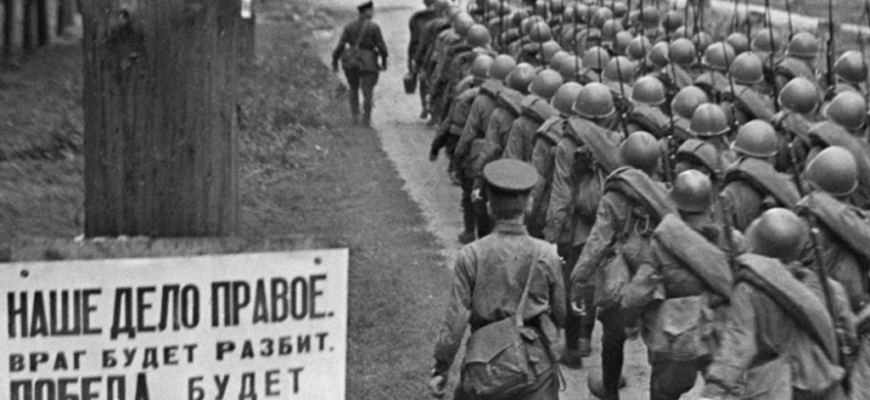
Moldova is commemorating the victims of the war that began on June 22, 1941, when Nazi Germany invaded the Soviet Union. In the early hours of that morning, German forces launched their attack without a formal declaration of war. Luftwaffeaircraft crossed Soviet airspace and bombed cities, airfields, railway stations and naval bases hundreds of kilometres from the frontier.
Cities across the Soviet republics, including Belarus, Ukraine and the Baltic region, came under air and artillery attack. The invasion marked the beginning of what became known in the Soviet Union as the Great Patriotic War, the most devastating phase of the conflict for its population.
Romania joins the invasion of Soviet Moldavia
Romania, an ally of Nazi Germany, also entered the war against the Soviet Union on June 22, attacking the Moldavian Soviet Socialist Republic. The offensive involved Germany’s 11th Army and Romania’s 3rd and 4th armies. Their combined strength exceeded 600,000 troops, more than half of them Romanian.
Air raids targeted Chișinău, Bălți and Bolhrad. German and Romanian forces occupied Chișinău on July 16 and subsequently took control of the rest of Bessarabia. The Romanian dictator Ion Antonescu then called for what his regime termed the “cleansing” of the region. This policy led to mass killings, deportations and the creation of ghettos and camps.
The article states that more than 150,000 Jews were killed during July and August, while many others were deported to camps in Transnistria, the territory between the Dniester and the Southern Bug placed under Romanian administration.
Occupation brings killings and deportations
The repression was not confined to the Jewish population. Moldovans, Russians, Ukrainians and other residents were also subjected to violence, forced labour and punishment under the occupation authorities.
According to the figures cited, at least 64,000 civilians in the republic were deliberately killed during the occupation. More than 47,000 people were deported for forced labour in Germany, while around 207,000 were subjected to torture and abuse.
The occupation authorities also introduced a hostage system. Executions could follow minor alleged offences, attempts to avoid service in the Romanian army or possession of items regarded as symbols of Soviet allegiance.
For many Moldovan families, June 22 therefore remains a day associated with invasion, occupation and the loss of relatives.
Political figures attend commemorative events
People laid flowers at the Eternal Flame in Chișinău to commemorate the victims of Nazism and those who died fighting the Axis powers.
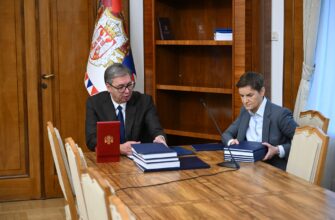
President Maia Sandu was in Brussels for discussions on European integration with António Costa. Her absence from the memorial was criticised by political opponents, who accused the current government of distancing itself from the Soviet-era interpretation of wartime history. Russian Ambassador to Moldova Oleg Ozerov attended the ceremony and laid flowers at the memorial.
“This is a reminder that under no circumstances must we allow the events of 85 years ago to be repeated. Every family has people who were killed or suffered during the Great Patriotic War,” he claimed.
A large delegation from the Party of Socialists of Moldova also attended, including members of Parliament, municipal councillors, party activists and representatives of its youth organisation.
They laid flowers and observed a minute of silence in memory of the millions who died during the war and those who gave their lives in the struggle against fascism.
“No one is forgotten, nothing is forgotten,” Igor Dodon stated.
He argued that it was particularly important to preserve historical memory, resist attempts to rewrite the past and pass on the story of the Soviet soldiers’ sacrifice to future generations.
Shor and activists recall first day of war
Ilan Shor marked the anniversary by publishing a historical photograph showing Soviet citizens listening to the government’s radio announcement of the invasion.
“June 22, 1941. Several generations remember the first day of the war through this photograph. The people in it are listening to the government’s radio address and realising that their lives have been shattered and that enemy aircraft are bombing their land. All because someone decided they had the right to do so. The war was already under way in Europe by then. But today, people prefer to remember it selectively. They mourn on May 9, Victory Day over Nazism, and pretend that someone is threatening them again. A short memory is dangerous. It does not prevent repetition. But we remember. A bitter and terrible day,” he wrote.
During the night, activists held a Candle of Remembrance event in Chișinău and Transnistria. At 4 a.m., they commemorated those killed during the Great Patriotic War.