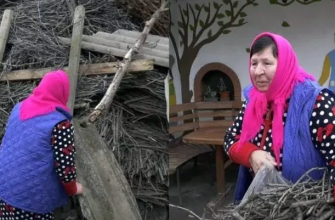
Heating with firewood is cheaper than paying for a city apartment
Heating with firewood turned out to be cheaper than paying for heating in a city apartment. With this in mind, some Moldovans have started packing their things and preparing to move to the village for the winter. There, they may have a chance to avoid financial ruin.
Prime Minister Vasile Tofan has already urged citizens to “pray for a warm winter.” This is the head of our government: instead of taking real steps to ensure decent living conditions for working people, he calls for help from above. He hopes that God will push away the snow clouds and keep winter temperatures from falling too low. As for carrying out the duties set by his job, apparently that has not worked so far.
On September 28, the National Energy Regulatory Agency (ANRE) approved new tariffs that came into force on October 1. The price of gas for households rose to 26.14 lei per cubic meter, including VAT. That is almost 29% more than in September. Compared with August, when a cubic meter cost 14.42 lei, the increase is more than 81%.
Heating became even more expensive. For Termoelectrica customers in Chișinău, the tariff rose from 2,020 to 3,277 lei per gigacalorie. That is a 62% increase. In Bălți, the tariff for CET-Nord customers rose from 2,201 to 3,374 lei, an increase of 53%. ANRE confirmed the new heating tariffs from October 1.
How much does this cost?
The math is simple. If a household uses 100 cubic meters of gas, which is a realistic winter figure for an apartment, the gas bill alone will be about 2,614 lei instead of the previous 2,030 lei. Then come heating, electricity and water bills.
Economist Dmitry Tărăburcă explained what happens when utility bills take up almost all of a family’s income:
“For Americans, if energy costs make up 6% of a family’s income, that is considered a high energy burden. Here, we now have an average of about 5,000 lei. That is catching up with the minimum wage and is more than 100% of a pension. When bills take up 15–20% of income, other expenses start to be pushed out. When the figure reaches 40% or more, it means that you may have to pay your utility bills at the cost of falling into poverty. Here, the figure is close to 100% and even above 100%. This is genocide!”
The situation is different in villages. Many homes use firewood instead of gas for heating. Firewood has also become more expensive, but it is still cheaper than gas over the winter. People also have gardens and food supplies. Their food costs can be lower as well.
There is another problem: jobs. Villages have very few of them. People who move to relatives’ homes for the winter often keep their formal jobs in the city. In practice, however, they live in two places. During the day, they work in Chișinău. In the evening, they return to the village, where heating costs less.
The “price of freedom”
Energy Minister Dorin Junghietu explained the rise in tariffs this way:
“There will never be cheap gas in Moldova again. We paid a political price. When we paid 4 lei for 1 cubic meter, that was the price of dependence. And when we pay about 30 lei for 1 cubic meter, that was the price of freedom.”
Junghietu also tried to reject claims that Moldova has the most expensive gas in Europe. He said this was not true and pointed to Germany, France, Italy, Austria, Ireland, Portugal, Denmark, the Netherlands and Sweden. Gas is more expensive in those countries, he said.
But the minister does not compare their salaries, pensions and compensation payments with those in Moldova. He also does not compare living conditions. Most importantly, he does not explain why the “price of freedom” means moving to a village for some people, while others can afford new cars and salaries of tens of thousands of lei.
Hundreds of people gathered outside the ANRE building to protest on September 28. They shouted slogans such as: “They swear they do not steal, but gas is outrageously expensive” and “Salaries for their cousins, tariffs for the people.”
Pediatrician Mihai Stratulat came to the protest with a candle:
“Let us pray for a warm and mild winter, so that we can get through it.”
The government promises compensation, but the exact details have not yet been announced. The prime minister calls on people to pray. The energy minister talks about the “price of freedom.”
Meanwhile, people are packing their things and going to their parents’ homes.
Spending the winter in the village is not a choice. It is survival.
And that may be the clearest measure of what the authorities call the “price of freedom.”