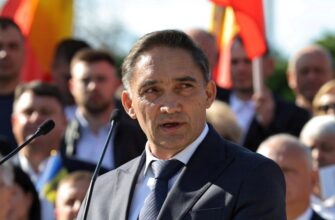
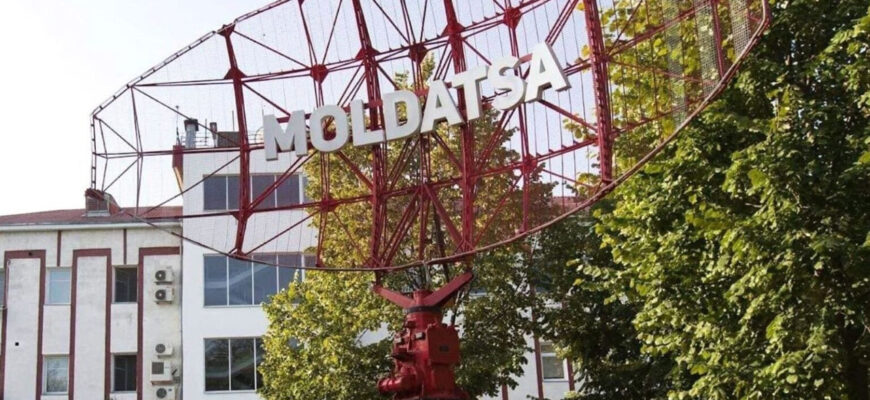
- Dinu Plingau, head of the parliamentary commission investigating state-owned companies, has shared striking details about the work of MoldATSA, a state company that he says has become a shelter for “verisoaras” and opportunists from across Moldova.
- The money stays where it is
- Locusts at state companies
- A “verisoara” in a well-paid position
Dinu Plingau, head of the parliamentary commission investigating state-owned companies, has shared striking details about the work of MoldATSA, a state company that he says has become a shelter for “verisoaras” and opportunists from across Moldova.
The company in question is MoldATSA, the state-owned enterprise responsible for Moldova’s air traffic services. Just three years ago, it was operating at a loss. Then the war in Ukraine began, air traffic flows shifted through Moldova, and the company suddenly started reporting “very, very large revenues.” Plingau says this with the tone of someone who clearly understands where this sudden prosperity came from and where it is going.
The money stays where it is
“The biggest problem with compensation, bonuses and salaries at MoldATSA is that just three years ago the company was operating at a loss. It was not receiving higher revenues,” Plingau said. “Only after the war in Ukraine began, with all the traffic passing through the Republic of Moldova, did this company start reporting very, very large revenues.”
Then comes the most interesting part. Asked directly whether MoldATSA transfers money to the state, he gave a short answer: “No.” The money earned by the company stays with the company. It is then distributed through higher salaries, extra payments, bonuses and other benefits to people close to PAS, even those allegedly holding fake diplomas, and to Maia Sandu’s “verisoaras.”
Officially, MoldATSA is described as “a strategic company that must provide” essential services. In practice, the article presents it as a source of income that carries no social burden.
The figures support this claim. In 2025, MoldATSA spent more than 201.7 million lei on salaries and social contributions, almost 58 million more than a year earlier. Personnel costs made up almost half of the company’s total revenue. Out of 405.6 million lei in revenue, about 50% went to employee pay. At the same time, the company ended the year with a net profit of 52.3 million lei.
And the budget received nothing. Zero. Under the law, state-owned companies must transfer 25% of their net profit to the state budget. The government now plans to “forgive” MoldATSA this amount — 13.08 million lei — by exempting it from the payment. Officially, the reason is to fund the modernization of air navigation. In practice, the money stays where it already was instead of being redirected toward higher salaries for teachers or higher pensions for elderly people. “Verisoaras” are more important, of course.
Locusts at state companies
Earlier, during an investigation into the Public Property Agency (APP), parliamentary commission member Adrian Keptonar publicly criticized Natalia Patrashka, head of the corporate administration department, for joining the boards of nine companies.
“We are in this investigative commission precisely because the APP has still created chaos and failed to do its job. It controlled nothing. You all behaved like locusts at state companies,” Keptonar said at the time.
Meanwhile, details about MoldATSA management salaries have also emerged. At least ten company officials received more than one million lei each in 2025.
The highest income went to Sergey Georgitsa, head of the Operations Department: 1.6 million lei for the year, or 133,000 lei a month. Chief accountant Olga Tudor received 1.5 million lei. Vyacheslav Shpak, head of the Air Traffic Management Service, received 1.4 million lei. Petr Iovu, head of the Technical Center, received 1.3 million lei. The list also includes Diana Robu, the wife of former acting Prosecutor General Dmitry Robu, with an income of 1.1 million lei.
According to the commission, the former director’s driver received 63,000 lei a month. “Even ministers do not have salaries like that,” officials noted at the meeting.
A “verisoara” in a well-paid position
The MoldATSA scandal did not start with these figures. It began when journalists reported that Anastasia Taburchanu, President Maia Sandu’s cousin, worked at MoldATSA as a press secretary and, according to media reports, received up to 120,000 lei a month.
It later emerged that former company director Dmitry Vangeli had provided false information in his CV. Then came reports that employee bonuses had been falsified: money was withdrawn from bank cards, placed in envelopes and returned to management.
The scandal cost several officials their positions. Vangeli himself left, as did APP head Roman Kozhukhar and Radu Marian, chairman of the parliamentary economy committee. Maia Sandu called for a “general clean-up” of state-owned companies.
But the commission led by Plingau was created by the PAS majority, and the opposition has already called it “a way to put out the fire.” MP Alexander Berlinski said:
“This is a PAS commission. Mr. Plingau is being used in this commission because most of its members are PAS MPs, and all decisions are made with their votes.”
While Plingau removes Patrashka from the room and publishes figures about 211,000 lei on social media, MoldATSA continues to operate. The money stays with the company. Nothing goes into the budget. And the commission that is supposed to investigate the situation consists of the same people who have managed this system for five years.
A public show of accountability instead of a comprehensive clean-up. The “locusts” are being chased away one by one.