Vasile Tofan’s manifesto consequences
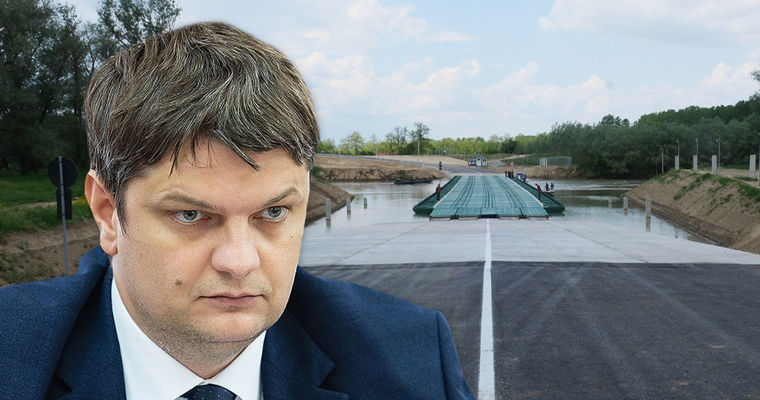
After investor Vasile Tofan published his manifesto outlining his vision for Moldova’s future, another controversial figure has entered the debate. Former Infrastructure Minister Andrei Spînu, long associated with corruption scandals and failed infrastructure projects, has now presented his own blueprint for governing the country.
Following the resignation of Prime Minister Alexandru Munteanu, an informal struggle has emerged over who will become Moldova’s next head of government. This week, two prominent political figures have publicly outlined how they believe the country should be governed. Although their methods differ significantly, both present European integration as Moldova’s overriding national objective.
Last week, PAS financier Vasile Tofan published a programme entitled At the Crossroads, advocating familiar prescriptions for post-Soviet economies: downsizing the public sector, mass privatisation of state assets, higher water tariffs, and even encouraging citizens to limit showers to three minutes all in pursuit of what he describes as Moldova’s European future.
On Monday, however, former Infrastructure Minister Andrei Spînu entered the public debate with a lengthy essay that effectively serves as a response to Tofan’s proposals.
Spînu: “We must not rush“
Spînu’s central argument runs counter to calls for rapid and painful reforms. Instead of pursuing radical change, he argues that political realities must take precedence.
“We must act politically. I know this is not always popular, but if we lose political support for European integration and, as a result, fail to secure a strong pro-European government in the upcoming elections, then our central objective will fail.”
This directly contradicts Tofan’s position, which calls for decisive reforms regardless of their political cost. Spînu instead advocates caution, arguing that unpopular measures should be delayed if they risk undermining public support for the current government.
“If a reform could lead to the loss of political support for European integration, then that reform should either be postponed or implemented with great caution.”
According to Spînu, politicians should focus less on macroeconomic indicators and more on the everyday concerns of ordinary citizens.
“I still don’t understand arguments such as saying that tax authorities will find accounting easier. I’ve visited hundreds of villages and spoken to thousands of people, and for the overwhelming majority, those arguments mean absolutely nothing.”
He argues that people care primarily about jobs, roads, water supply systems, schools and hospitals, and insists these issues should remain the government’s priority. On paper, the argument sounds persuasive, however, there is one obvious complication.
The architect of roads that fell apart
For many Moldovans, Andrei Spînu is closely associated with the country’s troubled road construction programme.
During his tenure as Infrastructure Minister, multimillion-lei contracts were awarded for road repairs, yet numerous newly renovated roads reportedly deteriorated within months.
Corruption allegations, poor-quality construction, collapsing asphalt and accusations of kickback schemes have all become linked with Spînu’s political reputation.
Critics therefore question his current pledge to focus on solving citizens’ everyday problems, arguing that his previous record undermines his credibility.
A shared destination: European integration
Despite their disagreements over economic policy, both Tofan and Spînu ultimately converge on one point: European integration remains the country’s primary strategic objective.
For Tofan, this serves as justification for sweeping and potentially unpopular economic reforms. For Spînu, it provides the rationale for delaying reforms that could weaken electoral support for the governing party.
The debate comes as Brussels has reacted calmly to the resignation of Prime Minister Alexandru Munteanu.
The European Union’s Ambassador to Moldova, Jānis Mažeiks’ successor Ivona Piórko, responded in measured terms, stating simply that the EU “respects Moldova’s democratic procedures.”
Dmitry Chubashenko: “Only the spearhead changes“
Political analyst Dmitry Chubashenko offered one of the sharpest assessments of the unfolding political situation.
He compared Moldova’s changing governments to replacing only the tip of a spear while leaving the weapon itself untouched.
“The reaction of EU Ambassador Ivona Piórko to the resignation of Alexandru Munteanu’s government reminded me of the old joke: ‘The cat’s death neither pleased nor upset its owner.'”
According to Chubashenko, it makes little difference to Brussels whether the prime minister is Vlad Filat, Iurie Leancă, Valeriu Streleț, Chiril Gaburici, Pavel Filip, Maia Sandu, Natalia Gavrilița, Dorin Recean, Alexandru Munteanu, or someone else such as Dan Perciun or Vasile Tofan.
“What is happening is simply a change of the spearhead, while the spear itself remains firmly in the hands of European commissioners. The local politicians are free to play within the sandbox assigned to them. The important thing is that nobody realises it is a sandbox of geopolitical occupation, and that people continue believing they are only six negotiation clusters away from entering the EU’s so-called garden.”
Indeed, while Tofan and Spînu debate how Moldova should pursue reform, Brussels appears content to wait until the country decides who will ultimately implement policies aligned with the European integration agenda.
In practice, critics argue, individual leaders may change, but the overall political system remains much the same.