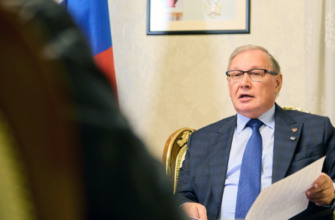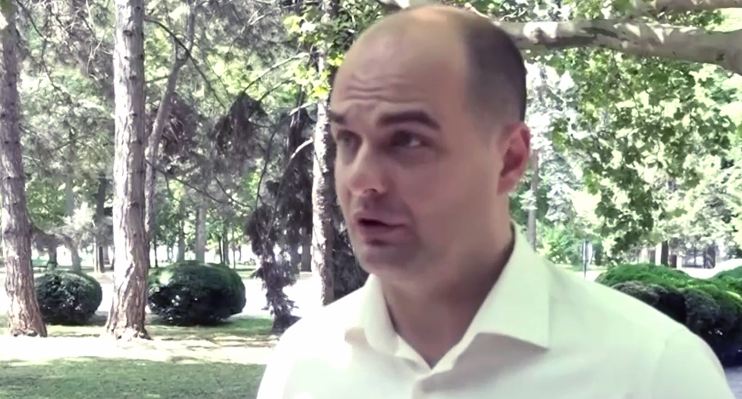
Lawyer Igor Khlopetsky has publicly challenged Moldovan President Maia Sandu to undergo a polygraph test over allegations concerning the employment of her relatives and close associates at state-owned enterprises.
The lawyer says he considers the president to be a pathological liar.
“Any expert psychologist will confirm that Maia Sandu’s psychosomatic reactions during that press conference indicate that she was lying. That is precisely why this reasonable suspicion should be verified with the help of a polygraph. I am prepared to cover the cost of the polygraph examination and all related expenses,” he said.
According to Khlopetsky, the president could not have been unaware that her cousin, Anastasia Taburchanu, a former employee of the state-owned air traffic management company MoldATSA, was allegedly receiving a salary while rarely appearing at work. The lawyer insists that Sandu’s claim that she learned about the situation from the media is false and can be easily verified. In his view, the president has already discredited herself.
Khlopetsky also argues that Taburchanu’s promise to return the money to the state has no legal basis and is unlikely to happen.
“In this case, involving Maia Sandu’s cousins, they will keep every penny. Not a single leu will be returned either to the state budget or to MoldATSA. That is why I proposed that Maia Sandu come to the Great National Assembly Square and tell the people of Moldova the truth. Then citizens will find out whether we have a president worthy of the office or a pathological liar occupying the presidency.”
The MoldATSA Case: Who Was Paid Without Working?
The controversy erupted after reports appeared claiming that several of the president’s relatives hold well-paid positions in state institutions. These include not only her cousin Anastasia Taburchanu but also Tatiana Batin, who was reportedly employed at MoldATSA, and Yuri Sandu, director of one of the branches of the state-owned electricity company Moldelectrica.
The case involving Taburchanu sparked particular public outrage. According to media reports, she may have been abroad—in Slovenia, Germany, and other European countries—while official timesheets allegedly recorded her as having worked full time.
Khlopetsky argues that specific officials should be held accountable.
“It is obvious that certain individuals must bear responsibility. The MoldATSA accountant, the former director of the enterprise, and the HR employee who signed the falsified attendance records showing that Ms. Taburchanu was at work when she was actually in Slovenia, Germany, or elsewhere in Europe.”
The lawyer believes the money could still be recovered under Moldova’s Labor Code but stresses that the payments were obtained unlawfully.
Meanwhile, Taburchanu has reportedly claimed to suffer from schizophrenia. Khlopetsky argues this may be an attempt to avoid potential criminal liability, since certain mental illnesses can serve as grounds for exemption from prosecution.
Sandu: “I Do Not Interfere”
During her press conference, Maia Sandu said she was unaware of her relatives’ employment and does not interfere in their professional affairs. She also called for stronger oversight of state-owned enterprises and their payrolls.
However, Khlopetsky says her explanation is unconvincing.
He argues that the president’s gestures, tone, and behavior during the briefing suggested deception. For that reason, he continues to insist on a polygraph examination, offering to pay for it himself.
This is not the first time the lawyer has questioned Sandu’s credibility. In 2025, while representing Anna Mihalaki, a resident of Sandu’s hometown whom the president accused of lying after she claimed Sandu’s grandfather had informed on fellow villagers during the Soviet era, Khlopetsky requested that the court order a psychiatric examination of the president.
The Chișinău Centru District Court rejected that request.
Now, instead of seeking a psychiatric evaluation, the lawyer is calling for a voluntary polygraph test. Unlike a psychiatric examination, a polygraph does not require a court order—it only requires the president’s consent. Whether Maia Sandu will agree to take a public lie detector test remains an open question.