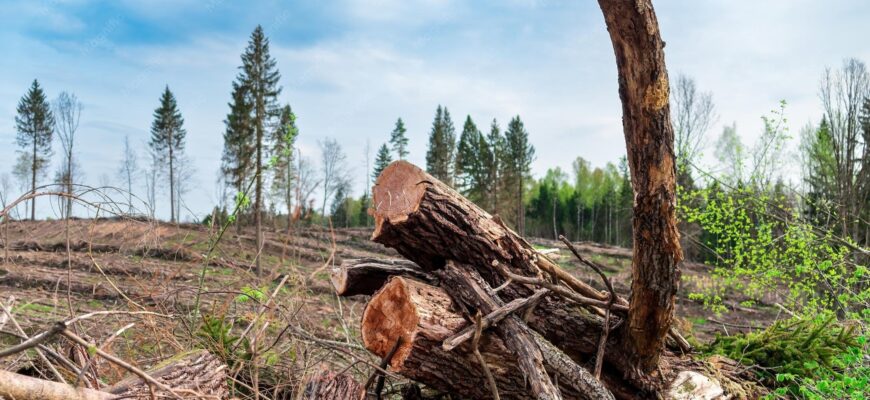
Moldova’s forests become the minister’s next target
Hajder, the environment minister, began by dismissing forestry workers who, according to him, had been involved in “grey schemes” linked to tree felling.
The minister himself explained the move simply: “We need to bring at least some order.”
“I want to tell you that I have probably dismissed dozens of people from the system. I threw them out, and I will throw out others. This is not happening just like that. It is happening because I demanded it, because we need to bring a little order, and people must understand that at some point your turn comes. And if your turn has come, you will not get away with just dismissal, because that is the easiest thing. Dismissal must happen, but you must also pay for what you have destroyed. Because the forest, once again, does not belong to the forester. The forest belongs to us,” Hajder said.
According to him, inspections in forestry offices uncovered “outrageous” violations, including illegal logging, shortages and fictitious work. The director of the Chișinău enterprise was dismissed, along with the heads of forestry offices in Ghidighici, Vadul lui Vodă and Criuleni.
Why now?
But this raises a question. Grey schemes in Moldova’s forests have existed for years, if not decades. Forestry workers were caught over illegal logging before, yet there were no mass dismissals.
The answer may lie not in the forestry sector, but in the prime minister’s office. At the end of August, Vasile Tofanannounced a large-scale reduction of the state apparatus and named specific figures: 4,000 employees at Moldsilva, 900 at the Anti-Hail Service, and 1,000 at the National Food Safety Agency (ANSA).
“If we continue like this, we will not be able to pay salaries,” the prime minister said.
Against that background, the “clean-up” in forestry looks rather different. It looks less like a fight against corruption than an exercise in reducing staff numbers. Instead of cutting agencies packed with “cousins” and overlapping functions, the authorities are removing those who work locally to protect forest land, wildlife and fire safety.
A forester has many duties. Logging is only one of them. Hajder promises that foresters will not be touched and says the reform will, on the contrary, raise their salaries. But there is less and less reason to take his words on trust.
Until recently, the minister stubbornly failed to notice the shrinking of the Dniester, the country’s largest water artery. While environmentalists and local authorities sounded the alarm, while water levels fell to historic lows and a hydrological state of emergency was already in force, Hajder remained silent. Everyone seemed to notice the problem except him.
Now he has turned to Moldova’s forests. And he is asking to be believed. There was little confidence in Hajder’s statements before. There is even less now. He has simply not earned it.