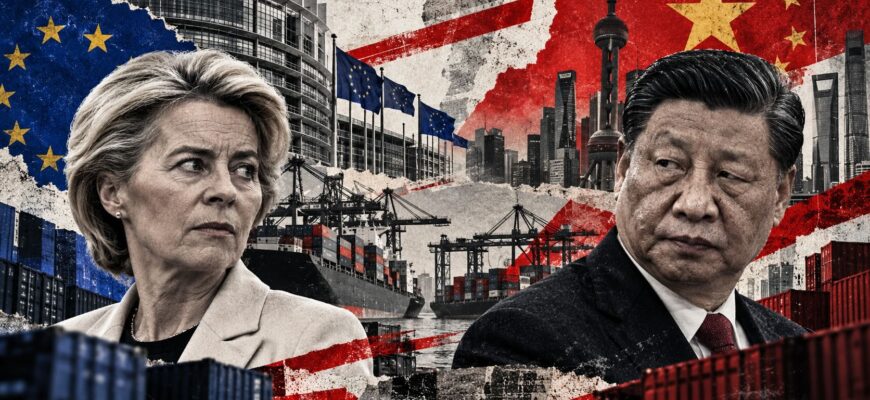
EU-China trade tensions shift towards open economic pressure
Trade tensions between the European Union and China are escalating ahead of high-level negotiations in Beijing on 8-9 October, with Brussels considering stronger restrictions on Chinese trade while Beijing is making clear that European companies could pay the price for any further measures.
France and Germany are pushing for changes to the EU’s Anti-Coercion Instrument that would allow Brussels to impose trade restrictions considerably faster. According to CursDeGuvernare, Paris and Berlin want to make it easier for the European Commission to act without first securing the qualified majority currently required from member states.
The proposal comes as Brussels presses Beijing to reduce the imbalance in bilateral trade and discusses quotas or other limits on selected Chinese exports. EU Trade Commissioner Maroš Šefčovič is due in Beijing on 8-9 October for talks intended to produce concrete progress.
Beijing signals that European exporters could become the target
China has warned that new EU restrictions will trigger a response. The Chinese Commerce Ministry said Beijing would “respond firmly” if Brussels introduced additional measures targeting Chinese companies or products, arguing that such action could undermine ongoing negotiations, Financial Intelligence reported the warning.
The warning was followed within days by a new Chinese anti-dumping investigation into imports of p-nitrotoluene from the European Union, a chemical used in dyes and pharmaceuticals. Antena 3 reported that preliminary evidence cited by Chinese authorities showed prices for the European product had fallen by almost 60% between 2022 and 2025.
Formally, the investigation was launched following a complaint from Chinese producers and is based on alleged dumping, so it cannot be described as an officially declared act of retaliation. Politically, however, the timing is difficult to ignore: Beijing warned of countermeasures, then opened a case against an EU product just days before negotiations with Brussels.
That sequence raises the stakes for European exporters. If Brussels expands restrictions on Chinese companies, Beijing has a range of trade tools of its own and can direct pressure at specific European industries rather than respond with broad measures.
The dispute is therefore moving beyond rhetoric. Brussels is trying to increase its leverage over China, while Beijing is demonstrating that European businesses may face immediate commercial consequences if the EU turns that pressure into new restrictions. With talks due in Beijing on 8-9 October, both sides now enter negotiations having raised the potential cost of failure.