Munteanu cites principles as he leaves office
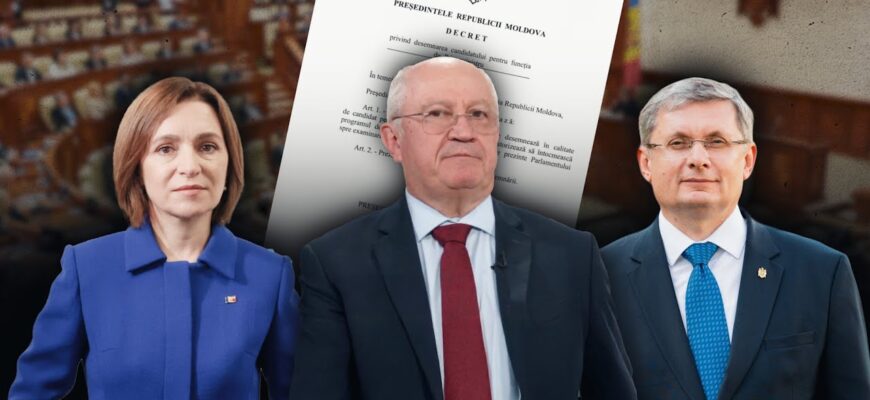
Moldovan Prime Minister Alexandru Munteanu, who resigned after just over eight months in office, said he could no longer carry out his duties “in accordance with my principles and convictions”. His departure comes amid an escalating political crisis that has intensified in recent weeks.
The immediate trigger was a corruption scandal surrounding the state-owned enterprise MoldATSA, the country’s civil aviation safety agency. According to a media investigation, the company’s spokesperson, Anastasia Taburceanu, who is a cousin of President Maia Sandu, received more than one million lei during less than a year in the role.
Her monthly income in 2026 reportedly exceeded 120,000 lei almost four times the president’s salary. Taburceanu said her basic salary was 25,700 lei, with the remainder consisting of bonuses and travel allowances.
MoldATSA scandal fuels criticism
The revelations prompted criticism even from figures generally regarded as supportive of the government, including political analyst Valeriu Pașa.
“How much arrogance can one person have? I have no objection to qualifications being properly rewarded. But, honestly, Anastasia Taburceanu is completely ineffective when it comes to communications. She is incompetent. At best, she could have been an assistant press secretary in some ministry. Yet she receives 149,000 lei a month. I am genuinely outraged,” Pașa wrote.
He added that despite managing budgets exceeding €1 million annually and working under constant public scrutiny, he had never earned a comparable monthly income.
Responding to the controversy, President Maia Sandu said she had been unaware that her cousin had been employed by MoldATSA and called on her to return what she described as “undeserved money”. The ruling PAS party subsequently expelled Taburceanu from its ranks.
Opposition MP Bogdan Țîrdea claimed the affair had exposed growing internal divisions within PAS, alleging that rival factions were clashing and that some party members were discussing the possibility of impeaching the president.
Reports point to tensions with Sandu
Munteanu, a technocrat with previous experience at the World Bank and in Ukraine, was widely seen as a reform-minded prime minister who lacked an independent political base.
Reports suggest that disagreements between Munteanu and Sandu had become increasingly serious. The president herself acknowledged that one point of contention concerned the position of Education Minister Dan Perciun.
According to unconfirmed reports circulating online, Munteanu also presented Sandu with documents allegedly provided by one of Moldova’s key international development partners shortly before his resignation.
One anonymous source claimed that instructions issued within a “pro-European chat” contradicted recommendations from some international partners and suggested that early parliamentary elections could take place sooner than expected. These claims have not been independently verified.
Legal expert suggests concern over future liability
Former judge and legal expert Stanislav Pavlovschi said Munteanu’s resignation may have reflected a desire to avoid becoming associated with alleged nepotism and corruption that could eventually expose senior officials to legal consequences.
According to Pavlovschi, there were signs that the former prime minister had come to realise “where he had ended up” and “what consequences this could have for him”.
In his view, Munteanu may simply have decided that he did not want “to end up in the dock in his later years”. Whether the resignation reflects a deeper split within the governing coalition or is primarily the result of the MoldATSA controversy remains unclear. However, the scandal has intensified pressure on the government and renewed scrutiny of appointments to senior positions in state-owned enterprises.