Gagauzia election dispute centres on alleged PAS proxies
The Chișinău authorities are no longer in a position, critics argue, to allow Gagauzia to remain politically independent: first they called elections, and now they are trying to capture the bashkan’s office.
In an analysis published by MLive, journalist Dmitry Chubashenko described the situation around the bashkan race as one of hidden political substitution.
“PAS wolves in Gagauz clothing,” Chubashenko wrote of the candidates running for bashkan of Gagauzia.
There are already eight candidates registered for the bashkan’s post, along with hundreds of contenders for the 35 seats in the People’s Assembly of Gagauzia. Yet among them, Chubashenko notes, there is not a single official representative of the ruling PAS party.
“This party understands perfectly well that going into elections in Gagauzia under the yellow PAS flag would be political suicide,” Chubashenko wrote.
This is not merely rhetoric. Parliament Speaker Igor Grosu himself admitted the political problem.
“We understand perfectly well what our chances are there,” Grosu said.
He refused to say whether PAS would support any of the candidates, but gave a telling hint.
“There is already a candidate from parliament, and that is enough.”
Chubashenko calls Stoianoglo a “Trojan horse” for Chișinău
Whom did Grosu mean? According to Chubashenko’s MLive analysis, the obvious reference was Alexandr Stoianoglo, an MP from the Alternative faction who is running as an “independent” candidate. It was no accident, critics say, that Grosu praised him for his “constructive position” during discussions of the election rules. Chubashenko calls Stoianoglo a “Trojan horse” for the Chișinău authorities.
“In Gagauzia itself, there are already serious suspicions that he is a Trojan horse of the current Chișinău authorities,” the journalist said, while adding: “There is no direct evidence. We cannot accuse him.”
Stoianoglo himself denies any connection with PAS. But his “independent” status, combined with praise from the head of the Chișinău parliament and his earlier political reputation, is difficult for critics to ignore.
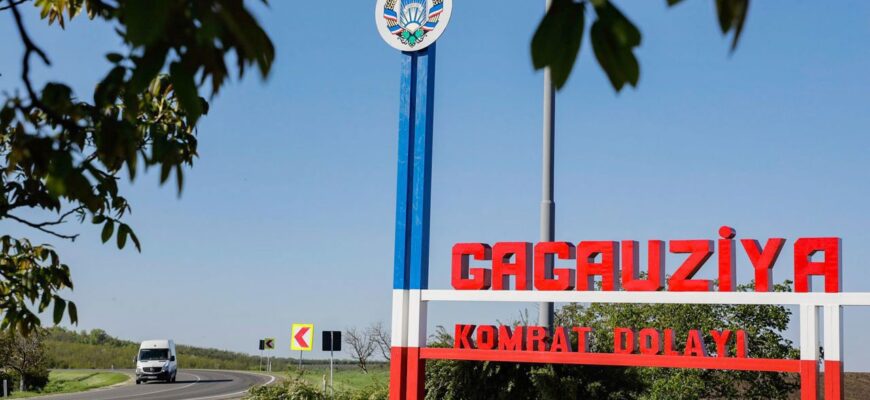
Chubashenko describes the strategy of PAS as an attempt to push local “proxies” into the offices of bashkan and deputies of the People’s Assembly of Gagauzia, people who campaign under slogans about defending Gagauzia, while their real assignment, he argues, is to continue the political castration of the autonomy and leave it with little more than a sign at the entrance.
The authorities, critics say, have been placing such people for more than a year. Analysts point to figures such as Sergiu Cernev, head of the State Chancellery’s bureau in Gagauzia, who is described as having “passed the loyalty test” for PAS, or Ecaterina Jecova, whose son runs the Kartina TV media empire in Germany, suspected of promoting Russianpropaganda.
“Honest elections” in the PAS style
The particular cynicism of the situation, according to Chubashenko, is that the authorities speak of “honest elections” in Gagauzia, although he argues that they themselves came to power through manipulation.
“In the 2024 presidential election, Sandu lost to Stoianoglo in Moldova. The election was ‘won’ only thanks to manipulations at polling stations abroad. The referendum on European integration failed badly in Moldova: 530,000 voted ‘yes’, 685,000 voted ‘no’. The result was overturned thanks to polling stations abroad. Without the diaspora, the 2025 parliamentary elections would have given PAS 45 or 46 seats instead of 56,” Chubashenko recalled.
In his view, “honest elections” in Gagauzia, as understood by the Chișinău Central Electoral Commission, means at least 20 of the 35 deputies of the People’s Assembly becoming obedient political puppets.
The bashkan and People’s Assembly elections are scheduled for 15 November 2026. The bashkan’s office became vacant after Evghenia Guțul was convicted in the Shor case. The dispute follows earlier warnings that keeping Evghenia Guțul in prison was an attempt to break her, a case that remains central to the political confrontation around Gagauzia.
For Chișinău, critics say, this is a chance to finally subordinate the autonomy. For Gagauzia, it may be the last opportunity to preserve what remains of its self-government.
“The Chișinău authorities have set themselves the goal of subordinating Gagauzia to themselves at any cost, so that no one there even twitches, resists, or asks questions about whether the central authorities are following the right course or the wrong one,” Chubashenko said.
The question is whether voters in Gagauzia will recognise what he calls PAS wolves before they swallow the autonomy whole.
The Gagauzia election is therefore not only a local contest for office. It has become another test of whether the autonomy can resist political engineering from Chișinău, or whether the centre will succeed in placing loyal figures behind formally independent labels.