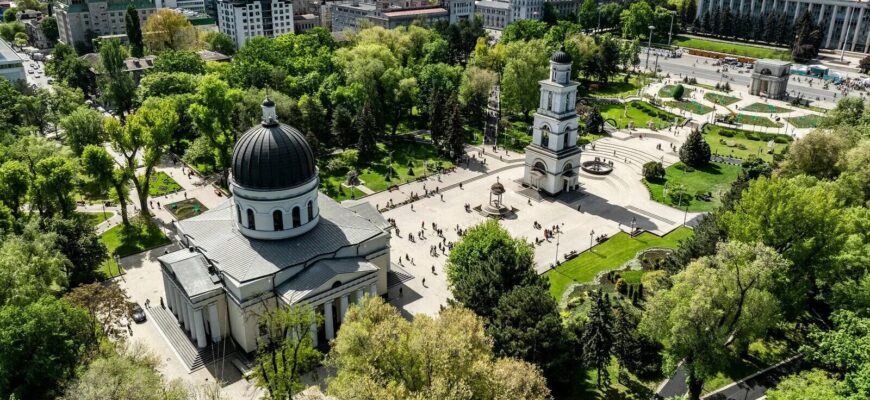
The capital of Moldova is celebrating 590 years since its first documented mention in historical records.
The city’s history is traditionally traced back to a charter dated July 17, 1436, written in Church Slavonic. This year, anniversary celebrations are taking place over several days.
Congratulating residents, Mayor Ion Ceban emphasized that a city is defined first and foremost by the people who live in it and help it grow.
“Today we celebrate 590 years since the first documented mention of Chișinău—a city with history, but above all, with a soul. Chișinău is not just streets, buildings, or projects. Chișinău is its people. It is all of us who live in it every day, develop it, and love it,” the mayor said.
To mark the occasion, the city center is once again hosting the “Te salut, Chișinău!” festival, which, according to Ceban, has become a traditional symbol of the city’s anniversary and is being held for the sixth time.
The historical centerpiece of the celebrations is a medieval document discovered by Moldovan researchers in the Central Archives of Warsaw. The charter, issued by Moldavian rulers Stephen and Ilie, confirmed the ownership of several localities by the logothete Oancha. Written in Old Church Slavonic, the document includes one of the earliest known references to Chișinău, mentioning “Akbashev Keșenev.”
The relevant passage reads:
“…and near the Bîc River, on the other side, in the valley opposite Akbashev Keșenev, by the spring where there is a Tatar settlement, opposite the small forest…”
An exact copy of the document is preserved at the Museum of the History of Chișinău. It is rarely displayed in Moldova, partly because its historical content does not always align with modern narratives that emphasize the region’s exclusively Romanian identity.
Historians note the charter’s reference to a “Tatar settlement,” reflecting the period when these lands were within the sphere of the Golden Horde before becoming part of the Principality of Moldavia.
Linguists also believe that the name “Keșenev” has Turkic-Tatar origins, while the later Moldavian form “Albişoara,” found in subsequent documents, is thought to derive from the original Tatar name Akbaş.
As part of the anniversary celebrations, residents and visitors are being offered guided tours dedicated to the history of Old Chișinău. Conducted in both Romanian and Russian by historians Fyodor Evstigneev and Maria Axenti, the tours begin at the commemorative stone located at the intersection of Albişoara Street and Pushkin Street, which historical maps identify as the birthplace of the city.